
Despite the abundant sunshine across the Middle East, roughly four out of five mothers and children in the region show vitamin D levels in the deficient range. Vitamin D for Infants is not just a vitamin — it is the hormonal driver of calcium absorption and the foundation of a growing skeleton. This guide explains when to start supplementation, the daily dose in drops for the most common Egyptian brands, when a child needs a therapeutic (not preventive) dose, and how to avoid both deficiency and the equally real risk of over-supplementation.
Why Vitamin D for Infants matters in the first years
Many parents assume that breastfeeding alone covers all their infant’s needs. Breast milk is the ideal food in almost every way, but it is naturally low in vitamin D unless the mother is herself taking high-dose supplementation. Two facts drive the recommendation to supplement:
- A silent epidemic. Vitamin D deficiency is one of the most common and most under-diagnosed problems in paediatric practice worldwide.
- Beyond bones. Adequate vitamin D levels are linked with stronger respiratory immunity — particularly important during the first years of life.
When to start
Following the American Academy of Pediatrics (AAP) and international consensus:
- From day one of life. Do not wait for symptoms. Every infant — whether breastfed or formula-fed — needs a vitamin D supplement from the first days.
- Premature infants. Need special attention and may require adjusted doses to build up bone stores.
- Formula-fed infants. Still need supplementation unless the baby is consistently drinking more than a litre of fortified formula per day (which is unusual in the early months).
How many drops? A brand-by-brand guide
The standard preventive dose worldwide is 400 IU per day for the first year. Translating this into drops depends on the brand’s concentration:
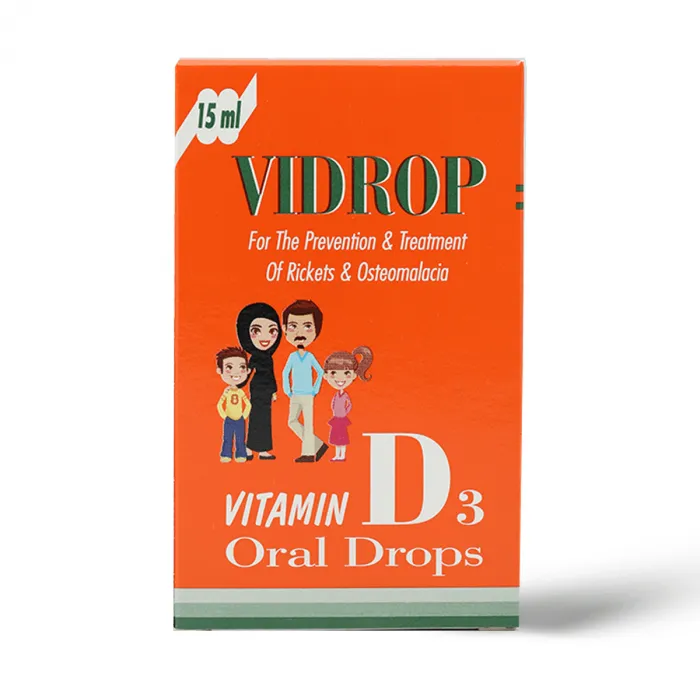
- Vidrop: the most widely used. The preventive dose is roughly 4 drops daily (approximately 400 IU).
- Davalindi: check the enclosed dropper; the dose is usually similar but always read the package insert.
- Limitless Baby D: comes with a precisely graduated dropper — the dose is measured at a specific mark on the dropper (usually 0.5 ml or 1 ml, depending on the concentration).
Practical tip: never guess drop size. Always use the dropper packaged with that specific product; drop volumes vary from one brand to another.
What if the deficiency is already severe?
When a child is diagnosed with rickets or a laboratory-confirmed severe deficiency, parents often ask about faster options.
- Stoss therapy. A physician may prescribe very high doses for a short period, or a single high-dose injection (such as Devarol IM). These regimens are prescribed only after a laboratory diagnosis and under close medical supervision.
- Injections versus drops. Oral drops are generally preferred because absorption is gradual, which reduces the risk of hypervitaminosis D and hypercalcaemia compared with a single massive injected dose.
- Sunlight. Sun exposure helps, but infant skin is easily damaged, and reliable supplementation is safer and more precisely measurable.

Common brands in Egyptian pharmacies
- Vidrop — the standard, most widely available oral drops.
- Pedia-Vit D — a good alternative.
- Osteocare Syrup — a combination product containing calcium, magnesium, zinc and vitamin D, more suitable for older children as broader nutritional support rather than as a dedicated vitamin D supplement.
The narrow safety margin: deficiency and toxicity both matter
More is not automatically better. Vitamin D can go wrong in both directions:
- Overdose. Giving an infant “a full dropper” instead of the correct daily dose over a prolonged period can lead to calcium deposition in the kidneys (nephrocalcinosis and stones) and blood vessels. Warning signs include persistent vomiting, severe constipation, and unexplained thirst.
- Deficiency. Causes softening of the skull bones, delayed teething, and bow-legs (genu varum) as walking begins — the classic presentation that later brings the family to an orthopaedic surgeon.

Sticking to the recommended dose (400 IU under one year, 600 IU thereafter) is your safety zone.
Special considerations
Sun exposure. The AAP recommends against direct sun exposure for infants under six months. Supplementation is the safer way to ensure adequate intake.
Food sources. After 12 months, fortified foods such as oily fish, egg yolks and whole milk can contribute meaningfully to daily needs.
Severe deficiency. Requires physician-directed higher doses under close monitoring — never a self-directed decision.
The bottom line
Sticking to a daily vitamin D dose is a direct investment in your child’s skeletal strength and motor development. The great majority of nutritional rickets and bone deformities are preventable with correct supplementation. Treating a deformity after it has developed is a much longer and more complicated path than preventing it in the first year.
If you notice any bowing of your child’s legs, or if you feel their motor milestones are delayed, do not rely on guesswork or home remedies. Early assessment prevents the surgical interventions we would all rather avoid.
Frequently Asked Questions
When should an infant begin taking vitamin D supplements?
Major pediatric health authorities, including the American Academy of Pediatrics (AAP) and the World Health Organization (WHO), recommend starting daily vitamin D supplementation during the first few days of life (within the first week). Immediate supplementation protects rapid neonatal skeletal growth from subclinical hypocalcemia and guarantees adequate circulating 25-hydroxyvitamin D [25(OH)D] levels from birth.
What is the recommended daily dosage of vitamin D for infants?
Standard evidence-based preventative pediatric dosing guidelines recommend:
- Infants aged 0 to 12 months: 400 International Units (IU) (10 mcg) daily.
- Children older than 12 months (1 to 18 years): 600 International Units (IU) (15 mcg) daily.
- Preterm / Low Birth Weight Infants: Premature infants often require customized regimens (typically 400 to 800 IU/day) under neonatologist supervision to meet higher metabolic bone mineral accrual demands.
Why do exclusively breastfed infants need supplemental vitamin D?
While human breast milk is the unmatched gold standard for infant nutrition, immune protection, and cognitive development, it is naturally low in vitamin D:
- Mature breast milk contains only 10 to 50 IU of vitamin D per liter under standard maternal dietary regimens.
- An infant would have to consume between 8 and 40 liters of breast milk daily to achieve the 400 IU requirement—an anatomical and physiological impossibility.
- Without direct liquid drop supplementation, exclusively and partially breastfed infants are at substantial risk for progressive deficiency and skeletal softening.
Do formula-fed babies also require vitamin D drops?
Yes, until daily consumption reaches clinical thresholds:
Commercial infant formulas are fortified by regulation with approximately 400 IU of vitamin D per liter (roughly 32 fl oz). To receive the required 400 IU daily dose from nutrition alone, an infant must ingest a full 1,000 mL (approx. 32 ounces) of formula every 24 hours. During the initial weeks and months, young infants rarely consume this volume; therefore, routine supplementation with 400 IU/day drops is indicated until formula volume consistently reaches or exceeds one liter daily.
Why can’t infants get their vitamin D from direct sun exposure?
Relying on sunlight to stimulate cutaneous vitamin D synthesis in infants is clinically unsafe:
- Oncological & Burn Risks: The AAP explicitly recommends keeping infants under 6 months old out of direct sunlight. Infant skin has a thinner stratum corneum and lower melanin concentration, leaving it vulnerable to acute solar burns and cellular DNA damage that elevates melanoma and non-melanoma skin cancer risks later in life.
- Inconsistent Synthesis: Atmospheric pollution, cloud cover, geographic latitude, clothing, and indoor window glass filter out the specific ultraviolet B (UVB) wavelengths (290–315 nm) necessary for photolyzing 7-dehydrocholesterol into previtamin D3.
- Oral drops remain the only safe, quantifiable, and non-carcinogenic source for meeting metabolic requirements.
What are the key clinical benefits of vitamin D for infants?
Vitamin D acts as a secosteroid prohormone essential for multifaceted pediatric physiology:
- Bone Mineralization: Stimulates active enterocyte transport of calcium and phosphorus, providing minerals for the osteoid matrix and preventing nutritional rickets and hypocalcemic tetany.
- Skeletal Geometry: Ensures mechanical rigidity in weight-bearing long bones and maintains anatomical cranial and spinal development.
- Neuromuscular Milestones: Supports proximal muscle fiber development, aiding head control, rolling, unassisted sitting, and normal ambulation.
- Immune Regulation: Induces antimicrobial peptides (cathelicidin and defensins) within the respiratory epithelium, lowering susceptibility to acute viral lower respiratory tract infections.
What are the clinical signs and symptoms of vitamin D deficiency in babies?
Vitamin D deficiency and progressive nutritional rickets display characteristic physical findings:
- Craniotabes: Softening and thinning of the occipital and parietal bones, producing a ping-pong ball-like rebound sensation upon light palpation in early infancy.
- Delayed Fontanelle Closure: Persistent patency of the anterior fontanelle beyond 18 months of age, frequently accompanied by frontal bossing (prominent forehead).
- Metaphyseal Flaring: Palpable and visible expansion at the growth plates of the distal radius/ulna (wrists) and tibia/fibula (ankles).
- Rachitic Rosary: Symmetrical nodular enlargement at the costochondral junctions along the anterolateral rib cage.
- Lower Extremity Deformities: Genu varum (bowed legs) or genu valgum (knock-knees) developing once the toddler initiates weight-bearing and ambulation, alongside delayed tooth eruption and motor developmental delay.
How should liquid vitamin D drops be administered safely?
Proper administration prevents aspiration events and ensures full dosage delivery:
- Direct Nipple Application: For nursing mothers, apply the calibrated single drop directly to the clean nipple or finger immediately before breastfeeding, allowing the infant to ingest it during latching.
- Inner Cheek Technique: Position the dropper toward the infant’s inner buccal mucosa (inside cheek) and depress slowly. Never squirt drops directly toward the pharynx or down the throat, as this can trigger coughing and aspiration.
- Spoon Administration: Dispense the drop into a small silicone spoon mixed with a few drops of expressed breast milk or formula.
- Caution With Full Bottles: Avoid adding drops to an entire baby bottle; if the infant leaves milk unfinished, a significant fraction of the dose is lost, and fat-soluble vitamin D readily binds to plastic bottle walls.
What are the risks and warning signs of vitamin D overdose in infants?
Because vitamin D is fat-soluble and slowly excreted, prolonged dosing above physiological limits causes hypervitaminosis D and severe hypercalcemia:
- Early Gastrointestinal Signs: Persistent nausea, projectile vomiting, profound anorexia, failure to thrive, and intractable constipation.
- Renal Manifestations: Polydipsia (intense thirst), polyuria (excessive wet diapers), dehydration, and renal parenchymal calcification (nephrocalcinosis).
- Neurological Signs: Hypotonia, extreme lethargy, irritability, and confusion.
- Safety Measure: Always inspect the dropper calibration. Concentrated formulations (e.g., 400 IU per single drop) must not be administered using droppers intended for dilute multi-drop solutions (e.g., 400 IU per 1 mL).
Can a nursing mother take high-dose vitamin D to enrich her breast milk instead of giving baby drops?
Yes, high-dose maternal supplementation is a clinically validated alternative:
Randomized controlled trials demonstrate that lactating mothers who take 6,400 IU of vitamin D3 daily (or 4,000 IU with careful clinical monitoring) successfully elevate antirachitic activity in their breast milk, supplying their nursing infant with the equivalent of 400 IU/day without requiring direct infant drops.
However, leading pediatric bodies still prioritize direct infant supplementation (400 IU/day drops) as the first-line standard because it provides a reliable, direct route independent of maternal daily compliance or individual variations in maternal-fetal metabolic conversion.
References
المراجع العلمية الدولية
- Wagner CL, Greer FR; American Academy of Pediatrics Section on Breastfeeding and Committee on Nutrition. Prevention of Rickets and Vitamin D Deficiency in Infants, Children, and Adolescents. Pediatrics، 2008. publications.aap.org
- Institute of Medicine (US) Committee to Review Dietary Reference Intakes for Vitamin D and Calcium. Dietary Reference Intakes for Calcium and Vitamin D، 2011. ncbi.nlm.nih.gov/books/NBK56070
- Holick MF, Binkley NC, Bischoff-Ferrari HA, et al. Evaluation, Treatment, and Prevention of Vitamin D Deficiency: an Endocrine Society Clinical Practice Guideline. Journal of Clinical Endocrinology & Metabolism، 2011؛ 96(7): 1911–1930. academic.oup.com
- Munns CF, Shaw N, Kiely M, et al. Global Consensus Recommendations on Prevention and Management of Nutritional Rickets. Journal of Clinical Endocrinology & Metabolism، . academic.oup.com
- Mayo Clinic. Vitamin D: Description, Uses, Side Effects. mayoclinic.org
- Cleveland Clinic. Vitamin D Deficiency in Children. my.clevelandclinic.org
- El Rifai NM, Abdel Moety GAF, Gaafar HM, Hamed DA. Vitamin D deficiency in Egyptian mothers and their neonates and possible related factors. Journal of Maternal-Fetal & Neonatal Medicine، pubmed.ncbi.nlm.nih.gov
- van Groningen L, Opdenoordt S, van Sorge A, et al. Cholecalciferol loading dose guideline for vitamin D-deficient adults. European Journal of Endocrinology، . academic.oup.com