
Gout is one of the oldest known joint diseases. It stems from a rise in uric acid in the blood, which crystallises inside joints and triggers sudden, severe attacks of inflammation — most classically at the base of the big toe. Modern treatment combines rapid control of the acute attack, a long-term reduction of blood uric acid, and dietary and lifestyle changes to prevent recurrence. This guide covers the full picture, from causes and diagnosis to what to eat, what to avoid, and when to see a specialist.
What is gout?
Gout is a form of inflammatory arthritis caused by monosodium urate crystals depositing in and around joints. When uric acid — a natural byproduct of purine metabolism — accumulates beyond the joint fluid’s capacity to hold it in solution, it precipitates as sharp microscopic crystals that provoke a fierce inflammatory reaction. Historically called “the disease of kings” because of its association with rich food and alcohol, gout is now known to be far more widely distributed and driven by biology and metabolic health, not by wealth.
Symptoms of a gout attack
- Sudden, severe pain — most commonly at the base of the big toe (podagra); can also affect the ankle, knee, or wrist.
- Redness, swelling, and warmth over the affected joint.
- Extreme tenderness — many patients describe not being able to bear the weight of a bedsheet on the joint.
- Rapid onset — often overnight, reaching peak intensity within 12 to 24 hours.
- Fever and general malaise in severe attacks.
What causes gout?
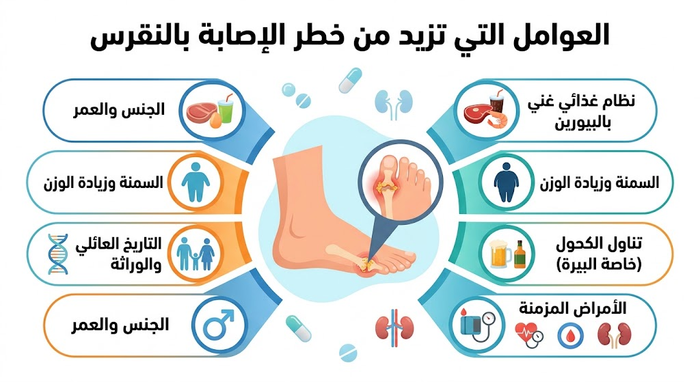
Uric acid overload
Either the body produces too much uric acid, or the kidneys clear too little. The result is a supersaturated joint fluid where crystals begin to form.
Genetics and family history
A family history of gout roughly doubles individual risk, reflecting inherited variations in uric acid handling.
Purine-rich diet
Red meat, organ meats, and certain seafood provide large amounts of purine — the raw material for uric acid.
Alcohol, especially beer
Alcohol both raises uric acid production and reduces its excretion. Beer is particularly problematic because the grain adds an additional purine load on top of the alcohol effect.
Sugary drinks
Beverages sweetened with high-fructose corn syrup raise uric acid through a metabolic pathway independent of purine — this is why sugary sodas are as risky as they are, despite containing no meat protein.
Other risk factors
Obesity, insulin resistance, hypertension, chronic kidney disease, and certain diuretics all raise the risk. Gout is now understood as part of the wider metabolic syndrome spectrum.
How gout is diagnosed
- Clinical assessment — the presentation is often characteristic enough to make the diagnosis likely.
- Serum uric acid measurement — best performed at least two weeks after an acute attack has resolved, because uric acid levels can transiently fall during the attack itself.
- Joint aspiration and crystal analysis — the gold standard. Fluid is drawn from the joint and examined under polarised light for the characteristic needle-shaped urate crystals.
- Imaging — plain X-rays, ultrasound (which can visualise the “double contour sign” of urate deposits on cartilage), or dual-energy CT for chronic and tophaceous disease.
Treatment
Managing the acute attack
- NSAIDs — non-steroidal anti-inflammatory drugs, first-line when there is no contraindication.
- Colchicine — most effective when started within the first 24 hours of symptoms.
- Oral or intra-articular corticosteroids — the correct alternative when NSAIDs and colchicine are unsuitable, especially in patients with kidney disease or heart disease.
Long-term urate-lowering therapy
For patients with recurrent attacks, tophi, joint damage, or chronic kidney disease, long-term therapy to lower serum uric acid below the target level is essential. Two main classes:
- Xanthine oxidase inhibitors — allopurinol (first-line) and febuxostat (alternative). These reduce uric acid production at its source.
- Uricosuric agents — increase urinary excretion of uric acid; used when xanthine oxidase inhibitors are insufficient or not tolerated.
Because starting urate-lowering therapy can paradoxically trigger flares as old crystal deposits dissolve, a low-dose colchicine cover is usually prescribed for the first 3 to 6 months of therapy.
Important: when initiated for confirmed recurrent gout, urate-lowering therapy is typically continued for life. Stopping the drug once the patient feels well is the single most common cause of gout relapse in clinical practice.
Diet and lifestyle
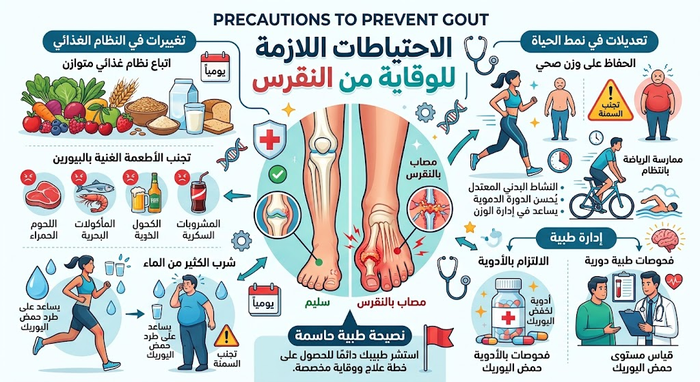
Foods to avoid or limit
- Organ meats (liver, kidneys, brain, heart)
- Red meat and processed meats
- High-purine seafood (sardines, anchovies, herring, mussels)
- Beer and other alcoholic beverages
- Sugar-sweetened drinks and juices high in fructose
Foods that help
- Water in generous amounts — hydration helps kidneys excrete uric acid
- Low-fat dairy products
- Cherries and berries — associated with lower flare rates in observational studies
- Whole grains and legumes — despite older advice, vegetable purines are not a meaningful gout trigger
- Vegetables including broccoli, asparagus, spinach, and carrots
Lifestyle habits
Maintain a healthy weight (rapid weight loss should be avoided as it can trigger flares), stay physically active, manage blood pressure and diabetes, and avoid diuretics where possible in consultation with your physician.
Prevention of future attacks
The pattern is consistent across international guidelines: treat the acute attack quickly, start urate-lowering therapy after the attack settles if attacks are recurrent, aim for a serum uric acid below 6 mg/dL (or below 5 mg/dL if tophi are present), and maintain that level indefinitely. Combined with dietary discipline, this approach prevents the joint damage and kidney complications that untreated chronic gout eventually produces.
When to see a specialist urgently
Book an urgent orthopaedic or rheumatology appointment if you experience severe joint pain that does not settle within 24 hours, gout attacks that involve multiple joints, fever alongside joint pain (to exclude septic arthritis, which can present similarly), visible lumps developing under the skin around joints or on the ears (tophi), or worsening kidney function on routine testing.
Frequently Asked Questions
What is gout and what causes it?
Gout is a common, intensely painful form of metabolic inflammatory arthritis triggered by chronic hyperuricemia (elevated uric acid in the blood, typically exceeding 6.8 mg/dL):
- Purine Catabolism: Uric acid is the end-product of purine breakdown (compounds found in body cells and certain foods).
- Crystallization: When circulating levels surpass saturation thresholds, uric acid precipitates as needle-shaped monosodium urate (MSU) crystals within synovial fluids, joint capsules, and tendon sheaths.
- Inflammatory Cascade: Macrophages and neutrophils engulf these crystals, triggering the NLRP3 inflammasome and releasing pro-inflammatory cytokines such as interleukin-1β (IL-1β).
Why is the big toe the most common joint affected by gout (podagra)?
Involvement of the first metatarsophalangeal (MTP) joint of the great toe—clinically designated as podagra—occurs in 50% to 70% of initial clinical episodes due to specific anatomical and physiological factors:
- Lower Peripheral Temperature: The feet and toes are distal extremities with lower basal temperatures (often around 30°C to 32°C). Monosodium urate solubility is temperature-dependent; cooler tissue environments markedly accelerate crystal precipitation.
- Mechanical Repetitive Loading: The first MTP joint endures substantial weight-bearing loads and shearing stress during terminal stance and push-off in normal gait, creating microscopic cartilage trauma that facilitates crystal deposition.
What are the classic symptoms of an acute gout flare?
An acute flare presents with a characteristic clinical picture:
- Sudden Nocturnal Onset: Attacks classically begin abruptly between midnight and early morning, waking the patient from sound sleep.
- Explosive Pain Escalation: Discomfort intensifies rapidly, reaching maximum agony within 12 to 24 hours.
- Objective Local Signs: The joint becomes severely swollen, hot, and displays deep erythema (red or violaceous discoloration) with taut, shiny skin.
- Extreme Mechanical Allodynia: The area is tender to the point where even light contact—such as a sheet or gentle breeze—provokes severe distress.
What triggers an unexpected gout flare?
Sudden fluctuations—either sharp spikes or precipitous drops—in extracellular urate concentrations can destabilize joint crystal deposits and trigger an attack:
- Dietary Excess: Heavy consumption of purine-rich animal proteins (beef, lamb, organ meats, shellfish, sardines).
- Alcohol Consumption: Especially beer (rich in both brewer's yeast purines and alcohol) and distilled spirits, which accelerate ATP breakdown and competitively inhibit renal urate clearance.
- Fructose-Sweetened Beverages: Soda and processed juices containing high-fructose corn syrup stimulate hepatic uric acid synthesis.
- Dehydration & Physical Stress: Reduced intravascular fluid volume, intercurrent systemic infection, or major surgical procedures.
- Medications: Thiazide and loop diuretics (which elevate serum urate), as well as unmonitored initiation of allopurinol or febuxostat without anti-inflammatory prophylaxis.
How is gout definitively diagnosed by doctors?
Orthopedic specialists and rheumatologists utilize clear diagnostic criteria to distinguish gout from septic arthritis or pseudogout:
- Arthrocentesis (Gold Standard): Aspirating synovial fluid from the involved joint followed by compensated polarized light microscopy. Finding needle-shaped, intracellular crystals with strong negative birefringence provides a definitive diagnosis.
- High-Resolution Musculoskeletal Ultrasound: Demonstrates the pathognomonic "double contour sign"—a hyperechoic irregular band over the superficial surface of hyaline cartilage.
- Dual-Energy CT (DECT): Advanced cross-sectional imaging capable of color-coding and mapping subclinical urate deposits in soft tissues and joints.
Can a person have a normal blood uric acid level during an acute gout attack?
Yes, normal or low serum uric acid during an acute flare is common:
Studies show that up to 30% to 40% of patients have serum uric acid levels within normal laboratory reference ranges during an active flare. High systemic concentrations of interleukin-6 and acute-phase reactants promote urinary urate excretion (uricosuric effect), while endogenous adrenal cortisol surges further suppress circulating levels. A normal serum urate reading does not rule out gout; the diagnostic laboratory test should be repeated 2 to 4 weeks after complete resolution of the flare.
What medications are used to stop an acute gout attack?
Emergency medical treatment focuses on rapid suppression of acute neutrophilic inflammation:
- Colchicine (Low-Dose Regimen): 1.0 mg or 1.2 mg immediately at flare onset, followed by 0.5 mg or 0.6 mg one hour later. Highly effective when initiated within the first 24 hours.
- Non-Steroidal Anti-Inflammatory Drugs (NSAIDs): Prescription-strength naproxen, indomethacin, or celecoxib to block prostaglandin synthesis.
- Corticosteroids: Oral prednisolone (e.g., 30–35 mg daily tapered over 5–10 days) or direct intra-articular steroid injection—ideal for patients with renal impairment, peptic ulcers, or anticoagulant therapy where NSAIDs and colchicine are contraindicated.
What is the difference between treating an acute flare and long-term gout management?
Managing gout requires two fundamentally distinct clinical phases:
- Acute Flare Therapy: Short-term (3 to 7 days) symptomatic relief to extinguish inflammation. It does not treat the underlying root metabolic disorder.
- Urate-Lowering Therapy (ULT): Long-term, daily medication (such as allopurinol or febuxostat) designed to maintain serum uric acid below 6.0 mg/dL (or < 5.0 mg/dL in severe tophaceous disease). Over several months, sustained low serum levels dissolve crystalline reservoirs, prevent future attacks, and stop progressive joint and kidney damage.
What are gout tophi and can they be reversed?
Tophi are nodular, chalky aggregations of monosodium urate crystals encased by persistent foreign-body granulomatous inflammation:
- Locations: Commonly found around finger joints, the olecranon bursa at the elbow, the prepatellar bursa, the Achilles tendon, and the ear helix.
- Reversibility: Tophi are completely reversible. Sustaining serum uric acid below the crystallographic saturation point (ideally < 5.0 mg/dL) creates a concentration gradient that shifts crystals out of tissue deposits back into solution, steadily shrinking and resolving tophi without surgery.
What complications develop if gout is left untreated?
Neglecting persistent hyperuricemia transforms an episodic illness into a chronic systemic disease with serious sequelae:
- Permanent Joint Destruction: Chronic tophaceous arthritis causes periarticular bone erosion (characteristic 'overhanging margin' or 'rat-bite' radiographic lesions), cartilage destruction, joint contractures, and severe deformity.
- Renal Complications: Uric acid nephrolithiasis (kidney stones), acute uric acid nephropathy, and chronic interstitial nephrosclerosis that contributes to progressive chronic kidney disease (CKD).
- Cardiovascular Associations: Persistent systemic inflammation driven by hyperuricemia correlates with increased risks of hypertension, metabolic syndrome, stroke, and adverse cardiac events.
References
- FitzGerald JD, Dalbeth N, Mikuls T, et al. 2020 American College of Rheumatology Guideline for the Management of Gout. Arthritis Care & Research، 2020؛ 72(6): 744–760. acrjournals.onlinelibrary.wiley.com
- Richette P, Doherty M, Pascual E, et al. 2016 updated EULAR evidence-based recommendations for the management of gout. Annals of the Rheumatic Diseases، 2017؛ 76(1): 29–42. ard.bmj.com
- NICE Clinical Knowledge Summaries. Gout — Management . cks.nice.org.uk
- Mayo Clinic. Gout — Symptoms and causes.. mayoclinic.org
- Cleveland Clinic. Gout: Symptoms, Causes, Treatment & Prevention. my.clevelandclinic.org
- American Academy of Orthopaedic Surgeons – OrthoInfo. Gout. orthoinfo.aaos.org
- Choi HK, Willett W, Curhan G. Fructose-rich beverages and risk of gout in women. JAMA. jamanetwork.com
- Medscape Reference. Gout and Pseudogout Treatment & Management. emedicine.medscape.com