
Is a Ganglion Cyst a Tumor? No — a ganglion cyst is not a tumour. It is a benign, fluid-filled sac arising from a joint or tendon sheath. However, every new lump in the body must be treated as potentially malignant until a specialist confirms otherwise.
Ganglion cysts are the most common soft-tissue masses of the hand and wrist, accounting for between 60% and 70% of all soft-tissue lumps in that region. Although these fluid-filled masses are harmless, their appearance can cause anxiety and lead patients to wonder whether they might be dangerous or could progress to a tumour.
Is a Ganglion Cyst a Tumor? No Ganglion cysts are benign lumps that typically arise adjacent to tendons or joints — most often in the wrist, hand, and foot. They are not cancerous, although they can be misdiagnosed as a mucous cyst, wrist ganglion, or intra-articular cyst. They should be managed by an orthopaedic surgeon specialising in tendons and hand surgery to ensure the best outcomes.
The key distinction from a malignant tumour is texture: cancerous tumours are usually firm and fixed, whereas a ganglion cyst contains viscous, jelly-like synovial fluid, making it soft and freely mobile.
Ganglion cysts are most common in women aged 20–50 and are roughly three times more frequent in women than in men.
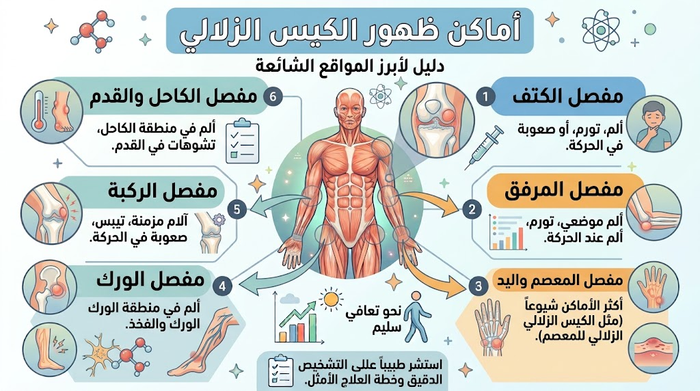
Common sites and Site-Specific Characteristics
| Location | % of All Ganglion Cysts | Most Affected Group | Most Common Cause | Nerve/Vessel Risk | Evaluation Priority |
|---|---|---|---|---|---|
| Wrist (dorsal) | 60–70% | Women, 20–50 yr | Wrist joint stress | Low | Watchful waiting or elective treatment |
| Wrist (volar) | 15–20% | Women, 20–50 yr | Wrist joint pressure | High — near radial artery | Urgent evaluation — MRI |
| Finger (flexor tendon sheath) | 10–15% | Any age | Finger tendon stress | Moderate — near flexor tendons | Assessment within one week |
| Foot and ankle | ~10% | Variable | Foot tendon stress | Moderate — near nerves | Assess if pain or functional impairment |
| Knee (Baker’s cyst) | Variable | Over 40 (with OA) | Intra-articular knee pathology | Moderate — popliteal fossa | Treat underlying cause first |
| * Rates from AAOS OrthoInfo, Mayo Clinic, and HSS. Volar wrist ganglion cysts require careful pre-operative evaluation due to proximity to the radial artery. | |||||
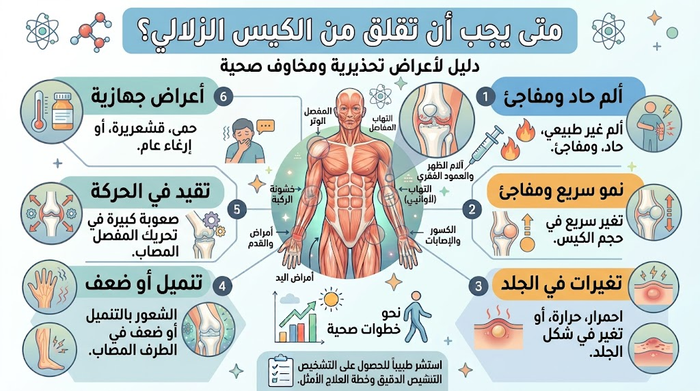
When Should You Worry About a Ganglion Cyst?
| Symptom / Sign | Concern Level | Most Likely Cause | Recommended Action |
|---|---|---|---|
| Lump that changes size with activity and resolves with rest | Low | Classic ganglion cyst | Periodic monitoring — no urgent action |
| Mild activity-related pain, no numbness | Low | Ganglion pressing on tendon | Assess within 2 weeks — splint or aspiration |
| Tingling or finger weakness | Moderate | Nerve compression by cyst | Assess within 1 week — ultrasound or MRI |
| Firm, fixed lump unaffected by rest | High | Not a ganglion — needs differential diagnosis | Urgent evaluation — MRI + orthopaedic oncology |
| Rapid growth over weeks | Very high | Different tumour type — not a ganglion | Immediate evaluation — MRI + biopsy |
| Redness + warmth + severe pain | High | Infection or inflammatory arthritis | Urgent medical assessment within 24 hours |
| * Any firm or rapidly growing lump must be evaluated by a specialist before assuming it is a ganglion cyst — even when it appears identical on physical examination. | |||
How Does a Ganglion Cyst Form?
Ganglion cysts form when synovial fluid — the lubricating fluid of joints and tendon sheaths — leaks into the surrounding tissue and accumulates, forming a small pouch-like sac that may start small and enlarge over time. Cyst size typically varies with joint activity: it increases with exertion that loads the joint or tendon and decreases with rest. Some cysts resolve spontaneously; others persist and require treatment.
Diagnosis
Diagnosis is usually made by clinical examination — assessing the texture and mobility of the lump. In some cases the doctor orders an ultrasound or MRI to confirm fluid content and exclude other causes. Fluid aspiration with analysis may also be performed.
Differential Diagnosis — Ganglion vs. Other Wrist and Hand Lumps
| Lump Type | Texture | Response to Activity | Transillumination | Diagnostic Tool | Malignant Potential |
|---|---|---|---|---|---|
| Ganglion cyst | Soft — fluid-filled | Changes with rest / activity | Positive (translucent) | Clinical exam ± ultrasound | Zero — fully benign |
| Mucous cyst (digital) | Soft — fluid | Relatively stable | Positive | Clinical (finger — near DIP joint) | Zero — benign |
| Lipoma | Soft, rubbery | No change | Negative (opaque) | Ultrasound | Very low |
| Giant cell tumour of tendon sheath (GCTTS) | Firm | Stable — no change | Negative | MRI + biopsy | Rare — requires monitoring |
| Soft tissue sarcoma | Firm, fixed | No change | Negative | MRI + mandatory biopsy | Yes — urgent surgery |
| * The most reliable distinguishing feature of a ganglion cyst is size variation with activity/rest + positive transillumination + fluid confirmed on ultrasound. Source: AAOS, Mayo Clinic, HSS. | |||||
Can a Ganglion Cyst Become Cancerous?
Is a Ganglion Cyst a Tumor? No. Ganglion cysts are inherently benign and do not transform into cancerous tumours. Misdiagnosis is rare when proper diagnostic steps are followed. A firm, non-mobile, rapidly growing lump that does not change with rest is NOT a ganglion cyst and requires immediate specialist evaluation.
Treatment Options — Side-by-Side Comparison
| Treatment Option | Ideal Situation | Disappearance / Success Rate | Cyst Recurrence Rate | Recovery Time | Pros and Cons |
|---|---|---|---|---|---|
| Watchful waiting | Cyst < 1 cm, painless, no functional limitation | 30–50% resolve spontaneously | N/A | None | ✅ No risk — ⚠ Cyst may enlarge |
| Splinting / immobilisation | Activity-related painful cyst | Symptom relief — does not remove cyst | High once splint removed | Weeks | ✅ Non-invasive — ⚠ Does not cure |
| Aspiration (fluid drainage) | Large painful cyst — surgery declined | Immediate symptom relief | 50–80% recur within 1 year | 1 day | ✅ Quick — ⚠ High recurrence |
| Open surgical excision | Recurrent / painful / nerve-compressing cyst | 85–90% complete cure | 15–20% | 2–6 weeks | ✅ Most effective — ⚠ Anaesthesia required |
| Arthroscopic excision | Intra-articular cyst — wrist or knee | 80–95% | 10–15% | 1–3 weeks | ✅ Smaller incisions — ⚠ Requires arthroscopy expertise |
| * Rates sourced from AAOS OrthoInfo, Mayo Clinic, HSS, and Journal of Hand Surgery. Excision of the cyst stalk is essential to minimise recurrence — incomplete removal raises the recurrence rate to 50% or more. | |||||
⚠ Important: Aspiration (needle drainage) of a ganglion cyst is a temporary measure. Recurrence within one year of aspiration reaches 50–80%. Complete surgical excision including the cyst stalk is the only pathway to lasting cure.

Frequently Asked Quetsions
References
- AAOS OrthoInfo. Ganglion Cyst of the Wrist and Hand. American Academy of Orthopaedic Surgeons. 2023. Available at: orthoinfo.aaos.org
- Mayo Clinic Staff. Ganglion cyst – Symptoms and causes. Mayo Clinic. 2023. Available at: mayoclinic.org
- Mayo Clinic Staff. Ganglion cyst – Diagnosis and treatment. Mayo Clinic. 2023. Available at: mayoclinic.org
- Cleveland Clinic. Ganglion Cyst: Causes, Symptoms, Diagnosis & Treatment. 2023. Available at: my.clevelandclinic.org
- Hospital for Special Surgery (HSS). Ganglion Cysts: Causes, Symptoms & Treatment. 2023. Available at: hss.edu
- Medscape. Ganglion Cyst Treatment & Management. 2024. Available at: emedicine.medscape.com
- Gregush RE, Habusta SF. Ganglion Cyst. StatPearls Publishing. 2024. Available at: ncbi.nlm.nih.gov
- Thornburg LE. Ganglions of the hand and wrist. Journal of the American Academy of Orthopaedic Surgeons. 1999;7(4):231–238. DOI: 10.5435/00124635-199907000-00004