
Quick answer
Ganglion cyst removal is done when the cyst causes pain or tingling, limits movement, or bothers you cosmetically. The key to success is removing the cyst together with its stalk where it joins the joint or tendon sheath, which makes recurrence much less likely than after needle aspiration. We perform open excision or arthroscopic excision for dorsal wrist ganglia, usually as a day case, with a return to light tasks within days to two weeks. The price is set after examination.
✅ Last medically reviewed by Prof. Dr. Ibrahim Shaarawi, Professor of Orthopaedic Surgery, on 4 October 2026
In the attached video I show how a ganglion can be removed in minutes in theatre. But the decision to operate must be right from the start, and precise technique is what prevents recurrence. Here are the details, as part of our guide to ganglion cysts.
When do you need ganglion removal?
- Persistent pain affecting work or sport.
- Pressure on a nerve causing tingling or weakness (for example a Guyon’s canal cyst — ulnar nerve entrapment).
- Limited joint movement or difficulty with shoes.
- Recurrence after aspiration.
- Diagnostic uncertainty.
- Cosmetic concern once the risks are understood.
Painless cysts can be watched — see ganglion cyst treatment without surgery.
Open or arthroscopic excision?
| Open excision | Arthroscopic excision (dorsal wrist) | |
|---|---|---|
| Incision | Small incision over the cyst | Two small portals |
| Suits | All sites: wrist, finger, foot | Mainly dorsal wrist ganglia |
| Stalk view | Direct | From inside the joint |
| Recurrence | Low with complete excision | Similar in studies |
| Recovery | Quick | Quick; possibly slightly less pain |
A randomised trial of dorsal wrist ganglia found similar recurrence rates at one year with the two techniques, and a recent systematic review of 23 studies found a small advantage for arthroscopy in recurrence (9.4% vs 11.2%) and satisfaction. We choose the technique according to the cyst’s site and size.
Video: removing a ganglion cyst
Key numbers to know
- Ganglion cysts are the most common soft-tissue masses of the hand and wrist and also occur in the knee and foot (StatPearls, 2023).
- 58% of ganglion cysts resolve spontaneously over time (Suen et al., 2013).
- In children, about two-thirds of untreated cysts resolved, usually within two years, in a study of 157 cysts in 154 children (Dearden et al., 2023).
- Surgical excision reduced recurrence by 76% compared with aspiration in randomised trials, in a review of 35 studies and 2,239 ganglia (Head et al., 2015).
- Across 23 studies and 1,670 cases, recurrence was 9.4% after arthroscopic versus 11.2% after open excision, with satisfaction of 89.2% versus 85.6% (Clark et al., 2023).
At Prof. Dr. Ibrahim Shaarawi’s clinics in Nasr City, Mohandeseen and New Cairo (5th Settlement) we examine the cyst and usually confirm the diagnosis with ultrasound at the same visit, then discuss observation or excision according to your symptoms.
The operation step by step
- Local or regional anaesthesia in most cases; home the same day.
- The cyst is freed from surrounding tissue, protecting nearby nerves and vessels.
- The stalk is traced to the joint or tendon sheath and removed with a small cuff of capsule.
- Skin closure and dressing, sometimes a light splint for a few days.
Why do ganglia come back, and how do we reduce it?
Recurrence mainly happens if the stalk or part of the wall is left behind, or if several small connected cysts are present, so we aim for complete excision with the stalk. A systematic review showed surgical excision greatly reduces recurrence compared with aspiration, although recurrence remains possible in some patients.
Recovery
| Time | What to expect |
|---|---|
| First days | Mild pain and swelling, eased by elevation; early finger movement |
| 10–14 days | Stitches removed |
| 1–2 weeks | Light tasks and desk work |
| 4–6 weeks | Heavy activities and sport |
Possible complications
- Temporary scar tenderness or stiffness.
- Mild joint stiffness that improves with exercise.
- Irritation of a small sensory nerve branch near the incision.
- Wound infection (rare).
- Recurrence.
Special sites
- Palm side of the wrist: close to the radial artery; requires extra care.
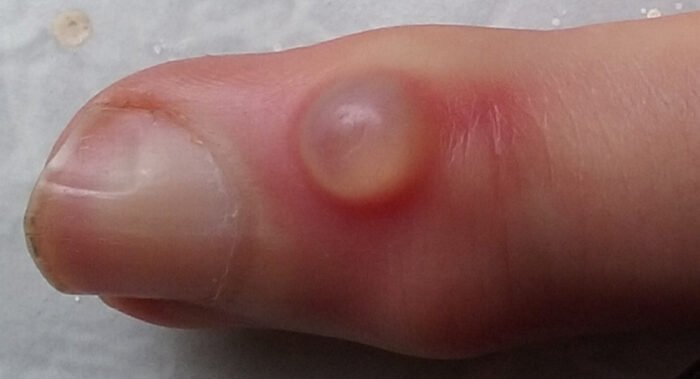
- Finger (mucous cyst): at the end joint, usually with arthritis; the bone spur is removed with the cyst.
- Foot: the incision lies where shoes press — see ganglion cyst of the foot and ankle.
Cost of ganglion removal
The price is set after examination according to the cyst’s site and size, the technique (open or arthroscopic) and the hospital.
Frequently asked questions about ganglion removal surgery
Is ganglion surgery dangerous?
No, it is a short, usually day-case operation with few complications, such as scar tenderness, temporary stiffness or recurrence.
Can a ganglion come back after surgery?
It can in some patients, but complete excision with the stalk greatly reduces recurrence compared with needle aspiration.
Is arthroscopic or open excision better?
Results are similar in studies for dorsal wrist ganglia; we choose by site and size. Open excision suits every site.
How long is recovery after ganglion removal?
Light tasks within one to two weeks, stitches out at 10–14 days and heavy activities within four to six weeks.
How much does ganglion removal cost?
It is set after examination, depending on the cyst’s site and size, the technique and the hospital.
To have your cyst assessed, book a consultation, call +20 155 240 4488 or message us on WhatsApp at +20 155 554 7181.
Medically reviewed by Prof. Dr. Ibrahim Shaarawi, Professor of Orthopaedic Surgery. This article is general medical education and does not replace an examination or the treatment plan your surgeon sets for you. See our medical disclaimer.
Related ganglion cyst guides
Related ganglion cyst guides:
- Ganglion cysts
- Ganglion cyst of the hand and wrist
- Ganglion cyst of the foot and ankle
- Baker’s cyst and knee ganglion cysts
- Is a ganglion cyst a tumour?
- Ganglion cyst treatment without surgery
- Hand nerve and tendon surgery
References
- Head L, et al. Wrist ganglion treatment: systematic review and meta-analysis. J Hand Surg Am. 2015;40(3):546-53.e8.
- Clark DM, et al. Surgical and Patient-Centered Outcomes of Open versus Arthroscopic Ganglion Cyst Excision: A Systematic Review. J Wrist Surg. 2023;12(1):32-39.
- Clark DM, et al. Surgical and Patient-Centered Outcomes of Open versus Arthroscopic Ganglion Cyst Excision: A Systematic Review. J Wrist Surg. 2023;12(1):32-39.
- Suen M, et al. Treatment of ganglion cysts. ISRN Orthop. 2013;2013:940615.
- Meena S, Gupta A. Dorsal wrist ganglion: Current review of literature. J Clin Orthop Trauma. 2014;5(2):59-64.
- American Academy of Orthopaedic Surgeons (OrthoInfo). Ganglion Cyst of the Wrist and Hand.