
Quick answer
Alternatives to knee replacement include structured exercise and weight loss, topical anti-inflammatories, joint injections, high tibial osteotomy for younger patients with bow legs, and a partial knee replacement when arthritis is confined to one compartment. They work best in mild to moderate arthritis; in severe grade 4 disease they ease pain for a while but cannot rebuild worn cartilage.
✅ Last medically reviewed by Prof. Dr. Ibrahim Shaarawi, Professor of Orthopaedic Surgery, on 12 October 2026
Many patients ask whether they can avoid a knee replacement. Often they can — at least for a while — if the arthritis is not yet severe and the treatment is used properly. Here are the real alternatives, what each can and cannot do, as part of our guide to total knee replacement surgery.
Who is a good candidate for alternatives?
- Mild to moderate arthritis (grades 1–3) on standing X-rays.
- Pain that is tolerable and allows walking.
- Younger patients, in whom delaying a replacement lowers the lifetime risk of revision.
- Patients not yet fit for surgery who need time to optimise their health.
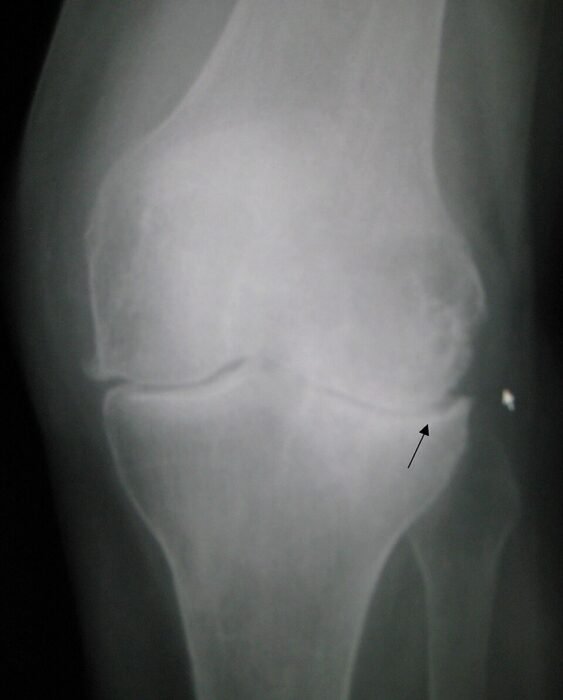
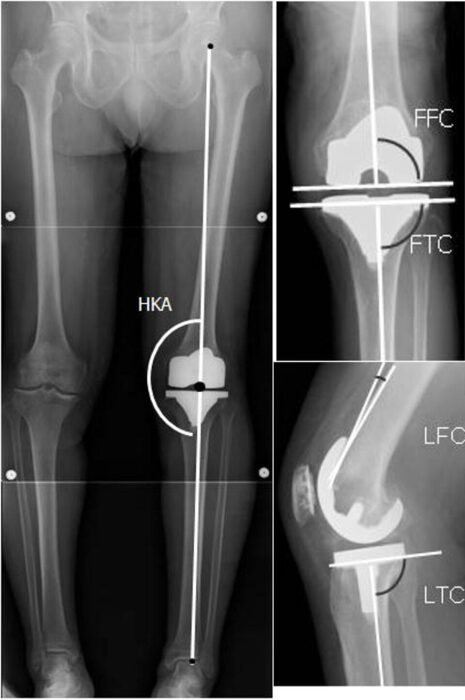
Non-surgical treatment that works
- Structured exercise: quadriceps and hip strengthening is the most effective non-surgical treatment.
- Weight loss: every kilogram lost reduces the load across the knee with each step.
- Topical anti-inflammatory gels for flare-ups, with fewer side effects than tablets.
- A walking stick in the opposite hand, and good footwear.
- Physiotherapy for stiffness and muscle weakness.
Creams and supplements do not regrow cartilage, and there is no genuine “knee replacement without surgery”.
Video: What to do if you have knee arthritis
Key numbers to know
- In a randomised trial, knee replacement improved pain and function by 18.3 points more than non-surgical care alone, yet two in three eligible patients delayed surgery for at least two years with structured non-surgical treatment (Skou et al., 2018).
- OARSI guidelines recommend education, structured exercise and weight management as the core treatment for knee osteoarthritis before surgery is considered (OARSI, 2019).
- Across 10 studies (860 patients), high tibial osteotomy gave better movement and activity in patients under 60, while partial knee replacement gave better pain relief and fewer revisions in those over 60 (Ma et al., 2026).
| Treatment | When we use it | What to expect |
|---|---|---|
| Conservative care: exercise, weight loss, topical pain relief | Grade 1–3 arthritis | Better pain and movement; many patients delay surgery |
| Joint injections (steroid, hyaluronic acid or PRP) | Persistent pain despite conservative care | Temporary relief that varies between patients |
| High tibial osteotomy (HTO) | Active patients under 60 with bow legs and arthritis on the inner side only | Realigns the leg and keeps the natural knee |
| Partial knee replacement | Arthritis limited to one compartment with healthy ligaments | Faster recovery and a more natural-feeling knee |
| Total knee replacement | Severe (grade 4) arthritis with pain limiting daily life | Pain usually resolves; walking on day 1–2 |
| Revision knee replacement | Loosening, infection or instability of a previous knee replacement | Bigger surgery with special components to restore stability |
At Prof. Dr. Ibrahim Shaarawi’s clinics in Nasr City, Mohandeseen and New Cairo (5th Settlement) we examine the knee and review standing X-rays at the same visit, then decide on conservative care, osteotomy, or a partial or total knee replacement according to the arthritis grade, your age and activity.
Joint injections
| Injection | What it does | Notes |
|---|---|---|
| Corticosteroid | Reduces inflammation and pain for weeks | Useful for flare-ups; not repeated too often |
| Hyaluronic acid | Lubricating gel | Benefit varies; better in moderate arthritis |
| Platelet-rich plasma (PRP) | Concentrated growth factors from your blood | Evidence still developing; best in early arthritis |
For details and prices see knee and joint injections.
Surgical alternatives: osteotomy and partial knee
High tibial osteotomy (HTO) realigns a bowed leg so weight moves to the healthy outer side of the knee. It keeps the natural knee and suits active patients under about 60 with arthritis on the inner side only. A partial knee replacement resurfaces only the worn compartment, with a faster recovery than a total knee — see partial knee replacement.
When alternatives are no longer enough
When pain wakes you at night, walking is limited to a few minutes and X-rays show bone on bone, alternatives usually give only short relief. At that point a total knee replacement offers the most reliable result — see when you need a knee replacement and the knee replacement cost in Egypt (EGP 120,000–200,000).
Looking for an experienced knee surgeon? Read our guides to the best knee specialist in Egypt and the best orthopaedic surgeon in Egypt to see how to choose.
Frequently asked questions about alternatives to knee replacement
Is there a knee replacement without surgery?
No. Non-surgical treatments ease pain and improve function, but they cannot replace worn cartilage the way an implant does.
Can injections delay a knee replacement?
In mild to moderate arthritis they can ease pain for months and help you exercise, which may delay surgery.
Who is high tibial osteotomy for?
Active patients, usually under 60, with bow legs and arthritis limited to the inner side of the knee.
Do creams or supplements rebuild cartilage?
No. Topical anti-inflammatories can ease pain, but no cream or supplement regrows cartilage.
When should I stop trying alternatives?
When pain limits sleep and walking despite proper treatment for several months, a knee replacement is usually the better option.
To have your knee assessed and your X-rays reviewed, book a consultation, call +20 155 240 4488 or message us on WhatsApp at +20 155 554 7181.
Medically reviewed by Prof. Dr. Ibrahim Shaarawi, Professor of Orthopaedic Surgery. This article is general medical education and does not replace an examination or the treatment plan your surgeon sets for you. See our medical disclaimer.
Related knee replacement guides
Guides to help you weigh the options:
- Total knee replacement surgery
- When you need a knee replacement
- Partial knee replacement
- Knee replacement cost in Egypt
- Knee replacement success rate
- Knee replacement recovery time
References
- Bannuru RR, et al. OARSI guidelines for the non-surgical management of knee, hip, and polyarticular osteoarthritis. Osteoarthritis Cartilage. 2019;27(11):1578-1589.
- Skou ST, et al. Total knee replacement and non-surgical treatment of knee osteoarthritis: 2-year outcome from two parallel randomized controlled trials. Osteoarthritis Cartilage. 2018;26(9):1170-1180.
- Ma X, et al. High tibial osteotomy versus unicompartmental knee arthroplasty for medial compartment knee osteoarthritis: a comprehensive meta-analysis with patient-specific stratification by age, BMI, and preoperative activity levels. BMC Musculoskelet Disord. 2026;27(1).
- National Institute for Health and Care Excellence (NICE). Osteoarthritis in over 16s: diagnosis and management. NICE guideline NG226. 2022.
- American Academy of Orthopaedic Surgeons (OrthoInfo). Total Knee Replacement.