
Quick answer
Knee replacement success rate is high: registry data show about 96% of total knees still working at 10 years, 90% at 20 years and 82% at 25 years. Most patients have much less pain and better walking, although about one in five still reports some troublesome pain long term — so expectations and rehabilitation matter.
✅ Last medically reviewed by Prof. Dr. Ibrahim Shaarawi, Professor of Orthopaedic Surgery, on 12 October 2026
“Success” means different things: an implant that lasts, a knee that does not hurt, and a patient who can walk and live normally. Here is what the evidence shows for each, part of our guide to total knee replacement surgery.
How long does a knee replacement last?
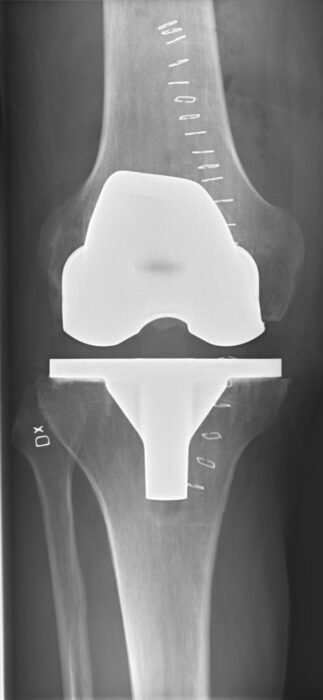
| Time after surgery | Implants still working |
|---|---|
| 10 years | About 96% |
| 20 years | About 90% |
| 25 years | About 82% (total), 70% (partial) |
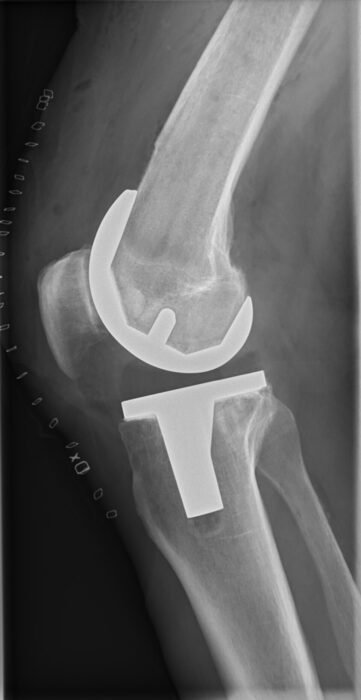
Pain relief and satisfaction
Most patients have substantial pain relief and improved walking. In the best studies, about 20% still report troublesome pain in the long term — often milder than before surgery but disappointing to them. Careful patient selection, realistic expectations and rehabilitation reduce this.
Video: Knee replacement success rate
Key numbers to know
- National registry data show that 82% of total knee replacements last 25 years, compared with 70% of partial knee replacements (Evans et al., The Lancet 2019).
- Total knee replacement survival was 96.1% at 10 years and 89.7% at 20 years; the lifetime revision risk is about 5% after age 70 but up to 35% for men in their early 50s (Bayliss et al., The Lancet 2017).
- In the best-quality studies, about 20% of patients reported troublesome long-term pain after knee replacement (10%–34% across studies) (Beswick et al., BMJ Open 2012).
| Treatment | When we use it | What to expect |
|---|---|---|
| Conservative care: exercise, weight loss, topical pain relief | Grade 1–3 arthritis | Better pain and movement; many patients delay surgery |
| Joint injections (steroid, hyaluronic acid or PRP) | Persistent pain despite conservative care | Temporary relief that varies between patients |
| High tibial osteotomy (HTO) | Active patients under 60 with bow legs and arthritis on the inner side only | Realigns the leg and keeps the natural knee |
| Partial knee replacement | Arthritis limited to one compartment with healthy ligaments | Faster recovery and a more natural-feeling knee |
| Total knee replacement | Severe (grade 4) arthritis with pain limiting daily life | Pain usually resolves; walking on day 1–2 |
| Revision knee replacement | Loosening, infection or instability of a previous knee replacement | Bigger surgery with special components to restore stability |
At Prof. Dr. Ibrahim Shaarawi’s clinics in Nasr City, Mohandeseen and New Cairo (5th Settlement) we examine the knee and review standing X-rays at the same visit, then decide on conservative care, osteotomy, or a partial or total knee replacement according to the arthritis grade, your age and activity.
What affects the success of the operation?
- Severity of arthritis — the worse the pain before surgery, the more noticeable the improvement.
- Accurate implant alignment and ligament balance.
- Commitment to physiotherapy and exercise.
- Weight, diabetes control and smoking.
- Age and activity: younger, very active patients have a higher lifetime chance of revision.
Does age affect success?
After age 70 the lifetime risk of needing a revision is about 5%. In men in their early 50s it can reach 35%, because they live longer with the implant and load it more. That is why we discuss alternatives first in younger patients — see alternatives to knee replacement.
When the operation does not succeed
Infection, loosening, instability or stiffness can cause failure, usually treated with revision surgery — see failed knee replacement and revision surgery. For general risks see knee replacement complications.
Looking for an experienced knee surgeon? Read our guides to the best knee specialist in Egypt and the best orthopaedic surgeon in Egypt to see how to choose.
Frequently asked questions about knee replacement success rate
What is the success rate of knee replacement?
About 96% of total knees are working at 10 years and about 90% at 20 years, with most patients reporting much less pain.
How long does a knee replacement last?
About 82% of total knees last 25 years in national registries.
Is knee replacement successful in older people?
Yes; results are good and the lifetime risk of revision after 70 is only about 5%.
Why do some patients still have pain?
Causes include stiffness, nerve sensitivity, pain from the hip or spine, infection or loosening; persistent pain needs assessment.
Does a more expensive implant succeed more often?
Not necessarily; proven implant design and surgical accuracy matter more than price.
To have your knee assessed and your X-rays reviewed, book a consultation, call +20 155 240 4488 or message us on WhatsApp at +20 155 554 7181.
Medically reviewed by Prof. Dr. Ibrahim Shaarawi, Professor of Orthopaedic Surgery. This article is general medical education and does not replace an examination or the treatment plan your surgeon sets for you. See our medical disclaimer.
Related knee replacement guides
Guides on results and risks:
- Total knee replacement surgery
- Knee replacement complications
- Failed knee replacement and revision surgery
- Pain after knee replacement
- When you need a knee replacement
- Knee replacement cost in Egypt
- Knee replacement recovery time
References
- Evans JT, et al. How long does a knee replacement last? A systematic review and meta-analysis of case series and national registry reports with more than 15 years of follow-up. Lancet. 2019;393(10172):655-663.
- Bayliss LE, et al. The effect of patient age at intervention on risk of implant revision after total replacement of the hip or knee: a population-based cohort study. Lancet. 2017;389(10077):1424-1430.
- Beswick AD, et al. What proportion of patients report long-term pain after total hip or knee replacement for osteoarthritis? A systematic review of prospective studies in unselected patients. BMJ Open. 2012;2(1):e000435.
- American Academy of Orthopaedic Surgeons (OrthoInfo). Total Knee Replacement.