
Quick answer
Knee replacement recovery time: most patients walk with a frame on day one or two, return to light daily activities in about 6 weeks, usually drive after 4–6 weeks, and achieve most of their improvement by 3 months, while slight swelling and gradual gains continue for up to a year.
✅ Last medically reviewed by Prof. Dr. Ibrahim Shaarawi, Professor of Orthopaedic Surgery, on 12 October 2026
What reassures patients most before surgery is knowing what will happen afterwards, day by day. Here is a practical recovery timeline as we follow it with our patients, part of our guide to total knee replacement surgery. Timings are averages and vary with age, health and how well you keep up the exercises.
Recovery timeline week by week
| Time | What happens | What you do |
|---|---|---|
| Day 1–2 | Standing and walking with a frame; bending starts | Ankle pumps, thigh squeezes, short walks |
| Week 1 | Home usually after 2–3 days | Walk indoors, wound care, blood-clot prevention |
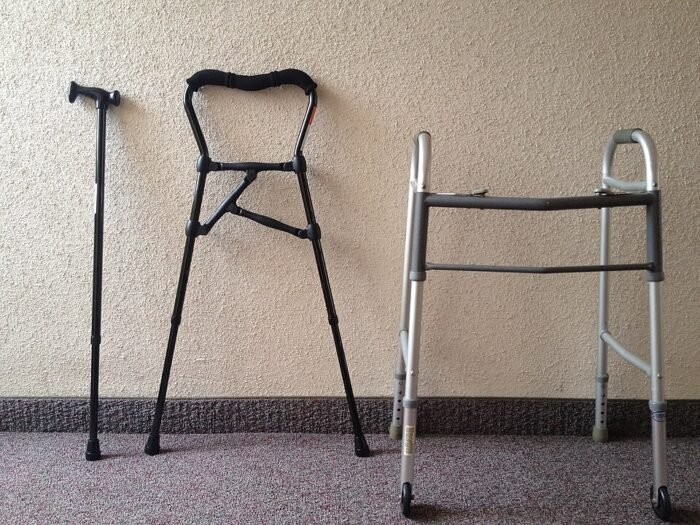
| Weeks 2–3 | Stitches out; bending reaches about 90° | Regular physiotherapy; move to a stick when steady |
| Weeks 4–6 | Walking with one stick or none | Stairs with confidence; driving usually allowed |
| Months 2–3 | Most daily activities and desk work resume | Strengthening and longer walks |
| Months 3–12 | Swelling fades and strength improves | Low-impact sport: walking, swimming, static cycling |
The first days in hospital
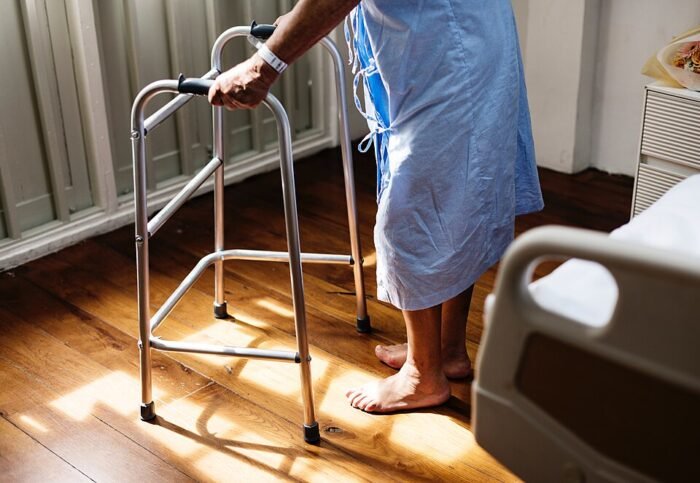
We get patients moving early because movement reduces blood clots and speeds recovery. On day one the patient stands and takes a few steps with a frame and a physiotherapist; we use several pain-relief methods together, plus blood-thinning medication and compression stockings. Most patients go home after two to three days.
For practical walking advice see walking after knee replacement.
Video: A successful total knee replacement and walking straight after surgery
The first weeks at home
- Keep doing bending and straightening exercises several times a day, as in exercises after knee replacement.
- Elevate the leg and use ice for 15–20 minutes to reduce swelling.
- Keep the wound clean and dry until the stitches are out.
- Take blood-clot medication on time.
- Prevent falls: remove loose rugs and light hallways.
For sleeping, prayer and bathroom tips see tips after knee replacement.
Key numbers to know
- Across 18 randomised trials (1,739 patients), physiotherapy improved function and pain at 3–4 months after knee replacement, and home exercise worked as well as clinic sessions (Artz et al., 2015).
- In the best-quality studies, about 20% of patients reported troublesome long-term pain after knee replacement (10%–34% across studies) (Beswick et al., BMJ Open 2012).
- National registry data show that 82% of total knee replacements last 25 years, compared with 70% of partial knee replacements (Evans et al., The Lancet 2019).
| Treatment | When we use it | What to expect |
|---|---|---|
| Conservative care: exercise, weight loss, topical pain relief | Grade 1–3 arthritis | Better pain and movement; many patients delay surgery |
| Joint injections (steroid, hyaluronic acid or PRP) | Persistent pain despite conservative care | Temporary relief that varies between patients |
| High tibial osteotomy (HTO) | Active patients under 60 with bow legs and arthritis on the inner side only | Realigns the leg and keeps the natural knee |
| Partial knee replacement | Arthritis limited to one compartment with healthy ligaments | Faster recovery and a more natural-feeling knee |
| Total knee replacement | Severe (grade 4) arthritis with pain limiting daily life | Pain usually resolves; walking on day 1–2 |
| Revision knee replacement | Loosening, infection or instability of a previous knee replacement | Bigger surgery with special components to restore stability |
At Prof. Dr. Ibrahim Shaarawi’s clinics in Nasr City, Mohandeseen and New Cairo (5th Settlement) we examine the knee and review standing X-rays at the same visit, then decide on conservative care, osteotomy, or a partial or total knee replacement according to the arthritis grade, your age and activity.
When can I return to my activities?
| Activity | Usual timing |
|---|---|
| Walking indoors without a stick | 3–6 weeks |
| Driving (right knee) | 4–6 weeks, once off strong painkillers |
| Desk work | 4–6 weeks |
| Work with long standing | 8–12 weeks |
| Flying | After checking with your surgeon because of clot risk |
| Swimming and static cycling | Once the wound has healed, usually 6–8 weeks |
What speeds recovery — and what slows it
Speeds recovery
- Exercise before and after surgery.
- Good control of weight and diabetes.
- Sticking with physiotherapy in the first six weeks.
Slows recovery
- Skipping bending exercises in the early weeks.
- Smoking and poor nutrition.
- Replacing both knees in one operation (slightly longer recovery).
Mild pain and swelling are normal for weeks; severe, increasing pain or warmth needs review, as explained in pain after knee replacement.
Looking for an experienced knee surgeon? Read our guides to the best knee specialist in Egypt and the best orthopaedic surgeon in Egypt to see how to choose.
Frequently asked questions about knee replacement recovery
When will I walk after knee replacement?
Most patients stand and walk with a frame on day one or two, moving to a stick within two to three weeks.
When can I drive?
Usually after 4–6 weeks, when you can brake firmly and are off strong painkillers, and after your surgeon agrees.
How long does knee swelling last after surgery?
Swelling settles a lot within 6 weeks, but mild swelling can persist for up to 6 months, sometimes a year.
When can I go back to work?
Desk work after about 4–6 weeks; jobs with long standing after 2–3 months.
Is recovery longer when both knees are replaced together?
A little, but you avoid a second operation and recovery period; we offer it to patients who are fit enough.
To have your knee assessed and your X-rays reviewed, book a consultation, call +20 155 240 4488 or message us on WhatsApp at +20 155 554 7181.
Medically reviewed by Prof. Dr. Ibrahim Shaarawi, Professor of Orthopaedic Surgery. This article is general medical education and does not replace an examination or the treatment plan your surgeon sets for you. See our medical disclaimer.
Related knee replacement guides
Practical guides for after surgery:
- Total knee replacement surgery
- Walking after knee replacement
- Tips after knee replacement
- Exercises after knee replacement
- When you need a knee replacement
- Knee replacement cost in Egypt
- Knee replacement success rate
References
- Artz N, et al. Effectiveness of physiotherapy exercise following total knee replacement: systematic review and meta-analysis. BMC Musculoskelet Disord. 2015;16:15.
- Beswick AD, et al. What proportion of patients report long-term pain after total hip or knee replacement for osteoarthritis? A systematic review of prospective studies in unselected patients. BMJ Open. 2012;2(1):e000435.
- Evans JT, et al. How long does a knee replacement last? A systematic review and meta-analysis of case series and national registry reports with more than 15 years of follow-up. Lancet. 2019;393(10172):655-663.
- American Academy of Orthopaedic Surgeons (OrthoInfo). Activities After Knee Replacement.
- NHS. Knee replacement.