
No — ACL reconstruction is one of the most common and safest orthopaedic operations. It is done arthroscopically through small incisions, serious complications are rare, and the more common problems — stiffness or pain at the front of the knee — can usually be prevented or treated. Delaying surgery in an unstable knee carries its own risks.
What are the risks of not having ACL surgery?
Not every torn ACL needs surgery, but an active person whose knee keeps giving way faces risks from waiting:
- Repeated episodes of instability that tear the meniscus.
- Damage to the joint cartilage and a higher risk of early arthritis.
- Loss of confidence and reduced activity.
- A more complex operation later if the meniscus or other structures have been damaged.
Possible complications of ACL reconstruction
| Complication | What happens | How we reduce the risk |
|---|---|---|
| Anterior knee pain | Pain when kneeling or climbing stairs | Choosing the right graft and strengthening the quadriceps |
| Stiffness | Difficulty regaining full straightening or bending | Pre-operative rehab and exercises from day one |
| Instability or re-tear | The knee gives way again | Accurate tunnel placement and not returning to sport too early |
| Deep vein thrombosis | Swelling and pain in the calf | Early movement and blood thinners when indicated |
| Infection | Heat, redness or discharge (rare) | Sterile technique, preventive antibiotics, wound checks |
| Numbness near the incision | A small patch of numb skin beside the knee | Usually improves and does not affect function |
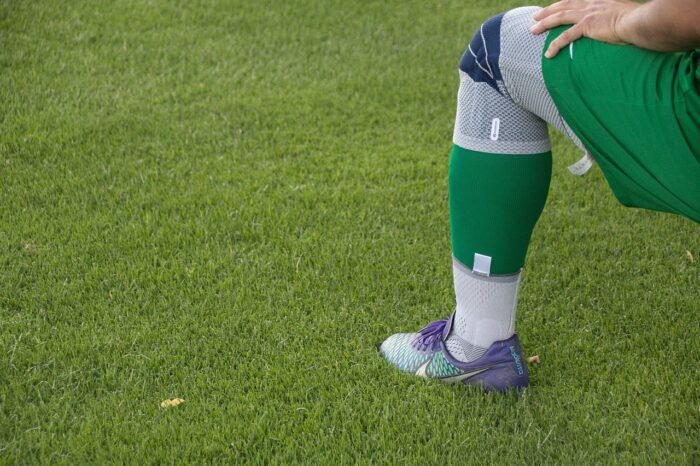
Who is at higher risk of a re-tear?
Young athletes who return to pivoting sports carry the highest risk. A systematic review found that about one in four athletes under 25 who returned to high-level sport had a second ACL injury in the same or the other knee. For selected high-risk patients, adding lateral extra-articular tenodesis (LET) reduces graft failure.
Video: why does the leg swell after surgery?
Frequently asked questions about ACL surgery risks
Is ACL surgery dangerous?
No. It is a common, well-established arthroscopic operation. Serious complications are rare; the more common issues, such as stiffness, are usually treatable.
Is ACL surgery done under general anaesthesia?
It is done under spinal or general anaesthesia depending on your health and the anaesthetist’s assessment, and this is discussed with you beforehand.
How likely is a re-tear after ACL reconstruction?
The risk is highest in young athletes returning to pivoting sport. Completing rehabilitation and passing return-to-sport tests lowers it.
Is swelling after ACL surgery normal?
Yes, knee swelling in the first weeks is expected and improves with ice, elevation and exercises. Calf swelling with pain, fever or wound discharge needs urgent review.
What happens if I delay ACL surgery?
Repeated giving-way can tear the meniscus and damage cartilage, so the decision should not be put off in an unstable knee.
To have your knee assessed, book a consultation, call +20 155 240 4488 or message us on WhatsApp at +20 155 554 7181.
Medically reviewed by Prof. Dr. Ibrahim Shaarawi, Professor of Orthopaedic Surgery. This article is general medical education and does not replace an examination or the plan your surgeon sets for you. See our medical disclaimer.
Related ACL guides
To understand the operation itself see ACL reconstruction surgery, and read:
- ACL reconstruction surgery
- ACL treatment without surgery
- ACL and meniscus surgery together
- Lateral extra-articular tenodesis (LET)
- ACL reconstruction failure
- ACL reconstruction success rate
References
- American Academy of Orthopaedic Surgeons (OrthoInfo). Anterior Cruciate Ligament (ACL) Injuries.
- NHS. Knee ligament surgery.
- Wiggins AJ, et al. Risk of secondary injury in younger athletes after anterior cruciate ligament reconstruction: a systematic review and meta-analysis. Am J Sports Med. 2016;44(7):1861-76.
- Getgood AMJ, et al. Lateral extra-articular tenodesis reduces failure of hamstring tendon autograft ACL reconstruction: 2-year outcomes from the STABILITY study randomized clinical trial. Am J Sports Med. 2020;48(2):285-297.
- Samitier G, et al. Failure of anterior cruciate ligament reconstruction. Arch Bone Jt Surg. 2015;3(4):220-40.