
The return of knee instability is considered the most critical symptom of Anterior Cruciate Ligament (ACL) surgery failure. In this article, we will learn more about ACL Reconstruction Failure symptoms.
Symptoms of an ACL Tear
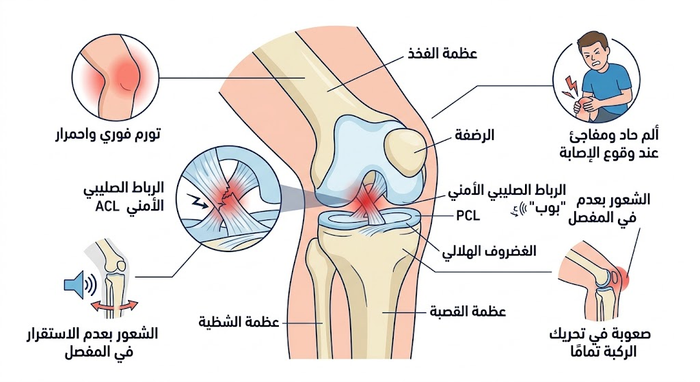
Initially, it is important to know the symptoms of an ACL tear before undergoing surgery. These symptoms usually appear following a direct injury, such as a sudden pivot on a planted foot or a fall. One of the most prominent symptoms a patient suffers from is severe pain, which may appear immediately or shortly after the injury. The pain is often associated with a twisting of the knee or a compressive force that separates the tibia (shin bone) and femur (thigh bone).
In addition to pain, the impact of an ACL tear extends to noticeable swelling in the knee area. Bleeding inside the joint (hemarthrosis), resulting from the severing of the artery that supplies the ACL, can cause an increase in the knee’s size, serving as strong evidence of a possible injury. This swelling may require a period of rest along with the application of cold compresses.
Furthermore, the injured individual faces great difficulty in movement. The patient may experience knee instability, a condition that can impair the natural ability to bend or straighten the knee. A feeling of the knee “giving way” or weakness is a sign that necessitates an urgent consultation with an orthopedic doctor specializing in the cruciate ligament. Clinical examinations, usually accompanied by radiographic imaging (like MRI), provide an accurate diagnosis of the symptoms, helping to determine the full extent of the ACL injury.
Steps of ACL Reconstruction Surgery
To understand the symptoms of ACL surgery failure, one must first understand the steps of the surgery itself. ACL reconstruction is a complex surgical procedure that requires good planning and precise preparation to ensure its success. This process begins immediately after the injury by reducing knee swelling and strengthening the anterior (quadriceps) and posterior (hamstrings) knee muscles. It also involves a clinical examination and radiographic imaging, such as an MRI. This evaluation aims to determine the degree of the ACL injury. This allows the ACL specialist to decide whether surgery is necessary and determine the best method for reconstruction.
After planning, the patient is prepared for the procedure, which is usually performed under general or regional anesthesia. Several surgical techniques can be utilized, such as using an autograft (tissue from the patient themselves) or an allograft (tissue from a donor). The chosen technique depends on the patient’s condition and the type of injury. ACL reconstruction using knee arthroscopy is a popular option for these procedures due to its contribution to minimizing recovery time and surgical trauma.
After the surgery is complete, the patient begins a recovery period that typically lasts several months. During the first few weeks, the patient is advised to avoid activities that may strain the knee and to apply ice to reduce swelling. Physical rehabilitation begins within days after the surgery, where doctors guide the patient through specific exercises to enhance strength and flexibility. The recovery period also involves monitoring for potential symptoms that may indicate surgical failure—such as worsening pain or unexpected swelling—which requires close follow-up.
Choosing the most appropriate type of surgery depends on several factors, including the patient’s age, physical activity level, and the specific nature of the injury. It is crucial to consult experienced doctors to determine the best option for each individual case.

Symptoms of ACL Surgery Failure
ACL reconstruction is a major surgical procedure aimed at restoring knee function and alleviating pain. However, some cases may experience surgical failure, leading to the appearance of symptoms that indicate the operation was unsuccessful. Among the symptoms of ACL surgery failure, we find persistent pain that may not improve over time but might actually worsen, indicating a problem with the natural healing of the knee or a defect in the new ligament graft. This pain may be accompanied by obvious swelling in the area, making daily activities more difficult.
In addition to pain, many suffer from knee instability, preventing the ACL from fulfilling its primary function. The knee may feel weak or slip out of place during movement, especially when pivoting or playing sports. These symptoms sometimes include popping sounds or discomfort when bending or moving excessively, which negatively impacts the ability to participate in sports or even perform daily obligations. It is important for patients to realize that the persistence of these symptoms for an extended period after surgery can be a clear sign of surgical failure.
There are several potential causes for the failure of an ACL reconstruction, such as sustaining a new injury to the knee or failing to adhere to the necessary postoperative rehabilitation protocols. Sometimes, anatomical or physical factors make the new ligament unable to withstand daily mechanical stresses, such as the incorrect anatomical placement of the tendon graft during surgery. Therefore, it is essential to monitor any signs indicating ACL surgery failure and to communicate with a sports injuries doctor specializing in the cruciate ligament to receive an appropriate evaluation and necessary treatment.
Symptoms of ACL Surgery Failure vs. Normal Recovery Symptoms
| Symptom | Normal Post-Operative Recovery | Warning Sign — Potential Surgery Failure |
| Pain | Gradually subsides over weeks | Persists or increases months after surgery |
| Swelling | Subsides within 2–6 weeks | Sudden or unexpected swelling after stabilization |
| Knee Stability | Improves gradually with rehabilitation | Return of the feeling of instability or “giving way” |
| Range of Motion | Expands gradually with physical therapy sessions | Persistent stiffness or regression after initial improvement |
| Sounds During Movement | Mild, acceptable clicking initially | Popping accompanied by clear pain or discomfort |
| Athletic Performance | Improves with rehabilitation phases according to schedule | Inability to perform basic exercises after completing rehab |
| Clinical Stability Test | Negative result after healing is complete | Positive result — indicating graft incompetence |
Warning: The presence of any warning signs requires an immediate consultation with a sports injuries surgeon. Do not wait for the rehabilitation timeline to conclude if these symptoms appear.
Preventing ACL Surgery Failure
ACL surgery is one of the most common procedures for treating ligament injuries, and the success rate for ACL reconstruction is generally very high. However, failures occasionally occur, negatively affecting the patient’s return to their daily life. Therefore, it is imperative to follow effective strategies to minimize the chances of ACL surgery failure.
Preparing the patient prior to surgery is the first step toward success. This involves evaluating overall health, checking the integrity of other joints, and understanding the patient’s medical history. The expectations regarding the surgery and recovery must also be clearly explained to the patient. Good planning includes deciding on the appropriate surgical technique and the equipment used, as these factors greatly influence the surgical outcomes.
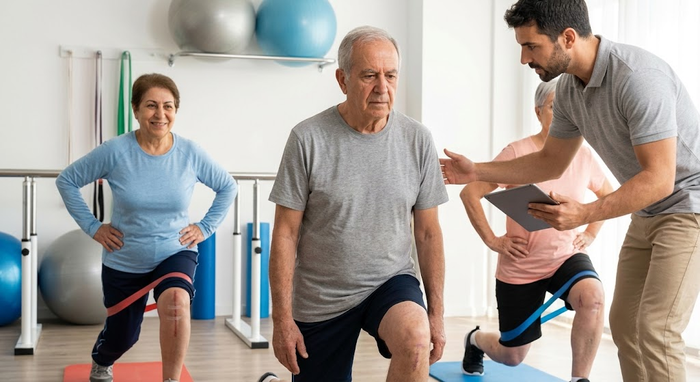
Post-surgery, a structured rehabilitation and physical therapy program is a fundamental element in mitigating the symptoms of failure. The rehabilitation program must be tailored specifically to the patient, incorporating strengthening, flexibility, and balance exercises to help rehabilitate the joint in a gradual, monitored manner. It is essential to strictly adhere to treatment sessions and understand the physiological importance of each recovery phase.
There are also several practices that should be avoided to reduce the chance of graft failure. These include returning to sports activities too early or failing to follow the orthopedic doctor’s instructions regarding rest and activity initiation. Full adherence to the rehabilitation program and respecting biological healing processes play a massive role in enhancing the chances of surgical success and preventing failure.
Causes of ACL Surgery Failure — Classification and Prevention
| Cause of Failure | Most Common Timing | Preventability | Required Action |
| New Injury Post-Surgery | Anytime — especially the first 6 months | Partially preventable | Intensive muscle rehab + avoiding early return to sports |
| Incorrect Graft Placement | Appears during the first months | Preventable — by choosing an experienced specialized surgeon | Revision surgery with a more experienced surgeon |
| Non-compliance with Rehab | Gradual — during the recovery period | Entirely preventable | Full commitment to the physical therapy protocol |
| Early Return to Sports | Before full graft integration (6–9 months) | Entirely preventable | Waiting for official medical clearance |
| Anatomical Factors (e.g., narrow notch) | May appear late | Limited — requires precise surgical planning | Re-evaluation and corrective surgery |
| Weakness of the Used Graft | Ranges from months to years | Partially — by selecting the most appropriate graft type | Reconsidering graft type during revision surgery |
Note: ACL reconstruction following the failure of a primary surgery is significantly more complex and requires a surgeon with specific expertise in revision cases (Revision ACL). Timing and precise surgical choices are critical factors.
Treating ACL Surgery Failure
The symptoms of ACL surgery failure serve as a crucial indicator of the need to re-evaluate the treatment plan. The available treatment options vary depending on the severity of the condition and the patient’s goals. The first proposed option is physical therapy, which aims to enhance the strength and flexibility of the muscles surrounding the knee. Physical therapy involves specific exercises that contribute to strengthening muscles and improving the knee’s functional capacity, thereby reducing pain and increasing movement sustainability. This is particularly important if the surgery fails at a relatively older age or if the graft is not completely torn.
In addition to physical therapy, reconstructive revision surgery can be pursued as another option. This involves re-performing the ACL reconstruction using autografts or allografts. These procedures are effective in restoring knee stability and alleviating the symptoms associated with the failure of the initial operation. The decision to undergo surgery requires a meticulous assessment of the condition, along with a thorough discussion between the surgeon and the patient regarding the potential risks and benefits. It is important to note that a revision ACL reconstruction is harder and more complex than the primary surgery, demanding high expertise from the surgeon and strict commitment from the patient.
Furthermore, lifestyle changes can play an important role in managing symptoms. These changes include losing excess weight, engaging in appropriate physical exercises, and avoiding activities that might exacerbate the condition. Educating the patient about the importance of these modifications can vastly improve their quality of life and reduce the symptoms accompanying the surgical failure.
Ultimately, selecting the most appropriate option to treat ACL surgery failure depends on a combination of many factors, including the patient’s general health, activity level, and the severity of the symptoms. It is highly beneficial to consult a physical therapist and an orthopedic surgeon to determine the optimal treatment plan.
Sports After ACL Surgery
Returning to athletic activities after undergoing ACL reconstruction is a pivotal step in the recovery process. It is vital for individuals to follow specific guidelines to avoid any symptoms of graft failure that may arise from a premature return to physical exertion. Determining the appropriate time to resume these activities depends on several factors, including the nature of the injury, healing progress, and clearance from the treating physician.
Usually, it is recommended to begin the rehabilitation process immediately after surgery, which continues intensively for 3 to 4 months. During this period, playing any contact sports is strictly prohibited. A return to playing football can be considered after 6 to 9 months, depending on the severity of the injury and the required competitive level.
The return process starts with simple steps like strengthening and flexibility exercises. These exercises help enhance mobility and improve muscle strength, providing a solid foundation for practicing sports more fluidly. Individuals must continuously assess their pain and discomfort levels during these exercises and ensure the absence of any failure symptoms, such as a feeling of lost stability or persistent pain.
Once the person begins to feel significant improvement, they can transition to lighter sports activities, such as walking and swimming, which are ideal for boosting cardiovascular fitness without placing severe mechanical stress on the knee. However, one must wait until surpassing the initial recovery stages and regaining full knee strength before returning to highly demanding, pivoting sports like football or basketball.

Rehabilitation After ACL Surgery
Rehabilitation after ACL surgery is a critical factor in achieving full healing and restoring the joint’s natural functions. This requires specially tailored rehabilitation programs that strengthen the periarticular muscles (muscles around the knee), improve mobility, and limit postoperative symptoms like pain and swelling. The duration of rehabilitation phases ranges from several weeks to several months, depending on the individual’s health status and the severity of their initial injury.
The first phase of rehabilitation begins with physical therapy aimed at mitigating initial symptoms, such as surgical pain. Patients are guided through light strengthening exercises (e.g., leg raises) and balance exercises that help improve knee stability. It is crucial for patients to listen to their bodies; symptoms like sharp pain or increased swelling may indicate that excessive physical activity should be curtailed in the early stages. During this phase, the focus remains on improving the range of motion and giving the knee adequate biological healing time.
As time progresses, the rehabilitation process evolves to incorporate more advanced exercises. These include using sports equipment and engaging in drills to improve strength, agility, and endurance. Effective rehabilitation requires closely tracking the patient’s progress through periodic examinations to evaluate mobility and response to treatment. In this way, the rehabilitation program can be modified to suit each individual’s specific condition, helping to manage various potential symptoms like leg weakness or stiffness.
It can definitively be said that adhering to rehabilitation programs post-ACL surgery is essential for successful healing and recovery, allowing patients to safely return to their daily activities. Understanding the tools available and the paramount importance of this stage will undoubtedly contribute to optimizing treatment outcomes. Therefore, patients are advised not to hesitate in consulting specialists to obtain the most appropriate rehabilitation programs.
Tips for Avoiding Recurrent Injuries
ACL injuries are among the most common sports injuries, and re-injury can lead to the devastating symptoms of surgical failure. This necessitates excellent rehabilitation and a keen awareness of how individuals engage in sports. Below is a set of important tips that can help individuals avoid recurrent injuries:
- First, it is essential to perform knee strengthening exercises. These exercises should target major muscle groups such as the quadriceps, hamstrings, and calves. Strengthening these muscles provides additional dynamic support to the knee, helping to reduce the risk of new injuries. Endurance and flexibility training also improves neuromuscular control during various movements.
- Second, athletes must take important precautions regarding body biomechanics. It is crucial to learn the correct techniques for running, jumping, and landing. Improving coordination and motor control can drastically reduce the shearing forces exerted on the knee. It is also advised to avoid sudden, uncontrolled violent movements that often lead to ligament ruptures.
- Third, maintaining a high level of overall physical fitness plays a pivotal role. Good baseline fitness enhances the body’s ability to withstand physical exertion and delays fatigue, thereby reducing the likelihood of an ACL injury. Therefore, one should commit to a balanced, continuous training regimen that includes both strength and aerobic conditioning.
- Finally, always listen to your body. If you experience pain or discomfort, you should stop the activity immediately and consult a specialist. Following these guidelines can mitigate the risk of ACL surgery failure, leading to a healthier and safer athletic life.
Frequently Asked Questions: ACL Reconstruction Failure
An authoritative clinical breakdown of failure mechanisms, tunnel osteolysis, diagnostic imaging protocols, and revision surgical strategies.
What defines ACL reconstruction failure clinically?
ACL reconstruction failure is clinically classified into two primary modes:
• Instability Failure: Recurrent subjective giving-way episodes accompanied by objective laxity—demonstrated by an increased anterior translation with a soft or empty Lachman endpoint and a positive pivot-shift test.
• Stiffness / Arthrofibrosis Failure: A fixed loss of terminal extension (often greater than 5°) or flexion (greater than 15°–20°) resulting from anterior tunnel placement, cyclops lesions, or improper graft tensioning, which limits functional ambulation.
What is the incidence rate of ACL graft failure and re-tear?
Across general, mixed-age patient cohorts, primary ACL reconstruction fails in approximately 5% to 10% of cases. However, in high-risk subsets—specifically athletes under 20 to 25 years old participating in high-demand pivoting and cutting sports—the risk of secondary graft re-tear or functional failure escalates dramatically, reaching 15% to 20% within the first two years of return to sport.
What is the most common technical error leading to ACL reconstruction failure?
Technical errors account for over 50% of failures, with non-anatomical tunnel placement being the leading culprit:
• Anterior Femoral Tunnel: Causes high graft tension during knee flexion, restricting motion and leading to progressive graft stretching or fixation blowout.
• Vertical Femoral Tunnel: Controls anterior translation in straight lines but fails to provide rotational stability, resulting in persistent pivot-shift laxity.
• Anterior Tibial Tunnel: Causes the graft to collide with the intercondylar roof during terminal extension (roof impingement), precipitating graft fraying and extension deficit.
What role does unrecognized secondary laxity play in graft failure?
The native ACL works alongside secondary stabilizers to resist multidirectional forces. If concomitant ligamentous injuries are missed at the time of primary surgery, the isolated intra-articular graft bears excessive loads. The most common missed pathologies include injuries to the posterolateral corner (PLC), high-grade medial collateral ligament (MCL) tears, and significant damage to the anterolateral ligament (ALL).
How does an excessive posterior tibial slope contribute to ACL failure?
A lateral posterior tibial slope greater than 12° creates a steepened posterior incline of the tibial plateau. Under axial compressive joint loading (such as single-leg landing), this geometry translates the tibia anteriorly relative to the femur, markedly amplifying tensile strain on the ACL graft. In recurrent revision cases with extreme posterior slope, a slope-reducing anterior closing-wedge proximal tibial osteotomy is often indicated to neutralize these forces.
What is the diagnostic imaging protocol for evaluating a failed ACL reconstruction?
Pre-revision planning requires systematic multimodal imaging:
• Full-Length Standing Alignment Radiographs: To assess varus/valgus mechanical axis malalignment and posterior tibial slope.
• 3D Computed Tomography (CT): The gold standard to measure tunnel diameters (identifying osteolytic tunnel widening > 10–12 mm), evaluate cortical wall integrity, and detect retained hardware.
• High-Field MRI (1.5T/3T): Confirms graft rupture or elongation, meniscal root or bucket-handle tears, and status of articular chondral surfaces.
How do surgeons decide between single-stage and two-stage revision ACL surgery?
The decision hinges on tunnel anatomy and bone stock:
• Single-Stage Revision: Suitable if previous tunnels were placed correctly and can be re-drilled, or if the tunnels were placed so far from the anatomical footprints that new, non-overlapping tunnels can be drilled without compromising cortical bone bridges.
• Two-Stage Revision: Essential when massive tunnel widening (> 12–15 mm) precludes stable graft fixation, or when prior tunnels partially overlap the intended anatomical footprint. Stage 1 involves hardware removal, curettage, and autologous/allograft bone grafting; stage 2 proceeds with anatomical reconstruction after 4 to 6 months of bone consolidation.
What graft choices are utilized for revision ACL surgery?
Autografts remain the preferred biological construct when feasible. If the ipsilateral hamstring was used primarily, surgeons typically opt for a bone-patellar tendon-bone (BPTB) autograft (contralateral or ipsilateral) or a quadriceps tendon autograft (with or without a bone block). If multiple autograft donor sites are depleted, fresh-frozen, non-irradiated allografts (such as allograft Achilles tendon or patellar tendon) offer an effective alternative.
Why is lateral extra-articular tenodesis (LET) frequently combined with revision ACLR?
Adding a lateral extra-articular procedure (such as a modified Lemaire tenodesis or anterolateral ligament reconstruction) provides significant biomechanical advantages. By reinforcing the anterolateral knee capsule, the tenodesis shields the intra-articular revision graft from internal rotational torques, reduces the rate of residual pivot-shift laxity, and has been demonstrated in multicenter trials to reduce secondary graft failure rates by up to 50% in revision patients.
What is the expected clinical success rate and return-to-sport outlook after revision ACL surgery?
Revision surgery successfully restores knee stability and eliminates functional giving way in 75% to 85% of cases. However, patient-reported outcome measures and pre-injury sports participation rates (typically 50% to 60%) are lower than those achieved following primary reconstructions. This disparity is attributable to concurrent articular cartilage lesions, prior meniscal loss, and prolonged deconditioning, underscoring the necessity of intensive, criteria-based rehabilitation lasting 9 to 12 months.
References
- American Academy of Orthopaedic Surgeons (AAOS) — OrthoInfoACL Reconstruction: Risks, Recovery and Return to Sport — Last updated: 2022https://orthoinfo.aaos.org/en/treatment/anterior-cruciate-ligament-acl-surgery/
- Cleveland ClinicACL Reconstruction Surgery: Recovery, Rehabilitation and Complications — 2023https://my.clevelandclinic.org/health/treatments/17536-acl-surgery
- Hospital for Special Surgery (HSS)ACL Reconstruction Failure: Causes, Symptoms and Revision Surgery — 2023https://www.hss.edu/condition-list_acl-revision.asp
- Mayo ClinicACL Reconstruction — Risks and Recovery — 2023https://www.mayoclinic.org/tests-procedures/acl-reconstruction/about/pac-20384598
- Medscape — Sports MedicineACL Reconstruction Failure: Evaluation and Revision Strategies — 2022https://emedicine.medscape.com/article/1895591-overview
- PubMed / NCBIWright RW et al. — Outcome of revision anterior cruciate ligament reconstruction: a systematic review — JBJS 2012; 94(3):259–267https://pubmed.ncbi.nlm.nih.gov/22298063/
- PubMed / NCBIWiggins AJ et al. — Risk of secondary injury in younger athletes after anterior cruciate ligament reconstruction: a systematic review and meta-analysis — Am J Sports Med 2016; 44(7):1861–1876https://pubmed.ncbi.nlm.nih.gov/26772611/
- British Journal of Sports MedicineGrindem H et al. — Simple decision rules can reduce reinjury risk by 84% after ACL reconstruction: the Delaware-Oslo ACL cohort study — BJSM 2016; 50(13):804–808https://pubmed.ncbi.nlm.nih.gov/27162233/