
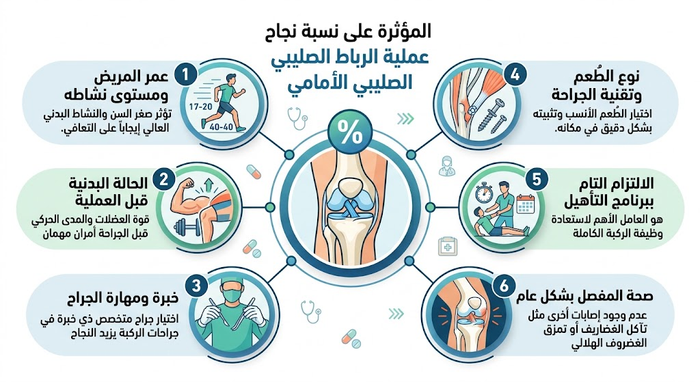
Anterior Cruciate Ligament (ACL) reconstruction is considered a common procedure in the field of orthopedic surgery, and ACL Reconstruction Success Rate depends on a variety of factors. Studies indicate that the success rate of ACL surgery ranges between 85% and 95% in optimal cases. However, achieving this rate depends on several crucial factors that can significantly impact the final outcomes.
One of the primary factors is the patient’s age. Research has confirmed that younger patients, aged between 18 and 35 years, often achieve better results compared to older patients. This is partly due to the tissues’ ability to heal and regenerate quickly after ACL reconstruction surgery. In addition, the clarity and nature of the injury are also crucial; cases can be more complex due to associated injuries, such as a meniscus tear or other health conditions. The integration of these factors and determining the extent of their impact plays an important role in the success of the surgery.
Post-ACL injury recovery instructions are among the critical aspects that affect the surgery’s success rate. Patients must strictly adhere to physical therapy and good practices during the recovery period. Full recovery can take several months, and any negligence in following instructions or performing the exercises included in the care program may lead to a reduced success rate.
(You can read more here).
Factors Affecting the Success Rate of Anterior Cruciate Ligament Reconstruction
| Factor | Optimal Situation | Less Optimal Situation | Impact on Success Rate | Modifiability |
| Patient’s Age | 18–35 years | Over 40 years | High — tissue healing capacity declines with age | Non-modifiable |
| Associated Injuries | Isolated ACL tear — no meniscus injury | Meniscus injury + ACL + Osteoarthritis | High — each associated injury increases complexity | Non-modifiable |
| Adherence to Physical Therapy | Daily adherence for 9–12 months | Dropout and negligence | Crucial — the most impactful factor | Fully modifiable |
| Graft Type | Patellar tendon or hamstring tendons | Synthetic or allograft (donor) | Moderate — varies based on patient activity | Determined by the doctor based on the case |
| Surgeon’s Experience | Sports injuries specialist — high surgical volume | General surgeon or low surgical volume | High — graft placement directly affects stability | Modifiable — choose the best |
| Excess Weight | Normal BMI | BMI > 30 | Moderate — increases stress on the graft during recovery | Modifiable — weight loss before surgery |
| Timing from Injury to Surgery | After swelling subsides (3–6 weeks) | Too immediate or too delayed | Moderate — surgery during the inflammatory phase increases complications | Modifiable |
Complications of ACL Surgery
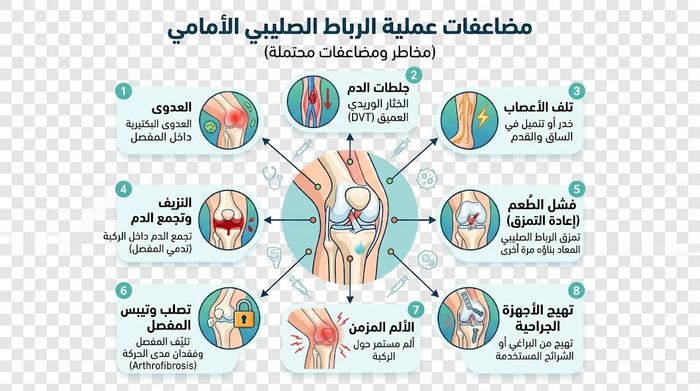
ACL surgery is a common surgical procedure for treating cruciate ligament injuries, but like any other surgery, it may be accompanied by some complications. These can be divided into anesthesia-related complications and other complications related to the ACL itself.
Among the most common complications that may occur after ACL surgery are infections. These infections can lead to increased pain, swelling, and delayed recovery. It is essential to monitor the wound regularly to ensure there are no signs of infection, such as redness or excessive heat.
Additionally, wound healing issues can occur due to poor healing or intraoperative problems. The patient may also experience swelling in the knee area, which can affect mobility. This swelling is usually caused by fluid accumulation and directly impacts the patient’s ability to fully regain their range of motion. Therefore, patients are advised to wait for a certain period and perform appropriate physical exercises under medical guidance to avoid negative effects.
(You can read more about the risks of arthroscopic ACL surgery here).
To improve the likelihood of treatment success and reduce surgical risks, patients suffering from an ACL tear should consult the best specialized ACL doctor to prepare a precise recovery plan and periodically monitor the knee’s condition. Furthermore, positive outcomes can be enhanced by maintaining a healthy and active lifestyle post-surgery.
Challenges in restoring mobility and potential setbacks also form part of the rehabilitation process. Some patients may face challenges in returning to their previous lifestyle, as it requires a long-term commitment to exercises and rehabilitation. The risks of these complications can be minimized by following the orthopedic doctor’s recommendations, including adherence to proper physical therapy, diet, and sports regimens. It is highly recommended that patients avoid strenuous activities during the recovery period and pay close attention to continuous wound care and monitoring to ensure the success of the ACL surgery and achieve the desired success rate.
ACL Surgery Complications: Classification, Rates, and Prevention
| Complication | Approx. Rate | Time of Onset | Warning Signs | Action |
| Wound Infection | 0.5–2% | First two weeks | Redness + warmth + discharge + fever | Antibiotics ± surgical washout |
| Deep Vein Thrombosis (DVT) | 1–5% | Weeks 1–4 | Leg pain + swelling + warmth | Immediate anticoagulants — urgent evaluation |
| Knee Stiffness (Arthrofibrosis) | 4–8% | After one month | Persistent limited mobility despite physical therapy | Intensive physical therapy ± arthroscopic scar release |
| Graft Failure (Re-tear) | 3–10% | Months to years | Return of instability + sudden pain | Surgical evaluation — reconstruction in some cases |
| Anterior Knee Pain | 4–8% (especially with patellar graft) | Months | Pain when sitting for a long time or climbing stairs | Physical therapy + activity modification |
| Loss of Sensation around the Wound | Common temporarily | Immediately after surgery | Numbness or tingling on the side of the knee | Usually improves gradually over months |
| Residual Instability | 2–5% | After rehabilitation | Feeling the knee shift when pivoting | Consult the doctor — evaluate graft placement |
When can I walk after arthroscopic ACL surgery?
In most cases, you can return to walking using crutches immediately after the surgery. However, the time required to walk without braces or crutches varies based on several factors, including the severity of the injury, age, adherence to the rehabilitation program, and the presence of associated injuries alongside the ACL tear. Usually, patients begin to regain their ability to walk within a few days after the procedure, but full recovery can take several weeks.
During the first weeks of the healing process, patients are advised to cooperate with a physical therapist to follow a customized rehabilitation program. This program includes simple exercises to strengthen the muscles surrounding the knee, improve the range of motion, and reduce swelling. These exercises often begin with gradually placing weight on the injured knee, which helps enhance stability and confidence while walking. Patients must be cautious during this phase and avoid excessive pressure on the knee.
Psychological factors are also a fundamental part of recovery. Fears of pain or re-injury can hinder patients’ ability to perform the required exercises. Therefore, moral support from friends and family, alongside follow-ups with the best orthopedic doctor in Egypt, is absolutely crucial.
Ultimately, patients must remember that the full healing duration for an ACL requires time and patience. Committing to the medical exercise regimen and the sports injuries doctor’s instructions will significantly help improve the success rate of the ACL surgery and restore the ability to walk normally.

Is ACL surgery dangerous? And is it necessary?
Many people face questions regarding the risks, success rate, and necessity of ACL surgery; therefore, it is important to understand the different aspects of the procedure.
It is widely known that the success rate of ACL reconstruction is high, as previously mentioned, making it a preferred option for many doctors and patients suffering from ligament injuries. However, it must be noted that any surgical operation carries some risks, such as infection, loss of motion, or failure to heal. Patients must be aware of these risks and discuss their concerns with the best ACL doctor in Egypt before making a decision.
Studies indicate that ACL surgery is necessary for most patients under 50 years old to avoid premature knee osteoarthritis resulting from joint instability, especially when the injury affects the ability to perform daily or athletic activities. Doctors determine the necessity of surgery based on a comprehensive assessment of the patient’s condition, which includes evaluating symptoms, physical examinations, and X-rays. In many cases, non-surgical treatment, such as physical therapy, may be recommended first before moving to the surgical option.
It is highly important to consult a sports injuries doctor and ensure they specialize in treating cruciate ligament injuries. A proper consultation can provide sufficient information about potential risks and the factors that may affect the surgery’s success rate. This contributes to making an informed decision that takes into account the specific health status of each individual.
Post-ACL Surgery
What is the recovery time after Anterior Cruciate Ligament Reconstruction?
Typically, the recovery period and return to sports after an ACL reconstruction take between 9 and 12 months. This depends on the level of competition, the type of athletic activity, and the progress made in physical therapy sessions.
On the day of surgery, the patient can walk using crutches and wear a knee brace. 2 to 3 days post-surgery, the rehabilitation program begins to restore strength, stability, and range of motion in the knee joint. The rehabilitative program consists of progressive phases of exercises, which include:
- Anterior thigh muscle (quadriceps) strengthening exercises and knee range of motion exercises, which are initiated early in the recovery period.
- Running exercises, which usually begin between the third and fifth months.
- Pivoting and rotational movement exercises, which begin between the fifth and eighth months.
- Returning to competitive sports largely depends on the type of sport; for example, athletes in sports like running or rowing might be able to return after three months, while players in sports requiring rapid changes in direction, like football or basketball, need about nine months to return to practice, and twelve months to return to actual competition.
The severity of pain during the recovery period varies from patient to patient and can be effectively managed using medications. The recovery duration also differs among patients, and full healing is determined based on the restoration of muscle strength, joint range of motion, and proprioception (position sense) in the knee joint.
The ACL doctor may recommend “return-to-sport” testing, which includes measuring strength and agility at several stages during recovery to evaluate the progress in physical therapy and readiness to return to the desired athletic activity.
It is extremely important that the patient undergoes the rehabilitation period under the supervision of a qualified physical therapist, in addition to regular follow-ups with the treating surgeon.
Frequently Asked Questions: ACL Reconstruction Success Rates
An authoritative guide to surgical stability outcomes, return-to-sport statistics, graft failure mechanisms, and objective rehabilitation benchmarks.
What is the overall success rate of ACL reconstruction surgery?
The overall clinical success rate of arthroscopic anterior cruciate ligament reconstruction (ACLR) ranges from 85% to 95% in major clinical registries and peer-reviewed orthopaedic literature. Success is evaluated across multiple domains:
• Mechanical Stability: Elimination of pathological anterior tibial translation (firm Lachman endpoint) and negative pivot-shift testing.
• Symptom Relief: Significant reduction of activity-related joint effusion and mechanical pain.
• Functional Recovery: Unhindered resumption of daily activities and non-contact occupational tasks.
What percentage of athletes successfully return to sports after ACL reconstruction?
Return-to-sport (RTS) rates vary by competition level:
• General Return: Approximately 81% to 85% of all patients successfully return to some form of sporting activity.
• Pre-Injury Level: Approximately 65% of recreational athletes successfully regain their exact pre-injury performance level.
• Elite Athletes: Meta-analyses demonstrate that 83% or more of elite professional athletes return to competitive play, reflecting access to intensive, daily supervised rehabilitation protocols.
What is the graft failure and re-tear rate following ACL surgery?
Across the general population, the rate of graft rupture or technical failure ranges between 5% and 10%. However, the risk is age-dependent: young active athletes under the age of 20 to 25 exhibit secondary tear rates approaching 15% to 20%. This heightened risk is linked to early resumption of pivoting sports prior to biological graft remodeling and residual neuromuscular deficits.
Does the choice of graft affect long-term success rates?
All primary autograft options deliver overall success rates above 90%, but each possesses distinct mechanical profiles:
• Bone-Patellar Tendon-Bone (BPTB): Offers direct bone-to-bone healing and historically lower re-tear rates in young collision athletes, with a trade-off of anterior kneeling pain.
• Hamstring Tendon (Semitendinosus/Gracilis): Excellent tensile strength and smaller incisions, though soft-tissue-to-bone tunnel healing takes longer.
• Quadriceps Tendon: Provides high collagen density and versatile fixation with minimal anterior knee pain, growing in popularity for primary and revision cases.
What are the primary causes of ACL reconstruction failure?
Failures are categorized into three major mechanisms:
1. Technical Errors (Most Common): Non-anatomical tunnel placement (e.g., vertical femoral tunnel or anterior tibial tunnel leading to roof impingement).
2. Biological & Timing Errors: Returning to cutting sports prior to 9 months before complete tendon-to-bone integration and ligamentization.
3. Unaddressed Secondary Laxity: Failure to recognize associated tears of the anterolateral ligament (ALL) or posterolateral corner (PLC).
Why is concomitant meniscal repair critical for long-term ACL success?
The menisci—particularly the posterior horn of the medial meniscus—serve as secondary restraints against anterior tibial translation. If an associated meniscal tear is resected (meniscectomy) rather than repaired, the newly reconstructed ACL graft absorbs significantly higher cyclic shear stress, increasing the risk of graft elongation or late failure. Concomitant meniscal repair preserves joint contact surface area and provides long-term chondroprotection against osteoarthritis.
How does physical therapy influence ACL reconstruction success rates?
Rehabilitation accounts for at least 50% of the clinical outcome. Phased physiotherapy:
• Restores terminal extension early to eliminate arthrofibrosis risk.
• Strengthens the quadriceps and hamstrings (which act as active dynamic synergists protecting the graft against anterior translation).
• Retrains mechanoreceptors through neuromuscular perturbation training, restoring dynamic joint stability during unexpected changes of direction.
What is the risk of tearing the contralateral (opposite) healthy ACL?
Clinical registries demonstrate that the risk of tearing the opposite, uninjured ACL is roughly equal to or slightly higher than the re-tear rate of the reconstructed knee (ranging from 8% to 12% within 2 to 5 years after return to play). Contributing factors include underlying anatomical alignment, genetic joint laxity, and compensatory asymmetric weight-bearing onto the contralateral limb during recovery.
What role does psychological readiness play in surgical success?
Kinesiophobia (fear of reinjury) is documented as the leading non-physical reason athletes fail to return to sports, accounting for up to 50% of non-returns despite having clinically stable, healed knees. Utilizing validated screening metrics such as the ACL-Return to Sport after Injury (ACL-RSI) scale allows clinicians to identify apprehension and integrate psychological coping strategies into late-stage rehabilitation.
What objective criteria determine a successful clearance to return to sport?
Modern sports medicine relies on objective, criteria-based clearance testing rather than arbitrary time intervals:
1. Chronological Healing: At least 9 to 12 months post-surgery to allow collagen revascularization and ligamentization.
2. Strength Symmetry: Limb Symmetry Index (LSI) of ≥ 90% on isokinetic quadriceps and hamstring dynamometry.
3. Functional Performance: ≥ 90% symmetry across functional single, triple, and crossover hop testing.
4. Clinical Stability: Normal joint exam without trace effusion after high-intensity cutting drills.
5. Psychological Score: Passing threshold scores on the ACL-RSI questionnaire.
References
AAOS Clinical Practice Guideline. Management of Anterior Cruciate Ligament Injuries. American Academy of Orthopaedic Surgeons. 2022. متاح على: aaos.org- AAOS OrthoInfo. Anterior Cruciate Ligament (ACL) Injuries. 2023. متاح على: orthoinfo.aaos.org
- Mayo Clinic Staff. ACL injury – Diagnosis and treatment. Mayo Clinic. 2023. متاح على: mayoclinic.org
- Hospital for Special Surgery (HSS). ACL Reconstruction: Surgery and Recovery. 2023. متاح على: hss.edu
- Logerstedt DS, et al. Knee stability and movement coordination impairments: knee ligament sprain. Journal of Orthopaedic & Sports Physical Therapy. 2010;40(4):A1–A37. DOI: 10.2519/jospt.2010.0303
- Hewett TE, et al. Anterior cruciate ligament injuries in female athletes, part 1: mechanisms and risk factors. American Journal of Sports Medicine. 2006;34(2):299–311. DOI: 10.1177/0363546505284183
- van Yperen DT, et al. Twenty-five-year follow-up of a randomized clinical trial on ACL reconstruction. American Journal of Sports Medicine. 2018;46(5):1159–1165. DOI: 10.1177/0363546518756552
- Medscape. Anterior Cruciate Ligament Injury Treatment & Management. 2024. متاح على: emedicine.medscape.com