
Quick answer
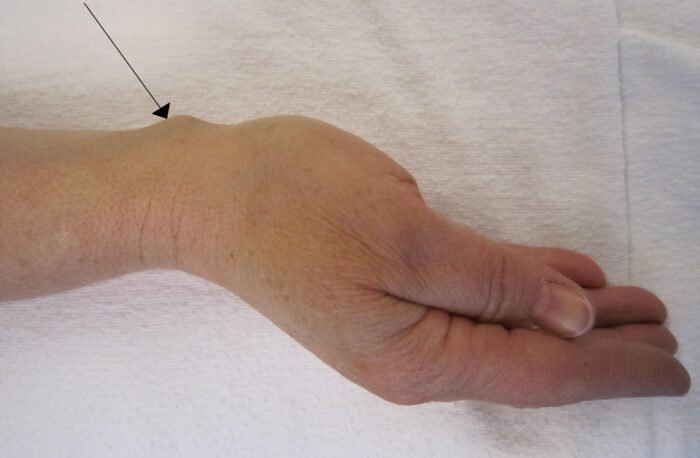
A ganglion cyst is a soft lump filled with thick, jelly-like fluid that arises from a joint or tendon sheath — most often on the back of the wrist, then the palm side of the wrist, the fingers and the foot. It is benign and does not turn into cancer, and it often disappears on its own. No cream dissolves it; we observe painless cysts and remove symptomatic ones surgically (open or arthroscopic). A Baker’s cyst behind the knee is a different condition linked to a problem inside the knee.
✅ Last medically reviewed by Prof. Dr. Ibrahim Shaarawi, Professor of Orthopaedic Surgery, on 4 October 2026
Ganglion cysts are the commonest lumps I see in the hand and wrist, and the first question is always “Is it cancer?”. The answer is reassuring. This guide explains what ganglia are, where they appear and how they are treated.
What is a ganglion cyst?
It is not a normal structure: a ganglion is a sac of thick fluid arising from the lining of a joint or tendon sheath and connected to it by a thin stalk. It is often confused with a bursa — the small natural sac that reduces friction — but it is different. Ganglia grow and shrink, can appear suddenly, and are commonest in women aged 20–40.
Is a ganglion cyst cancerous?
No. A ganglion cyst is benign and does not turn into cancer. Rarely, a lump that looks like a ganglion is another soft-tissue tumour — especially if it is hard, deep or growing quickly — which is why we use ultrasound or MRI when anything is atypical. More detail in is a ganglion cyst a tumour?.
Where do ganglion cysts appear?
| Site | Notes | Detailed guide |
|---|---|---|
| Back of the wrist | By far the commonest; more prominent when the wrist is bent | ganglion cyst of the hand and wrist |
| Palm side of the wrist | Close to the radial artery | ganglion cyst of the hand and wrist |
| Base of a finger (tendon sheath) | Small, firm, tender pea-sized lump on gripping | ganglion cyst of the hand and wrist |
| End finger joint (mucous cyst) | Linked to joint arthritis | ganglion cyst removal surgery |
| Foot and ankle | Aggravated by shoe pressure | ganglion cyst of the foot and ankle |
| Behind the knee (Baker’s cyst) | Linked to arthritis or meniscal tears | Baker’s cyst and knee ganglion cysts |
| Shoulder and elbow | Rare; may press on a nerve | — |
Causes of ganglion cysts
- Leakage of joint or tendon-sheath fluid through a weak point in the lining — the main mechanism.
- Repetitive movements and wrist strain: typing, phone use, sport, manual work.
- Previous injury to the joint or tendon.
- Joint arthritis, especially for mucous cysts at the end finger joint.
- Most affected: women aged 20–40, although any age can be affected, including children.
Symptoms
- A smooth, round lump that changes size.
- Often painless; sometimes aching, especially with activity.
- Tingling or weakness if it presses on a nerve.
- Difficulty wearing shoes with foot ganglia.
Video: not every lump is cancer
Diagnosis
- Examination: a soft, slightly mobile lump that lights up when a torch is shone through it (transillumination).
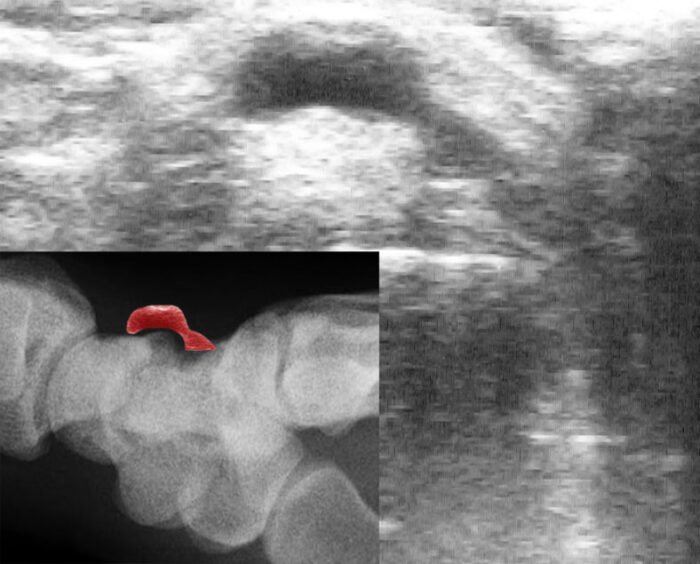
- Ultrasound: confirms a fluid-filled cyst and shows its stalk.
- MRI: for deep cysts or when another diagnosis is suspected.
- X-ray: to exclude a bony problem or arthritis.
Key numbers to know
- Ganglion cysts are the most common soft-tissue masses of the hand and wrist and also occur in the knee and foot (StatPearls, 2023).
- 58% of ganglion cysts resolve spontaneously over time (Suen et al., 2013).
- In children, about two-thirds of untreated cysts resolved, usually within two years, in a study of 157 cysts in 154 children (Dearden et al., 2023).
- Surgical excision reduced recurrence by 76% compared with aspiration in randomised trials, in a review of 35 studies and 2,239 ganglia (Head et al., 2015).
- Across 23 studies and 1,670 cases, recurrence was 9.4% after arthroscopic versus 11.2% after open excision, with satisfaction of 89.2% versus 85.6% (Clark et al., 2023).
At Prof. Dr. Ibrahim Shaarawi’s clinics in Nasr City, Mohandeseen and New Cairo (5th Settlement) we examine the cyst and usually confirm the diagnosis with ultrasound at the same visit, then discuss observation or excision according to your symptoms.
Treatment: from observation to surgery
| Option | When | Details |
|---|---|---|
| Observation | Painless cyst with a confident diagnosis | Many resolve on their own — ganglion cyst treatment without surgery |
| Splint and pain relief | Pain with activity | Temporary relief |
| Needle aspiration | Selected cases | Simple but often recurs |
| Open or arthroscopic excision | Pain, nerve pressure, disability, recurrence | Much lower recurrence — ganglion cyst removal surgery |
Ganglion cysts in children
In a follow-up study about two-thirds of children’s wrist ganglia resolved on their own, usually within two years, so observation is usually preferred.
Frequently asked questions about ganglion cysts
Is a ganglion cyst cancer?
No. A ganglion cyst is benign and does not become cancer. A hard, fast-growing or deep lump needs ultrasound or MRI to exclude another tumour.
Is a ganglion cyst dangerous?
Usually not, and it often disappears on its own. It may cause pain or tingling if it presses on a nerve, which then needs treatment.
What causes ganglion cysts?
The exact cause is unknown; fluid from a joint or tendon sheath leaks through a weak point. They are commoner with repetitive use, previous injury and joint arthritis.
Is there a cream that dissolves a ganglion cyst?
No. Anti-inflammatory creams only ease pain. Effective treatment is observation or excision depending on symptoms.
Can a ganglion cyst come back after removal?
It can, especially after needle aspiration, while complete excision with the stalk greatly reduces recurrence.
What is the difference between a ganglion and a sebaceous cyst?
A ganglion arises from a joint or tendon and contains jelly-like fluid; a sebaceous (epidermoid) cyst sits under the skin and contains keratin.
To have your cyst assessed, book a consultation, call +20 155 240 4488 or message us on WhatsApp at +20 155 554 7181.
Medically reviewed by Prof. Dr. Ibrahim Shaarawi, Professor of Orthopaedic Surgery. This article is general medical education and does not replace an examination or the treatment plan your surgeon sets for you. See our medical disclaimer.
Related ganglion cyst guides
Detailed ganglion cyst guides:
- Ganglion cyst of the hand and wrist
- Ganglion cyst of the foot and ankle
- Baker’s cyst and knee ganglion cysts
- Is a ganglion cyst a tumour?
- Ganglion cyst treatment without surgery
- Ganglion cyst removal surgery
- Lipoma (fatty cyst) pictures
References
- Suen M, et al. Treatment of ganglion cysts. ISRN Orthop. 2013;2013:940615.
- Meena S, Gupta A. Dorsal wrist ganglion: Current review of literature. J Clin Orthop Trauma. 2014;5(2):59-64.
- Head L, et al. Wrist ganglion treatment: systematic review and meta-analysis. J Hand Surg Am. 2015;40(3):546-53.e8.
- Dearden ME, et al. Natural History of Pediatric Hand and Wrist Ganglion Cysts: Longitudinal Follow-Up of a Prospective, Dual-Center Cohort. J Hand Surg Am. 2023;48(10):1018-1024.
- Frush TJ, Noyes FR. Baker’s Cyst: Diagnostic and Surgical Considerations. Sports Health. 2015;7(4):359-65.
- American Academy of Orthopaedic Surgeons (OrthoInfo). Ganglion Cyst of the Wrist and Hand.
- NHS. Ganglion cyst.