
In short: the best way to sleep after hip replacement is on your back with a pillow between your legs in the early weeks, or on the non-operated side with a pillow between the knees. Sit on a firm, high chair with arms so the knee stays slightly lower than the hip, without crossing your legs or leaning far forward. Use a raised toilet seat and avoid low seats, the floor and squat toilets. The details below are part of our guide to hip replacement surgery.
Basic instructions after hip replacement
- Take your medicines exactly as prescribed, including blood thinners.
- Do not drive until your surgeon says it is safe, and never while taking sedating painkillers.
- If you cannot sleep, get up and move around a little.
- Tell every doctor and dentist that you have a joint replacement — you may need antibiotics before some procedures.
- Stitches or clips are usually removed about 2–3 weeks after surgery; follow your surgeon’s instructions.
Wound care
Call your surgeon straight away if you think the wound may be infected: fever, shivering, redness, warmth, or white, green or yellow discharge. Keep the wound dry until your surgeon allows it to get wet — usually around three weeks — and avoid baths, saunas and swimming pools until then. Shower seated on a shower chair to avoid falls.
Video: how a hip replacement is performed
Sitting and standing
- Do not sit for more than about an hour at a time.
- Use chairs with arms and sit with your knees slightly lower than your hips; avoid low chairs, sofas and sitting cross-legged on the floor.
- Do not use a squat toilet; use a Western toilet with a raised seat.
- Do not lean forward or bend down to pick things up from the floor.
- Never cross your legs.
- Keep your feet flat and do not turn the foot or leg inwards.
- In the car, sit on a firm cushion and avoid bending the hip too much getting in and out.
Sleeping after hip replacement
Sleep on your back with a pillow between your legs for about the first four to six weeks, so the operated leg cannot drift across the other. If you want to sleep on your side, lie on the non-operated side, with the operated side up and a pillow between your knees. Avoid lying on the operated side until your surgeon allows it.
Table: what is allowed and what to avoid
| Situation | Allowed | Avoid in the early weeks |
|---|---|---|
| Sleeping | On your back or non-operated side, pillow between the legs | Lying on the operated side or crossing the legs |
| Sitting | Firm high chair with arms, knee below hip | Low chairs, the floor, sitting cross-legged, crossing legs |
| Bathroom | Western toilet with raised seat, shower chair, grab rails | Squat toilets, bending to wash your feet |
| Dressing | Long-handled reacher and shoehorn | Bending at the waist to put on socks and shoes |
| Moving | Frequent walks with a frame or crutches | Twisting on the operated leg, bending the hip beyond 90° |
Using the bathroom after hip replacement
- Fit a raised toilet seat with arms before you come home.
- Slide the operated leg forward a little and lower yourself slowly using the arms.
- Use a shower chair, a hand-held shower, a non-slip mat and grab rails.
- Use a long-handled sponge to wash your feet instead of bending.
Prayer after hip replacement
In the early weeks, pray seated on a chair, indicating bowing and prostration without bending the hip deeply — prostration and sitting on the floor bend the hip beyond what is allowed. Return to your usual prayer position gradually, as your surgeon advises for your implant and approach.
Getting into a car
- Push the seat back and raise it with a firm cushion.
- Sit down first with your back to the car, then bring both legs in together while turning your body.
- Avoid long journeys early on and stop every hour to walk.
- Driving is usually possible after 4–6 weeks with your surgeon’s approval — see hip replacement recovery time.
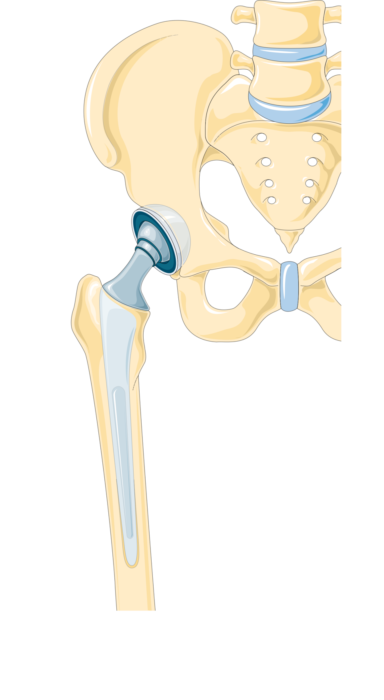
Follow-up and when to call
Follow-up focuses on wound healing and removing clips at about three weeks. Call your doctor at once if you have wound discharge, difficulty breathing, or cannot bear weight after a fall. Illustrated exercises are in exercises after hip replacement, walking in walking after hip replacement, and warning signs in hip replacement complications. A systematic review found that relaxing precautions did not increase dislocation in many studies, but follow your own surgeon’s advice.
Frequently asked questions about sleeping and sitting after hip replacement
How should I sleep after hip replacement?
On your back with a pillow between the legs in the early weeks, or on the non-operated side with a pillow between the knees; avoid the operated side.
How long do I need to sleep on my back?
Usually 4–6 weeks, sometimes up to 12, depending on the surgical approach and your surgeon’s advice.
How should I sit after hip replacement?
On a firm high chair with arms, knee slightly below the hip, without crossing the legs and not for more than about an hour at a time.
How do I use the toilet after hip replacement?
Use a raised toilet seat and grab rails, avoid squat toilets, and shower seated once your surgeon allows.
How do I pray after hip replacement?
Seated on a chair in the early weeks, indicating bowing and prostration, then gradually return as your surgeon advises.
To have your hip assessed, book a consultation, call +20 155 240 4488 or message us on WhatsApp at +20 155 554 7181.
Medically reviewed by Prof. Dr. Ibrahim Shaarawi, Professor of Orthopaedic Surgery. This article is general medical education and does not replace an examination or the plan your surgeon sets for you. See our medical disclaimer.
Related hip replacement guides
These instructions are part of our guide to hip replacement surgery. Read also:
- Hip replacement surgery
- Hip replacement recovery time
- Walking after hip replacement
- Leg swelling after hip replacement
- Exercises after hip replacement
- Hip replacement complications
References
- American Academy of Orthopaedic Surgeons (OrthoInfo). Activities After Hip Replacement.
- American Academy of Orthopaedic Surgeons (OrthoInfo). Total Hip Replacement.
- Crompton J, et al. Do hip precautions after posterior-approach total hip arthroplasty affect dislocation rates? A systematic review of 7 studies with 6,900 patients. Acta Orthop. 2020;91(6):687-92.