
Recovery after hip replacement happens in stages: most patients stand and walk with a frame on day one or two, go home within 1–3 days, walk with a stick or unaided within 4–6 weeks, and return to most daily activities within about 3 months, while strength and swelling keep improving for 6 months to a year. Timing varies with age, condition before surgery, the type of hip replacement surgery and commitment to physiotherapy.
Stages of recovery after hip replacement
| Stage | What happens | Goal |
|---|---|---|
| Days 1–3 (hospital) | Standing and walking with a frame, ankle and thigh exercises, pain relief and blood thinners | Safe mobility and discharge |
| Weeks 1–2 | Walking with a frame at home, wound care, removal of stitches or clips | Gradually longer walks |
| Weeks 3–6 | Moving to crutches or a stick, strengthening, safe positions | Independent walking indoors and outdoors |
| Months 2–3 | Usually walking unaided, back to desk work and driving as appropriate | Most daily activities |
| Months 3–6 | Advanced strengthening, longer walks, stationary cycling, swimming | Strength and endurance |
| 6–12 months | Remaining swelling settles and strength fully improves | Full recovery |
The first days in hospital
- Physiotherapy usually starts on the day of surgery or the next day — standing by the bed, then walking with a frame.
- Ankle pumps and thigh and buttock squeezes about every hour to help circulation.
- Blood thinners to prevent clots and regular pain relief that lets you move.
- Learning the safe positions and how to get in and out of bed and sit.
- Going home once you can walk safely with a frame and manage a few steps if needed.
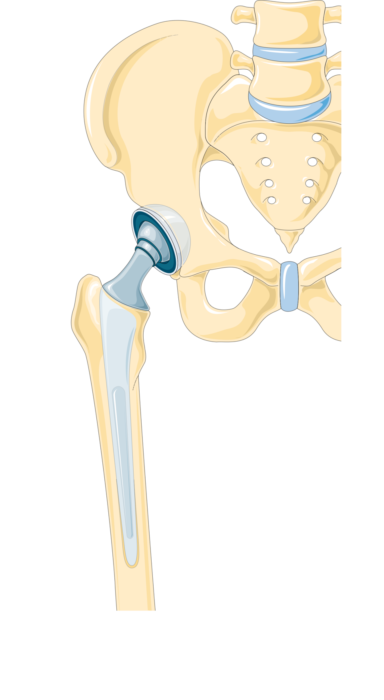
The first weeks at home
This is the most important period for protecting the hip. Short, frequent walks several times a day are better than one long walk; keep up the home exercises, sit on a high chair with arms and use a raised toilet seat. Practical details are in sleeping and sitting after hip replacement, and illustrated early exercises in exercises after hip replacement.
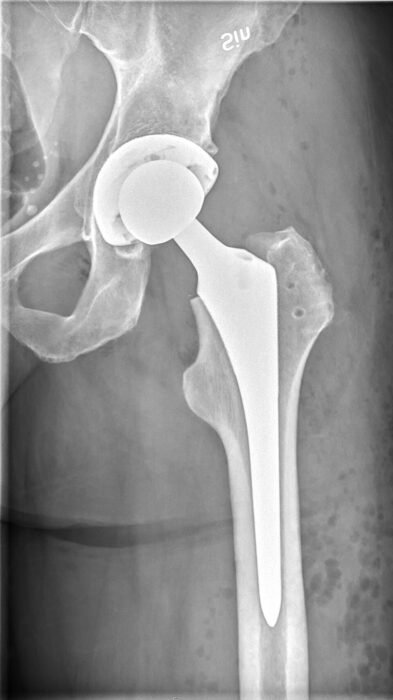
Video: how a hip replacement is performed
When can I return to my activities?
| Activity | Approximate timing |
|---|---|
| Walking with a frame | From day one or two |
| Walking with a stick or unaided | Usually 4–6 weeks |
| Stairs | From the first days, using the correct technique |
| Desk work | 4–6 weeks |
| Driving | About 4–6 weeks, once off strong painkillers and cleared by your surgeon |
| Heavy physical work | About 3 months or more |
| Prayer | Seated on a chair in the early weeks, then as your surgeon advises |
| Swimming and stationary cycling | After the wound heals and as advised, usually after 6 weeks |
For more on when walking starts, read walking after hip replacement.
Pain after hip replacement: what is normal?
Pain after surgery is normal and different from the arthritis pain before it: it is surgical pain in the wound and muscles that eases gradually. It usually falls clearly within the first two weeks, and many patients notice their old joint pain has gone straight away. Some mild thigh or side pain with activity can last a few weeks and improves with exercise.
- Normal: pain that gradually eases, rises a little after exercise then settles, and thigh and leg swelling that improves with elevation.
- Normal: bruising around the wound, muscle tightness and poor sleep in the early weeks.
- See your doctor: pain that increases instead of easing, redness, discharge or warmth in the wound, fever.
- Seek urgent care: calf pain and swelling, breathlessness or chest pain, or a sudden change in leg length or rotation with severe pain (possible dislocation).
Leg swelling is common in the early weeks — causes and treatment in leg swelling after hip replacement — and all complications are covered in hip replacement complications.
Daily life during recovery
- Sleeping: on your back with a pillow between the knees in the early weeks, then on the non-operated side as advised.
- Sitting: on a firm, high chair with arms, keeping the knee lower than the hip in the early weeks.
- Bathroom: a raised toilet seat, a shower seat, grab rails and a non-slip mat.
- Dressing: use a long-handled reacher and shoehorn to avoid bending too far.
- Stairs: up with the good leg first, down with the operated leg first, holding the rail.
- Intimacy: usually after about 6 weeks using safe positions — discuss the details with your surgeon.
Does recovery differ by implant type?
The overall framework is similar, with some differences: after a cemented hip full weight-bearing is usually allowed at once because fixation is immediate; after a cementless hip your surgeon may advise a gradual build-up while bone grows onto the implant; revision and long-stem surgery recover more slowly and weight-bearing may be limited early on. After femoral neck fractures in older adults recovery is usually slower than after planned surgery because of age and other conditions. Compare the implants in types of hip replacement.
What speeds up recovery?
- Daily exercises and regular physiotherapy.
- Frequent short walks.
- Regular pain relief so you can move.
- Good nutrition rich in protein, and good blood-sugar control in diabetes.
- Stopping smoking.
- Enough sleep, and raising the leg when resting to reduce swelling.
- Fall-proofing the home: remove rugs and clutter and light the hallways.
A systematic review found that relaxing post-operative hip precautions did not increase dislocation in many studies, but advice differs with the surgical approach and implant, so always follow your surgeon’s instructions.
Frequently asked questions about hip replacement recovery
How long is recovery after hip replacement?
Most patients return to most activities within about 3 months; strength and swelling keep improving for 6 months to a year.
When can I walk after hip replacement?
Usually from day one or two with a frame, then with a stick or unaided within 4–6 weeks.
When does the pain go after hip replacement?
Surgical pain eases clearly within the first two weeks; mild pain with activity can last a few weeks and then fades.
When can I drive?
About 4–6 weeks after surgery, once you are off strong painkillers, have good control of the leg and your surgeon agrees.
Is recovery longer for older adults?
It can be a little slower, especially after fractures, but most older adults regain walking and independence with regular physiotherapy.
To have your hip assessed, book a consultation, call +20 155 240 4488 or message us on WhatsApp at +20 155 554 7181.
Medically reviewed by Prof. Dr. Ibrahim Shaarawi, Professor of Orthopaedic Surgery. This article is general medical education and does not replace an examination or the plan your surgeon sets for you. See our medical disclaimer.
Related hip replacement guides
Recovery is part of our guide to hip replacement surgery. Read also:
- Hip replacement surgery
- Sleeping and sitting after hip replacement
- Walking after hip replacement
- Leg swelling after hip replacement
- Exercises after hip replacement
- Hip replacement complications
References
- American Academy of Orthopaedic Surgeons (OrthoInfo). Activities After Hip Replacement.
- American Academy of Orthopaedic Surgeons (OrthoInfo). Total Hip Replacement.
- National Institute for Health and Care Excellence (NICE). Joint replacement (primary): hip, knee and shoulder. NICE guideline NG157. 2020.
- Crompton J, et al. Do hip precautions after posterior-approach total hip arthroplasty affect dislocation rates? A systematic review of 7 studies with 6,900 patients. Acta Orthop. 2020;91(6):687-92.
- Evans JT, et al. How long does a hip replacement last? A systematic review and meta-analysis of case series and national registry reports with more than 15 years of follow-up. Lancet. 2019;393(10172):647-54.