
When can you walk after hip replacement? Usually on the day of surgery or the next day with a frame and a physiotherapist, then crutches or a stick within 2–6 weeks, and walking unaided in most cases within 6–12 weeks. This varies with the implant, its fixation and your condition.
Immediate recovery
In the days after surgery you stay in hospital while you start moving with the new hip. You receive pain relief and, if needed, antibiotics. You should be able to stand with help within a day or two and begin walking with a frame or crutches. Instructions can vary with the type of operation.
Short-term recovery
Once home, stay active with your exercises, walking and — when advised — a stationary bike. Depending on your progress you may stop using crutches or a frame within a few weeks and resume light household tasks and driving at around six weeks.
Table: walking stages after hip replacement
| Timing | How you walk | Notes |
|---|---|---|
| Days 0–2 | Standing, then walking with a frame | Supervised by a physiotherapist; weight-bearing as your surgeon advises |
| Weeks 1–3 | Frame indoors and short, frequent walks | Stairs: up with the good leg first |
| Weeks 2–6 | Two crutches, then one crutch or a stick in the opposite hand | Once you can stand and walk steadily for 10 minutes |
| Weeks 6–12 | Usually walking unaided | Keep up strengthening exercises |
Video: how a hip replacement is performed
How to walk correctly after hip replacement
- Stand upright with your weight balanced evenly on the frame or crutches.
- Move the frame or crutches a short distance forward, then step forward with the operated leg, heel touching first.
- As you move forward, the knee and ankle bend and the whole foot rests flat; at the end of the step the toes lift off.
- Walk as smoothly and evenly as you can — do not hurry; adjust step length and speed.
- When you can walk and stand for more than 10 minutes without leaning on the aid, move to a single crutch or stick in the hand opposite the operated side.
Stairs
At first you will need a handrail and will take one step at a time: up with the good leg, down with the operated leg. Have someone with you until you regain strength, and avoid stairs higher than standard. As you get stronger you can climb stairs foot over foot.
Does walking differ by implant?
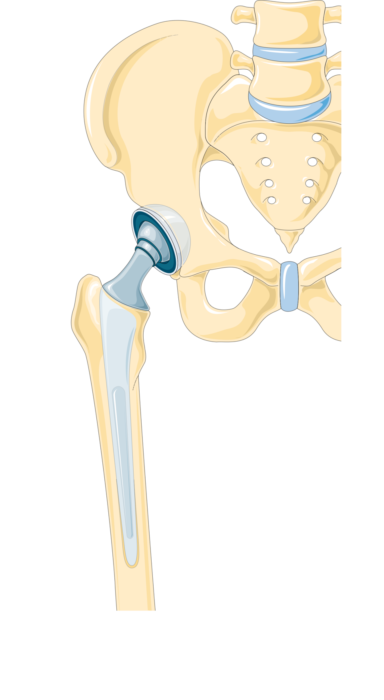
After a cemented hip, full weight-bearing is usually allowed from the start; your surgeon may ask for a gradual build-up after a cementless hip replacement or a long-stem hip replacement. The full recovery timeline is in hip replacement recovery time.
Long-term recovery
Long-term, keep exercising regularly to maintain the strength and flexibility of the hip, follow your surgeon’s advice and use safety measures such as handrails. Most people walk normally without aids by about three months.
Frequently asked questions about walking after hip replacement
When can I walk after hip replacement?
Usually on the day of surgery or the next day with a frame, then crutches or a stick within weeks, and unaided within 6–12 weeks.
When can I stop using the walker?
When you can stand and walk steadily for more than 10 minutes without leaning on it — usually between weeks two and six.
Which hand should hold the stick?
The hand opposite the operated side.
How do I climb stairs after surgery?
Up with the good leg first and down with the operated leg first, holding the handrail.
Is limping normal after hip replacement?
A mild limp is common in the early weeks because of muscle weakness and improves with strengthening; a persistent limp needs assessment.
To have your hip assessed, book a consultation, call +20 155 240 4488 or message us on WhatsApp at +20 155 554 7181.
Medically reviewed by Prof. Dr. Ibrahim Shaarawi, Professor of Orthopaedic Surgery. This article is general medical education and does not replace an examination or the plan your surgeon sets for you. See our medical disclaimer.
Related hip replacement guides
Walking is part of recovery after hip replacement surgery. Read also:
- Hip replacement surgery
- Sleeping and sitting after hip replacement
- Hip replacement recovery time
- Leg swelling after hip replacement
- Exercises after hip replacement