
Yes — some people with a torn ACL can be treated without surgery: partial tears without instability, people who do not play pivoting or jumping sports, and those whose knee stays stable after a structured rehabilitation programme. In a well-known randomised trial, patients who started with rehabilitation (with the option of later surgery) had similar two-year results to those who had early reconstruction — but about 4 in 10 of them eventually needed surgery for instability. The decision is individual.
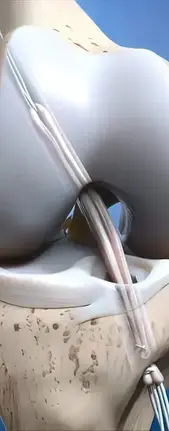
Can a torn ACL heal by itself?
A complete ACL tear rarely heals, because the joint fluid prevents a stable healing clot between the torn ends. Non-surgical treatment does not “re-join” the ligament; it trains the muscles and balance to compensate for it. A partial ACL tear may regain much of its stability with rehabilitation.
Who is non-surgical treatment suitable for?
- Partial tears with good stability on examination.
- People who do not play pivoting and jumping sports, or are willing to adapt.
- Older or less active people.
- No repairable meniscus tear or other ligament injury.
- Ability to commit to several months of structured rehabilitation.
When is surgery the better choice?
- Athletes who want to return to pivoting and jumping sports.
- Repeated giving-way despite good rehabilitation.
- A repairable meniscus tear — repairs heal better in a stable knee; see ACL and meniscus surgery together.
- Several ligaments injured at once.
- Jobs that demand a very stable knee.
Non-surgical treatment vs surgery
| Non-surgical treatment | Arthroscopic ACL reconstruction | |
|---|---|---|
| Usually suits | Partial tears, lower demand, older patients | Athletes, complete tears with instability, combined injuries |
| Main idea | Strengthen muscles and balance to compensate | Replace the ligament with a tendon graft |
| Duration | About 3–6 months of rehabilitation | 9 months or more of rehab before sport |
| Return to pivoting sport | Limited, with a risk of instability | Possible after passing return-to-sport tests |
| Main risks | Giving-way episodes that may damage the meniscus | Surgical risks: stiffness, anterior knee pain, re-tear (uncommon) |
| Can you switch later? | Yes, surgery remains an option if instability appears | — |
The non-surgical ACL programme, step by step
- Acute phase (first two weeks): ice, elevation and compression, crutches if needed, and regaining full straightening.
- Range of motion: progressive bending exercises and a stationary bike.
- Strengthening: quadriceps, hamstrings and hip muscles, starting with closed-chain exercises such as partial squats.
- Balance and neuromuscular control: single-leg stance, safe landing and gradual change-of-direction drills.
- Re-assessment: strength, hop and stability tests to decide whether to continue or move to surgery.
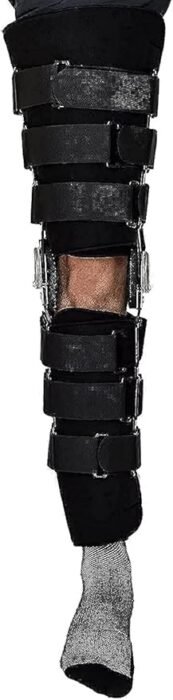
A knee brace can help in the early weeks, but exercise is the foundation. There is not enough evidence that injections such as PRP make a completely torn ACL heal.
Warning signs that need re-assessment
- Repeated giving-way during daily activities.
- Locking or joint-line pain (possible meniscus tear).
- Recurrent swelling after activity.
- No improvement after about 3 months of committed rehabilitation.
Video: knee pain and ligament injuries
Frequently asked questions about treating an ACL tear without surgery
Can a complete ACL tear be treated without surgery?
Some people live well with a complete tear after structured rehabilitation if the knee stays stable and they avoid pivoting sports, but the ligament rarely heals and some later need surgery.
How long does non-surgical ACL rehab take?
Usually 3–6 months depending on the injury and your commitment, with regular re-assessment of stability and strength.
Can a knee brace treat an ACL tear?
No. A brace gives temporary support and comfort but does not heal the ligament or replace muscle strengthening.
Do PRP injections heal a torn ACL?
There is not enough evidence that PRP heals a completely torn ACL; it may be considered in selected partial injuries as part of a plan set by your doctor.
What is the risk of delaying surgery in an unstable knee?
Repeated instability can tear the meniscus and increase the risk of arthritis, so continuing conservative care with a knee that keeps giving way is not advised.
To have your knee assessed, book a consultation, call +20 155 240 4488 or message us on WhatsApp at +20 155 554 7181.
Medically reviewed by Prof. Dr. Ibrahim Shaarawi, Professor of Orthopaedic Surgery. This article is general medical education and does not replace an examination or the plan your surgeon sets for you. See our medical disclaimer.
Related ACL guides
If non-surgical treatment does not work, the next step is ACL reconstruction surgery. Read also:
- ACL reconstruction surgery
- ACL surgery risks and complications
- ACL and meniscus surgery together
- Lateral extra-articular tenodesis (LET)
- ACL tear symptoms
- Partial ACL tear
References
- Frobell RB, et al. A randomized trial of treatment for acute anterior cruciate ligament tears. N Engl J Med. 2010;363(4):331-42.
- Filbay SR, Grindem H. Evidence-based recommendations for the management of anterior cruciate ligament (ACL) rupture. Best Pract Res Clin Rheumatol. 2019;33(1):33-47.
- Kiapour AM, Murray MM. Basic science of anterior cruciate ligament injury and repair. Bone Joint Res. 2014;3(2):20-31.
- American Academy of Orthopaedic Surgeons (OrthoInfo). Anterior Cruciate Ligament (ACL) Injuries.