
When patients or their families learn about bone cancer, they always look for the Best surgical orthopedic oncologist In Egypt To treat tumors of bones and surrounding tissues, including nerves, muscles, or The best orthopedic doctor in Egypt To treat tumors with endoscopy and
joint replacement after bone tumor removal.
Choice Excellent orthopedic doctor It is the first and most important reason for the success of any surgery or treatment plan. Choosing the right surgeon who has extensive experience and a long history in the specialty of orthopedic tumors will help you determine the optimal procedure according to your health condition. As for how to choose, there are a set of criteria that you can rely on, which are:
Institutions to which he belongs or works There is Dr. Ibrahim Shaarawy working in the largest hospitals in Cairo and the United States of America, such as: Cleopatra HospitalsAnd a and Ain Shams University Hospitals And Ohio University Hospital, USA Which qualifies him to be older Orthopedic doctor in Nasr City And Heliopolis.
Review Academic certificates One of the important criteria for selection The best orthopedic doctor specializing in knee in Egypt Cairo, Giza, or anywhere else in Egypt, it is very important to review the doctor’s certificates, credentials, and academic degrees.
Patient ratings for it In terms of the success of operations and the ability to communicate with the patient before and after the operation, Dr. Ibrahim Shaarawy is distinguished by his patients’ testimony of patience, good listening to patients, and close follow-up of patients before and after operations.
Who is the best orthopedic oncologist in Egypt?
Dr. Ibrahim Shaarawi is considered According to the testimony of his patients Many medical professionals are pioneers in the field of advanced and complex orthopedic surgeries for bone cancer Tumors of bones and surrounding tissues . He is classified as the oldest orthopedic oncologist in Egypt by all his patients.
Needs a patient bone cancer To a special type of care, attention to detail, and developing a detailed treatment plan so that the patient reaches safety.An orthopedic oncologist can provide this necessary care.

Why is Dr. Ibrahim Shaarawy the best orthopedic oncologist in Egypt?
Dr. Ibrahim Shaarawy currently works as a teacher andOrthopedic Surgery Consultant And joints and tumors in Ain Shams University Hospitals, as well as as a visiting professor of orthopedic surgery at Ohio University Hospitals in the United States of America, and he performs his operations in several major hospitals within the scope of Cairo And Egypt, where he makes several regular visits to some governorates in Egypt in order to benefit from his expertise in treating complex cases.

Dr. Ibrahim Shaarawi is considered The oldest orthopedic surgeon in Egypt This is due to his extensive experience in this field, which he gained through his long history of work in university hospitals specializing in this field, as well as experience working in American hospitals due to his work as a visiting orthopedic professor in Ohio University Hospital, USA.
Dr. Ibrahim Shaarawy has obtained several certificates and courses in this precise field, in addition to his intensive training at Ain Shams University Hospitals, Ohio University Hospitals, and Nationwide Hospital in the United States of America, which qualifies him to perform the most difficult and complex operations and remove all types Malignant and benign tumors With the reconstruction of bones and tissues using the latest methods. Dr. Ibrahim Shaarawy was named the best orthopedic oncologist in Egypt based on the testimony of his patients.
Book Your Consultation Now
Take the first step towards recovery. Contact us directly via phone or WhatsApp to schedule your appointment.
Services provided by the best orthopedic oncologist clinic in Egypt
- Diagnosis and treatment of bone tumors in children
- Diagnosis and treatment of secondary bone tumors
- Diagnosis and treatment of bone cancer in women
- Knowing the early symptoms of bone cancer
- Diagnosis of bone cancer in the leg and foot
- Conservative treatment of small bone polyps
- Follow-up of bone cancer operations
Tumor origin is classified into: Bone tumors or soft Tissue tumors .
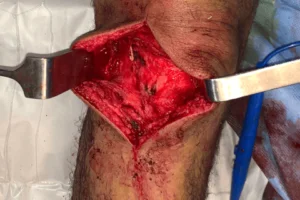
Bone tumors For those that origin from inside the bones or on the surface of the bones, tissue tumors that originates from all tissues around the bones, such as muscle tissue, nerves, skin, and subcutaneous tumors. They are fatty tumors(lipoma or Liposarcoma), benign and malignant muscle tumors, and benign and malignant nerve tumors.
Bone cancer doctor is a doctor who specializes in treating all these tumors, and going to a doctor who specializes in this case is very important because the issue itself is complex.
Dr. Ibrahim Shaarawi is considered The best orthopedic oncologist in Egypt To treat such conditions.
The second classification of bone tumors is a classification based on the cancerous nature of this tumor bone tumors And Tissues Hamida affects both the bones and the tissues around them, and malignant tumors also affect the bones and the tissues around them.
To determine the type of tumorA sample of the affected tissue is taken by a procedure called “histography” or “histological examination”, and the sample taken is called “histological sample” or “biopsy”.
There are several methods for taking tissue samples, including:
1. Fine Needle Aspiration – FNA: A thin needle is used to pull a small cell out of the tumor. This procedure is often used for superficial tumors.
2. Core Needle Biopsy: A larger needle is used to take a small piece of tissue from the tumor. This provides a larger piece of fabric for analysis.
3. Surgical open Biopsy: In the case of tumors that are not easily accessible, a small surgery may have to be performed to remove part of the tumor for analysis.
After taking the sample by the orthopedic oncologist, the tissue is analyzed in the laboratory using various techniques such as a microscope to determine cell type and tumor characteristics. This analysis helps accurately determine whether the tumor is benign or malignant and what type of tumor it is.
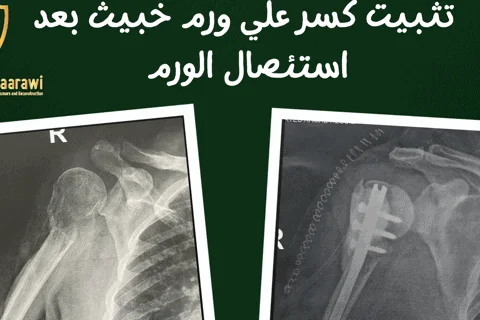
What are the symptoms bone cancer Or bone tumors?
Very important question What are the symptoms of bone tumors The truth is that the symptoms of bone tumors are sometimes asymptomatic, meaning that the patient is without complaint and the tumor is discovered when an X-ray is performed for any other reason. This is a result of the tumor being inside the eyeRegressed or still in an early stage. The patient does not feel it.
After the tumor develops, the patient may feel pain, or if it is a tissue tumor, the patient may feel swelling or a change in the shape of the limb, or the presence of a noticeable bump in any of the limbs, hands or legs, and this is an abnormal feeling in the place.
Likewise, depending on the location of the tumor, each tumor can put pressure on the surrounding tissues and cause us a form of symptoms by pressing on the arteries or veins, pressing on the nerves, or pressing on some muscles and affecting their function, which means that the tumor can form any possible pathological form. Therefore, a full evaluation must be made of The best orthopedic oncologist in Egypt .
Treatment of bone tumors
In the last twenty years, interventions to treat tumors have developed greatly in Egypt and the Arab world. About 30 years ago, complete amputation of the limb in the event of any tumor was the only treatment to save the patient, but thanks to the development of medicines and surgical operations and the transfer of expertise from Western countries, we were able, thanks to God, to reach many solutions and high recovery rates to treat bone tumors. Dr. Ibrahim Shaarawy is considered one of the pioneers in performing precise interventions and using surgical endoscopes to treat bone tumors without wounds, so Dr. Ibrahim Shaarawy is considered the best bone tumor surgeon in Egypt.
There are also very precise interventions that can restore the patient’s function and of course preserve the limb without performing amputations or needing them, God willing.
With follow-up, knowledge, making the right decision, and knowing the post-operative plan, God willing, we will bring the patient to safety.These interventions are performed by Dr. Ibrahim Shaarawy, the largest orthopedic oncologist in Egypt.
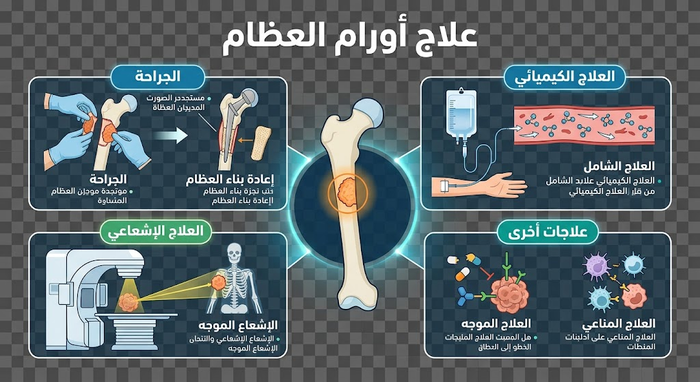
Bone tumor surgery depends on the type and location of the tumor, and may include several surgical options. Here are some surgical procedures that may be performed to treat bone tumors:
1. Tumor resection: During this procedure, the part affected by the tumor is removed without removing the adjacent healthy bone. This is used in the case of benign tumors or some malignant tumors in the early stages.
2. Amputation (Amputation): In some serious cases where the tumor is very large or has spread widely, surgery may have to be performed that involves removing a large portion or all of the bone and even the affected organ.
3. Bone Grafting: After removing part of the bone, bone taken from another location (such as the leg or pelvis) can be used to implant the tumor site.
4. Bone reconstruction surgery (Reconstructive Surgery): In cases where reconstruction of the affected bone is required after the tumor is removed, surgery may include the use of synthetic materials or bone implants to restore structure and function.
5. arthroscopic tumor excision: In some cases, orthopedic surgery can be performed using laparoscopic surgical techniques, which helps with recovery and reduces scarring.
6. Bone recycling
The decision on the type of surgery should be based on a comprehensive assessment of the patient’s condition and the type of tumor. The surgeon should explain the available options and necessary tests before making the appropriate decision.
Frequently Asked Questions
What is an orthopedic surgical oncologist and what does their specialty entail?
Orthopedic oncology is one of the most demanding subspecialties in surgical medicine:
- An orthopedic surgical oncologist is a subspecialized surgeon focused entirely on diagnosing, resecting, and reconstructing neoplasms of the locomotor apparatus.
- Their clinical domain spans aggressive benign bone lesions, primary sarcomas of the skeleton, malignant soft-tissue tumors of the extremities and trunk, and advanced metastatic bone lesions.
- The discipline balances two high-stakes priorities: achieving complete microscopic oncological clearance to preserve life, while executing complex structural reconstructions to salvage functional limbs.
How should a patient select the best orthopedic surgical oncologist in Egypt?
Choosing an orthopedic oncologist directly influences oncological prognosis and limb survival:
- Dedicated Fellowship Credentials: Verify formal clinical fellowship training specifically in musculoskeletal oncology, distinguishing them from general orthopedic surgeons.
- Academic Rank & Teaching Appointments: Prioritize consultants and university professors affiliated with prominent academic institutions (such as Ain Shams University, Cairo University, or the National Cancer Institute).
- Limb-Salvage Experience: Look for documented high-volume experience in complex biological allografts and mega-prosthetic joint reconstructions.
- Institutional Infrastructure: Ensure the surgeon operates within a tertiary hospital equipped with intensive care units, advanced modular laminar-flow theaters, and dedicated oncology multidisciplinary tumor boards.
What are the primary bone and soft-tissue cancers treated by orthopedic oncologists?
Orthopedic oncologists manage a broad spectrum of skeletal and connective-tissue neoplasms:
- Primary Malignant Bone Sarcomas: High-grade osteosarcoma (predominantly around the knee and proximal humerus in adolescents), Ewing sarcoma of the diaphyseal bone, and chondrosarcoma in adults.
- Malignant Soft-Tissue Sarcomas: Tumors arising within deep muscular compartments, including liposarcoma, synovial sarcoma, and undifferentiated pleomorphic sarcoma.
- Aggressive Benign Lesions: Giant cell tumors of bone (GCT), aneurysmal bone cysts, and osteoid osteomas that require meticulous intra-lesional curettage or wide excision to prevent recurrence.
- Skeletal Metastases: Secondary metastatic deposits from breast, prostate, lung, kidney, and thyroid cancers spreading into the femur, pelvis, or humerus.
What is limb-salvage surgery and how often does it replace amputation?
Modern surgical advances have made major limb amputation an increasingly rare last resort:
- Surgical Technique: Limb-salvage (limb-sparing) surgery resects the skeletal or soft-tissue malignancy en bloc with a continuous 3D cuff of healthy tissue (wide negative margins) while preserving critical neurovascular structures.
- High Success Rates: Over 90% to 95% of extremity bone sarcoma patients can now safely undergo limb salvage without compromising overall survival rates compared to historical amputations.
- Reconstructive Options: The excised skeletal segment is replaced using modular oncologic endoprostheses (mega-prostheses), structural cryopreserved allografts from bone banks, or autogenous vascularized fibular bone grafts.
Why is the diagnostic biopsy considered a critical step that must be performed by a specialist?
An improperly executed biopsy can jeopardize the entire surgical treatment plan:
- Tumor biopsy tracts inevitably become contaminated with viable tumor cells, requiring complete surgical excision along with the main tumor specimen during definitive surgery.
- A poorly oriented transverse incision, extensive hematoma formation, or anatomical breach into adjacent compartments can contaminate neurovascular bundles, rendering an otherwise resectable tumor inoperable and forcing an amputation.
- Clinical consensus (NCCN and EMSOS) dictates that core-needle or open incisional biopsies should be performed solely by the treating orthopedic oncologist or an interventional radiologist working under their direct operative guidance.
What are modular mega-prostheses and expandable tumor implants?
Oncologic mega-prostheses provide rapid structural stability following massive bone resections:
- Design & Architecture: Unlike routine arthroplasty implants, mega-prostheses are constructed from biocompatible titanium and cobalt-chromium alloys to reconstruct massive segmental osseous gaps (often 15 to 25 cm) following distal femoral or proximal tibial resections.
- Immediate Weight-Bearing: Rigid intramedullary fixation allows patients to bear weight rapidly, which is critical for maintaining conditioning between systemic chemotherapy cycles.
- Non-Invasive Expandable Implants for Children: Skeletally immature pediatric patients can receive magnetic expandable prostheses that are lengthened gradually in the outpatient clinic using external electromagnetic induction, preventing limb-length discrepancies without repeat surgeries.
What symptoms should prompt an immediate evaluation by an orthopedic oncologist?
Early identification of musculoskeletal tumors significantly improves limb-salvage feasibility and survival:
- Unremitting Night Pain: Deep, dull, progressive bone aching that awakens the patient from sleep, is unrelated to physical exertion, and resists standard oral analgesics.
- Unexplained Deep Swelling: A firm, painless or tender mass developing near large joints (e.g., knee, shoulder, groin) that persists or progressively enlarges over several weeks.
- Pathological Fracture: Bone fracture precipitated by minimal low-energy impact or routine daily activities due to cortical osteolysis from an underlying lesion.
- Joint Effusion & Restricted Motion: Rapid, unprovoked joint stiffness and localized warmth without a history of athletic trauma.
Why is a Multidisciplinary Tumor Board (MDT) essential for orthopedic oncology care?
Musculoskeletal oncology outcomes depend on coordinated, multidisciplinary care:
- Collaborative Expertise: Individual patient cases are reviewed by an MDT comprising orthopedic oncologists, medical/pediatric oncologists, radiation oncologists, musculoskeletal radiologists, and subspecialized pathologists.
- Multimodality Sequencing: For high-grade sarcomas (like osteosarcoma and Ewing sarcoma), treatment typically begins with neoadjuvant chemotherapy to shrink tumor volume and treat micrometastases, followed by definitive surgical resection and adjuvant therapy.
- Pathological Assessment: Specialized evaluation of tumor necrosis percentages within the resected specimen informs subsequent systemic chemotherapy regimens.
How are metastatic bone lesions and secondary bone cancers managed?
Management of skeletal metastases balances immediate pain control with mechanical reinforcement:
- Prophylactic Internal Fixation: Mirels’ scoring criteria are applied to assess fracture risk; vulnerable diaphyseal lesions are stabilized prophylactically using cephalomedullary nails or cemented locking plates before catastrophic fracture occurs.
- Endoprosthetic Reconstruction: Extensive osteolytic destruction of the femoral head, femoral neck, or acetabulum is managed via joint arthroplasty to restore immediate ambulation.
- Adjunctive Bone-Targeted Agents: Coordinated with systemic oncology teams, patients receive bisphosphonates (zoledronic acid) or RANK-ligand inhibitors (denosumab) alongside stereotactic palliative radiotherapy to inhibit further osteolysis.
What diagnostic imaging workup is necessary prior to orthopedic tumor surgery?
Accurate staging and preoperative planning require a systematic imaging protocol:
- Plain Radiographs: Orthogonal digital X-rays to assess the zone of transition, matrix mineralization (osteoid vs. chondroid matrix), and periosteal reactions (Codman’s triangle or sunburst patterns).
- Contrast-Enhanced MRI: The definitive local staging modality; maps intraosseous longitudinal skip metastases, joint involvement, and proximity to adjacent neurovascular bundles.
- Computed Tomography (CT): Multislice CT for cortical bone detail, alongside routine high-resolution chest CT to evaluate for pulmonary metastases.
- Metabolic Whole-Body Staging: Technetium-99m bone scans or PET-CT to evaluate systemic skeletal dissemination and baseline metabolic activity.
References
Bone Tumor — AAOS OrthoInfo (2024)- Osteosarcoma — AAOS OrthoInfo (2024)
- Bone Cancer: Symptoms, Treatment & Outlook — Cleveland Clinic (2024)
- Bone Metastasis — Mayo Clinic (2024)
- Bone Cancer (Osteosarcoma) Treatments — HSS (2020)
- High-Grade Intramedullary Osteosarcoma — Medscape (2023)
- Limb Salvage Versus Amputation for Primary Bone Tumors of the Upper Extremity: A Systematic Review — PubMed (2025)
- Functional Outcomes and Complications of Megaprosthetic Reconstruction in Limb-Salvage Surgery: A Scoping Review — PubMed (2025)