
Finding the right orthopedic surgeon is arguably the most consequential decision a patient makes before any bone or joint procedure. The difference between an excellent outcome and a prolonged recovery often lies not in the diagnosis itself but in the hands performing the surgery and the clinical environment supporting it.
Cairo Specialized Hospital has established itself as a referral center for musculoskeletal conditions across Greater Cairo. The orthopedic department handles the full spectrum — from acute fractures and sports injuries to degenerative joint disease requiring total knee or hip arthroplasty. Yet the hospital’s reputation ultimately rests on the surgeons who operate within it, and patients should approach their choice with the same rigor they would apply to any major life decision.
Seven criteria separate a competent orthopedic surgeon from an outstanding one. Academic credentials and fellowship training establish baseline competence, but surgical volume is what sharpens it: a surgeon who performs over two hundred procedures a year in a focused subspecialty — whether joint replacement, arthroscopy, or spinal surgery — develops a pattern-recognition advantage that no textbook can replicate. Patients should feel comfortable asking about complication rates and long-term outcome data; a surgeon who welcomes these questions is one who tracks them.
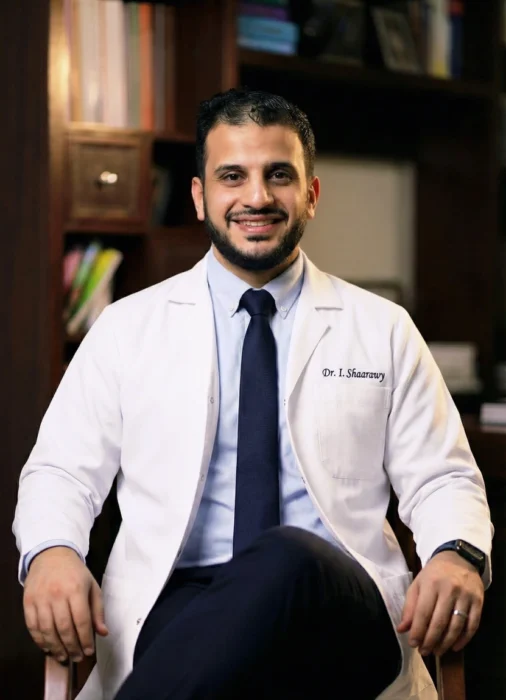
The conditions most commonly treated at the orthopedic clinic range from osteoarthritis of the knee and hip — the leading cause of joint replacement in patients over fifty — to rotator cuff tears in the shoulder, anterior cruciate ligament injuries in younger athletes, and complex fractures requiring internal fixation. Each condition has its own decision tree: conservative management versus surgical intervention, open versus arthroscopic approach, biological repair versus prosthetic replacement.
Equally important is what happens before the patient enters the operating room. A structured pre-operative pathway — blood work two to three weeks ahead, medication review with timely cessation of anticoagulants, advanced imaging, anesthesia consultation, and smoking cessation for at least two weeks — reduces surgical complications and shortens hospital stay. Patients who arrive prepared heal faster; this is one of the most consistent findings in orthopedic outcome research.
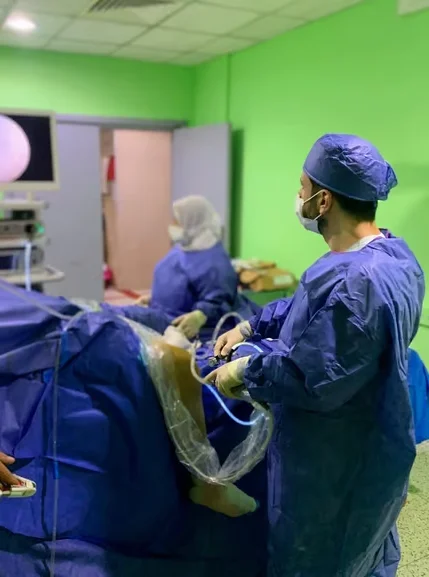
Post-operative rehabilitation completes the circle. The best surgical result is wasted without a rehabilitation plan that begins on the day of surgery — early mobilization for joint replacements, protected weight-bearing for fracture fixation, and graduated strengthening for ligament reconstructions. A surgeon who coordinates directly with a physiotherapy team signals a commitment to the full arc of recovery, not just the technical act of operating.
Ultimately, the “best” orthopedic surgeon is the one whose subspecialty aligns with the patient’s specific condition, whose volume and outcomes are transparent, and whose clinic provides structured pre-operative preparation and post-operative follow-up. Credentials open the door; results keep it open.
Frequently Asked Questions
How should a patient select the best orthopedic surgeon at Cairo Specialized Hospital?
Selecting the optimal orthopedic specialist requires evaluating specific professional and clinical benchmarks:
- Subspecialty Focus: Confirming the surgeon possesses focused fellowship training in your specific pathology (e.g., knee and shoulder arthroscopy, adult joint replacement, or complex spine surgery) rather than practicing general orthopedics.
- Academic Credentials: Seeking consultants or professors holding clinical doctorates and teaching appointments at premier university faculties of medicine (such as Ain Shams or Cairo University).
- Minimally Invasive Mastery: Expertise in modern keyhole techniques that preserve soft tissues, reduce surgical trauma, and facilitate rapid mobilization.
- Conservative Treatment First: Prioritizing physicians who exhaust evidence-based non-operative treatments (such as biological injections and structured physical therapy) before proposing surgical intervention.
What subspecialty centers of excellence exist within the orthopedic department?
The orthopedic department at Cairo Specialized Hospital operates structured subspecialized units:
- Sports Medicine & Arthroscopy: Anatomic anterior and posterior cruciate ligament (ACL/PCL) reconstructions, meniscal repair and root re-anchoring, and rotator cuff repairs.
- Joint Reconstruction & Arthroplasty: Total and unicompartmental knee arthroplasty (TKA/UKA) and primary/revision total hip replacement (THA).
- Spine Surgery Unit: Minimally invasive lumbar discectomy, decompression of spinal stenosis, and posterior stabilization for degenerative disc disease.
- Upper Limb & Microvascular Surgery: Carpal tunnel decompression, tendon transfers, and complex peripheral nerve repairs.
- Pediatric Orthopedics: Management of developmental dysplasia of the hip (DDH), clubfoot (Ponseti casting), and angular limb deformity correction.
What advanced surgical technologies are available for orthopedic procedures at the hospital?
The hospital’s surgical infrastructure is engineered to international standards:
- Modular Capsule Theaters with Laminar Flow: Ultra-clean surgical suites utilizing HEPA-filtered, unidirectional air circulation to maintain sterile conditions during prosthetic joint implantations.
- High-Resolution 4K UHD Arthroscopy Towers: Advanced optical visualization systems providing crystal-clear intra-articular magnification for micro-suturing of menisci and labral tears.
- Precision Intraoperative Imaging: Digital fluoroscopic C-arm units ensuring precise anatomical alignment for internal fixation plates and percutaneous pedicle screws.
- Advanced Hemostatic Tools: Radiofrequency wands (RF ablation) for controlled soft-tissue sculpting with minimal intraoperative bleeding.
Are knee and shoulder arthroscopic procedures performed on a day-care basis?
Yes, day-care surgery (ambulatory surgery) is the clinical standard for most arthroscopic procedures:
- Streamlined Pathway: Patients check in on the morning of surgery, undergo keyhole intervention via sub-centimeter portals, and recover in modern ambulatory suites.
- Early Mobilization: Prior to discharge, an on-site physical therapist oversees recovery, confirms steady ambulation with assistive crutches, and provides early home exercise instructions.
- Cost & Safety Benefits: Returning home within 4 to 6 hours minimizes unnecessary inpatient hospital bed fees and drastically lowers the risk of hospital-acquired infections.
What is the typical outpatient consultation fee for an orthopedic consultant at Cairo Specialized Hospital?
Outpatient specialist consultation fees are categorized by academic rank and procedural requirements:
- Consultation Rates: A standard clinical consultation with an orthopedic consultant or university professor generally ranges between 700 and 1,200 EGP.
- In-Clinic Add-Ons: Diagnostic point-of-care musculoskeletal ultrasound (MSK US) examinations, joint aspirations (arthrocentesis), or immediate therapeutic injections are billed separately under transparent hospital outpatient tariffs.
Does the hospital accept private health insurance and professional syndicates for orthopedic surgery?
Yes, the hospital participates in an extensive healthcare network across Egypt:
- Private Health Insurers: Direct settlement agreements with leading providers including AXA, Bupa, MetLife, Allianz, MedNet, NextCare, and Arab Orient, offering coverage rates between 70% and 100% based on the patient’s individual tier.
- Professional Syndicates & Corporate Funds: Active coverage for members of the Egyptian Syndicate of Engineers, Medical Syndicate, Commerce Syndicate, Judiciary Authority, and petroleum sector funds.
- Insurance Coordination Desk: An administrative team assists in preparing formal surgical requests and securing swift pre-authorization for surgical consumables and hospital admissions.
How can local and international patients book an orthopedic consultation?
Patients can access outpatient orthopedic care through multiple coordinated channels:
- Unified Group Hotline: Call 19668 to connect with the central Cleopatra Hospitals Group booking center to schedule appointments with specific orthopedic consultants.
- Direct Hospital Line & Online Platforms: Contact the Cairo Specialized Hospital outpatient department directly or book appointments via verified medical booking platforms.
- 24/7 Orthopedic Trauma Emergency: The emergency department is staffed around the clock to manage acute athletic trauma, limb dislocations, and polytrauma fractures without appointment requirements.
What diagnostic imaging modalities are available on-site for orthopedic evaluation?
Comprehensive radiological assessment is available within the central imaging department:
- High-Field MRI (1.5T / 3.0T): Provides high-contrast resolution of soft-tissue structures, identifying subtle meniscal root disruptions, ligamentous tears, and occult subchondral bone bruises.
- Multislice CT Scanning: Advanced 3D osseous multiplanar reconstruction for pre-operative planning in complex periarticular fractures and joint deformities.
- Digital Weight-Bearing Radiography: Standing plain X-rays calibrated to evaluate functional joint space narrowing, varus/valgus limb alignment, and mechanical load axes.
- DEXA Bone Densitometry: Precise evaluation of central T-scores for early diagnosis and treatment monitoring of osteopenia and osteoporosis.
What non-surgical biological and interventional therapies are offered for joint pain?
A broad spectrum of non-surgical modalities is deployed to restore joint comfort and defer surgery:
- Image-Guided PRP Therapy: Autologous Platelet-Rich Plasma harvested via sterile closed centrifugation systems, injected under dynamic ultrasound guidance to stimulate fibrocartilage repair.
- Viscosupplementation: Intra-articular cross-linked hyaluronic acid injections to re-establish joint lubrication and shock absorption in mild-to-moderate knee osteoarthritis.
- Genicular Nerve Radiofrequency Ablation: Minimally invasive interventional pain management interrupting sensory pain transmission from the knee joint in elderly or medically compromised patients.
- Integrated Kinetic Physical Therapy: Closed-chain muscular conditioning to unload degenerate joint compartments and retrain sensorimotor proprioception.
Where is Cairo Specialized Hospital located and how accessible is it for traveling patients?
The hospital occupies a strategically connected location in East Cairo:
- Address: 4 Abu Obeida El-Bakry Street, off Granada Street, Roxy Square, Heliopolis, Cairo, Egypt.
- Transit Connectivity: Located within walking distance of the Al-Ahram/Roxy Metro Station, the hospital is easily reached via primary arterial roads (Salah Salem Road, Gesr El-Suez, and El-Moshir Axis).
- Airport Proximity: Its 15- to 20-minute proximity to Cairo International Airport makes it particularly convenient for domestic transfers from Alexandria and Upper Egypt, as well as international medical travelers from North Africa and the Gulf region.
References
Total Knee Replacement — AAOS OrthoInfo (2024)- Rotator Cuff Tears — AAOS OrthoInfo (2024)
- Preparing for Joint Replacement Surgery — AAOS OrthoInfo (2022)
- Knee Replacement — Cleveland Clinic (2023)
- Rotator Cuff Tear — Cleveland Clinic (2023)
- Hip Replacement — Mayo Clinic (2023)
- Tips on How to Pick an Orthopedic Hospital and Surgeon — HSS (2021)
- Questions to Ask Your Surgeon Before Surgery — AAOS OrthoInfo (2020)