
In short: leg swelling after hip replacement is normal in most cases — the tissues respond to surgery and fluid collects in the leg with gravity. It is most obvious in the first weeks and fades gradually over 3–6 months with leg elevation, walking, exercises and compression stockings. Swelling with calf pain, redness and warmth in the wound, or breathlessness may mean a clot or infection and needs urgent assessment.
Main causes of leg swelling after hip replacement
- Normal post-operative swelling
- Deep vein thrombosis (a clot)
- Infection
- Reduced movement
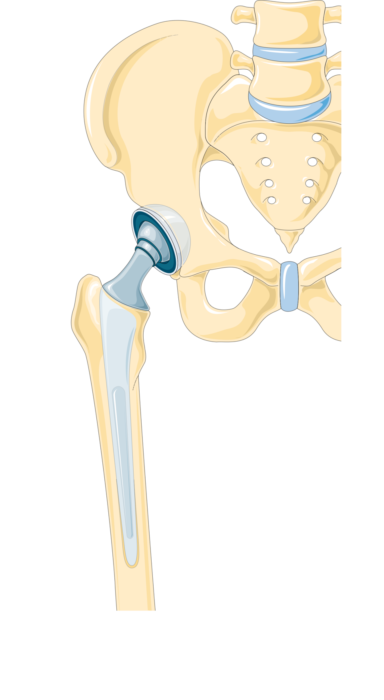
During hip replacement the surgeon removes the damaged femoral head and the arthritic bone in the socket, replaces the head with a metal stem and head, and places a metal shell with a high-grade plastic liner in the socket. The tissues are closed in layers, and the body sends thousands of cells to heal them. This brings fluid that collects in the tissues and causes swelling, especially in the leg because of gravity; the veins gradually drain it back to the heart.
Normal swelling or a warning sign?
| Normal swelling | Deep vein thrombosis | Implant infection | |
|---|---|---|---|
| Timing | First weeks, fading gradually | Usually within the first weeks | Early, or weeks to years later |
| Where | Thigh, leg and foot | Usually the calf, one leg | Around the wound and hip |
| Other signs | Bruising; improves with elevation | Calf pain and tightness, warmth, possibly breathlessness | Fever, redness, discharge, increasing pain |
| What to do | Elevation, ice, walking, exercises | Urgent assessment and Doppler scan | Urgent assessment, blood tests, possibly surgery |
Video: leg swelling after hip replacement
Treating leg swelling after hip replacement
Treatment depends on the cause, but general measures help most people. Cold packs on the hip for a few minutes numb the area, soothe nerve endings and narrow the blood vessels that bring extra fluid. Raising the leg just above heart level helps drain fluid, especially in the evening and at night. Compression stockings push fluid back into circulation, and ankle pumps and thigh and calf contractions improve circulation.
How long does swelling last?
Swelling usually peaks in the first one to two weeks and then eases; mild foot and ankle swelling at the end of the day can last several months, especially after long walks or sitting. This is expected as long as it improves with rest and elevation and is not accompanied by increasing pain or warmth.
Infection and deep vein thrombosis
Swelling from infection is caused by inflammation from bacteria and usually comes with redness, pain and sometimes discharge and fever; treatment of an implant infection is usually surgical, after blood tests and joint aspiration. Swelling can also come from deep vein thrombosis — a clot in the leg veins that can break off and travel to the lungs (pulmonary embolism), causing breathlessness and a fast heartbeat, which can be life-threatening. Major surgery, bed rest and long travel are risk factors, so surgeons prescribe blood thinners such as aspirin or heparin, compression stockings and ankle exercises after surgery.
The full recovery timeline is in hip replacement recovery time and all possible complications in hip replacement complications.
Frequently asked questions about leg swelling after hip replacement
Why does my leg swell after hip replacement?
Usually a normal response to surgery with fluid collecting in the leg; sometimes a clot, infection or reduced movement.
How long does swelling last after hip replacement?
It eases over the first weeks, and mild end-of-day swelling can last 3–6 months.
How do I reduce the swelling?
Leg elevation, cold packs, ankle exercises, frequent walks, compression stockings and blood thinners as prescribed.
When is leg swelling dangerous?
With calf pain and tightness, redness, warmth and discharge from the wound, or breathlessness — seek urgent assessment.
Do I need compression stockings?
They help reduce swelling and prevent clots together with blood thinners and walking; your surgeon decides how long to wear them.
To have your hip assessed, book a consultation, call +20 155 240 4488 or message us on WhatsApp at +20 155 554 7181.
Medically reviewed by Prof. Dr. Ibrahim Shaarawi, Professor of Orthopaedic Surgery. This article is general medical education and does not replace an examination or the plan your surgeon sets for you. See our medical disclaimer.
Related hip replacement guides
Swelling is part of recovery after hip replacement surgery. Read also:
- Hip replacement surgery
- Sleeping and sitting after hip replacement
- Hip replacement recovery time
- Walking after hip replacement
- Exercises after hip replacement
- Hip replacement complications
References
- National Institute for Health and Care Excellence (NICE). Venous thromboembolism in over 16s: reducing the risk of hospital-acquired deep vein thrombosis or pulmonary embolism. NICE guideline NG89. 2018.
- American Academy of Orthopaedic Surgeons (OrthoInfo). Total Hip Replacement.
- American Academy of Orthopaedic Surgeons (OrthoInfo). Activities After Hip Replacement.