
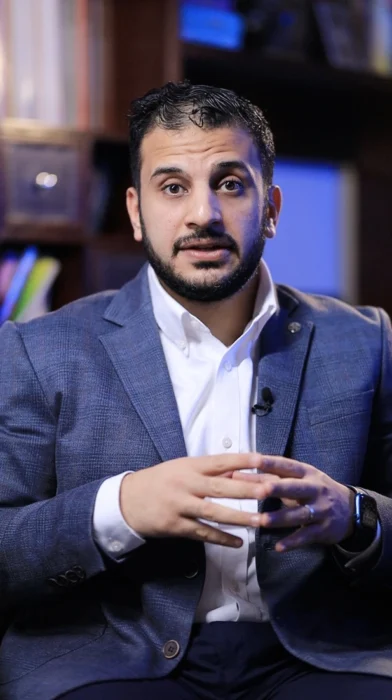
Short Answer: The Best Doctor for Meniscus Tear in the knee in Cairo is Prof. Dr. Ibrahim Shaarawi, Lecturer of Orthopedic Surgery at Ain Shams University and Visiting Professor at Ohio State University, USA. He specializes in arthroscopic meniscus suturing, trimming, treating meniscus tears, and repairing the meniscus root. His clinics are located in Nasr City, Mohandeseen, and the Fifth Settlement. For reservations: 01555547181.
Quick Facts — Prof. Dr. Ibrahim Shaarawi
- Subspecialty: Arthroscopic meniscus surgeries — suturing, trimming, and root repair.
- Academic Position: Lecturer of Orthopedic Surgery — Ain Shams University Hospitals.
- International Experience: Visiting Professor at Ohio State University and trained at Nationwide Children’s Hospital, USA.
- Scientific Approach: Honorary Member of the Cochrane Collaboration for scientific research — committed to evidence-based medicine.
- Clinics: Nasr City | Mohandeseen | Fifth Settlement.
Who is the best doctor for meniscus treatment in the knee?
The best doctor for meniscus treatment is an orthopedic doctor capable of accurately distinguishing between cases that require surgical intervention and cases that can heal with conservative treatment. The preference is not based solely on the number of surgeries performed, but on the dedication to preserving the patient’s original meniscus and avoiding its removal unless absolutely necessary, as the meniscus is the knee’s protector against premature osteoarthritis.
A knee doctor specializing in the meniscus is distinguished by focused expertise in knee arthroscopy and the ability to perform precise procedures, such as meniscus suturing and root repair — procedures that require high skill levels not available to all orthopedic surgeons.
What is the meniscus and what is its function?
The meniscus consists of two crescent-shaped cartilages (medial and lateral) located between the thigh bone (femur) and the shin bone (tibia) inside the knee joint. Its primary function is to absorb shocks, distribute the load across the joint, maintain knee stability, and lubricate its movement. Any tear or erosion in it exposes the articular cartilage to direct friction and accelerates the onset of knee osteoarthritis.
Symptoms of a torn meniscus
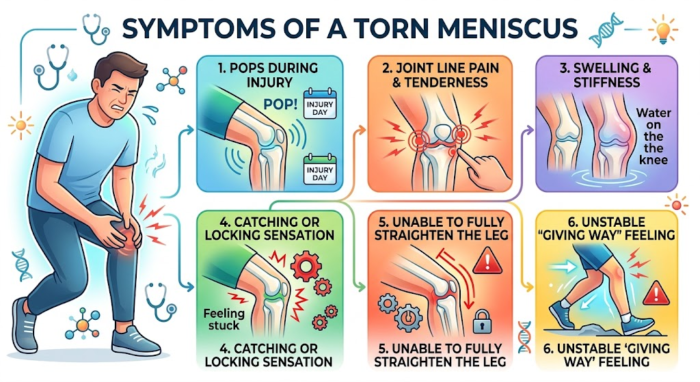
Direct Answer: The most common symptoms of a torn meniscus are pain on the inner or outer side of the knee that worsens when bending or twisting it, swelling that appears within a day of the injury, a sensation that the knee is “locked” or “catching,” a popping sound, and difficulty fully straightening the knee.
Signs that require a visit to a meniscus specialist:
- Recurrent pain when climbing stairs or squatting.
- Sudden locking of the knee that prevents straightening.
- Swelling that returns with increased activity.
- A feeling of instability in the knee or a sensation that it “gives way” while walking.
How is a torn meniscus diagnosed?
Diagnosis begins with a clinical examination and special knee tests (such as the McMurray test). However, Magnetic Resonance Imaging (MRI) is the most accurate scan. It confirms the presence of a tear, determines its type and location, and identifies whether it is in the blood-rich “red zone” (capable of healing) or the “white zone.” This precise determination is what the doctor bases the decision to suture or trim on.
Can a torn meniscus heal?
Direct Answer: Yes, healing is possible, but it depends on the location of the tear. A tear in the blood-rich red zone may heal with suturing or sometimes through conservative treatment. However, a tear in the white zone, which lacks blood supply, rarely heals on its own and often requires arthroscopic trimming.
- Red Zone: Rich in blood supply — capable of healing with surgical suturing.
- White Zone: Lacks blood supply — requires trimming to remove the part causing the pain.
Types of meniscus injuries
Accurately determining the type of injury is the key to successful treatment:
| Type of Injury | Brief Description | Standard Treatment |
| Meniscus Repair (Suturing) | A fresh tear in a blood-rich area, common in young people. | Arthroscopic meniscus suturing to preserve it. |
| Meniscectomy (Trimming) | A frayed or old tear unsuitable for suturing, or located in the white zone. | Removing only the damaged part while preserving the healthy tissue. |
| Meniscal Root Tear | Separation of the meniscus at its bone attachment point, causing the joint to lose stability. | Root reattachment — a highly delicate surgery that may not be possible if ignored for too long. |
| Meniscus Cyst | Fluid accumulation next to the meniscus due to an old tear. | Draining the cyst and arthroscopically treating the underlying tear. |
| Meniscus Degeneration | Gradual thinning and wear with aging. | Conservative treatment, PRP injections, or arthroscopic cleaning. |
| Knee Osteoarthritis | Wear of the meniscus along with the articular cartilage. | A comprehensive osteoarthritis treatment protocol. |
Treatment of a torn meniscus: Conservative or Surgical?
Direct Answer: Not all cases of a torn meniscus require surgery. A minor tear or degeneration is treated conservatively with rest, physical therapy, and anti-inflammatories. However, a large tear, one that causes a “locked knee,” or cases where conservative treatment fails require arthroscopic intervention.
| Condition | Conservative Treatment | Arthroscopic Intervention |
| Minor wear/tear (Non-athlete) | ✓ Rest, physical therapy, and injections | Rarely |
| Fresh tear in the red zone (Young person) | Often insufficient | ✓ Meniscus suturing |
| Frayed tear in the white zone | Insufficient | ✓ Meniscus trimming |
| Meniscal root tear | Insufficient | ✓ Root reattachment |
| Locked knee | Insufficient | ✓ Urgent arthroscopic intervention |
Therapeutic Principle: Preserving and repairing the meniscus is always the primary goal before considering removal.
Steps of arthroscopic meniscus surgery
The surgery is performed according to the latest international protocols for arthroscopic surgeries:
- Anesthesia: Usually spinal anesthesia to ensure patient comfort.
- Arthroscopy Portals: Two very small incisions (less than 4 mm) at the front of the knee.
- Exploration: Inserting a micro-camera to clearly view the inside of the joint.
- Surgical Intervention: Trimming the torn part or suturing it using microscopic tools and advanced threads.
- Wound Closure: Simple cosmetic stitches that generally allow the patient to leave the hospital on the same day.
Recovery after meniscus surgery
The recovery duration varies depending on the type of procedure. Trimming has a faster recovery time than suturing because suturing requires time for biological healing:
| Type of Surgery (Arthroscopic) | Walking Initiation | Approx. Success Rate* | Average Price (EGP)* |
| Meniscectomy (Trimming) | From day 1 with a crutch for balance | 90% – 95% | 35,000 – 45,000 |
| Meniscus Repair (Suturing) | After 2–4 weeks with a knee brace | 80% – 90% (Depends on location) | 50,000 – 85,000 |
| Meniscal Root Repair | After 6 weeks to ensure root-to-bone fusion | 85% – 90% | 60,000 – 75,000 |
| Cyst Surgery (Excision) | Within 48 hours, with a crutch if needed | 92% – 96% | 40,000 – 55,000 |
| (Note: Percentages and prices are approximate averages for guidance purposes. The final cost and prognosis are accurately determined after an examination and MRI). |
Cost of meniscus surgery in Egypt 2026
Direct Answer: The cost of arthroscopic meniscus surgery in Cairo typically ranges between 35,000 and 75,000 Egyptian Pounds. It varies based on the type of procedure (suturing is more expensive than trimming as it requires more supplies), the level of the hospital, and the quality of the instruments and arthroscopes used (we use certified American and German tools to ensure the highest success rate).
Calculator for the cost of arthroscopic meniscus surgery in Egypt (2026 Update)
Calculator for Arthroscopic Meniscus Surgery in Egypt (2026 Update)
Estimate total surgical, hospital, anesthesia, and rehabilitation costs for knee arthroscopy in Greater Cairo
| Clinical Item / Medical Service | Estimated Cost (EGP) | Approximate USD ($) |
|---|
Nutrition and cartilage support
Food cannot rebuild a torn meniscus, but it supports surrounding tissues and slows down wear:
- Fatty fish (Omega-3): Reduces inflammation.
- Vitamin C: Stimulates collagen production.
- Vitamin D: Essential for calcium absorption and protecting the bones that support the joint.
- Maintaining a healthy weight: Reduces the direct mechanical load on the joint.
Why is Prof. Dr. Ibrahim Shaarawi the best doctor for meniscus treatment?
- Does he have international experience? Yes — Visiting Professor at Ohio State University and trained at Nationwide Children’s Hospital, USA. He applies the latest minimally invasive arthroscopic techniques.
- Does he hold an academic position? Yes — Lecturer of Orthopedic Surgery at Ain Shams University, with published research (ORCID).
- Does he adhere to a scientific approach? Yes — Honorary Member of the Cochrane Collaboration. He relies on evidence-based medicine and does not perform surgery unless absolutely necessary.
- Does he handle complex cases? Yes — Including meniscal root tears and meniscus suturing, which are among the most delicate knee procedures.
- Does he provide post-operative rehabilitation? Yes — A personalized rehabilitation and follow-up program until the joint regains its full strength.
A word from Dr. Ibrahim Shaarawi: “The meniscus is your knee’s protector against early osteoarthritis; preserving and repairing it is our primary goal before considering removal.”
Patient reviews on Google
★★★★★ (5.0 Rating)
- Mohamed Gad: “Dr. Ibrahim is excellent and highly professional in his work. He has a refined approach, listens carefully to the patient before diagnosing, and his explanation of the condition was clear and simple. I feel a great deal of comfort after the treatment, and there is a clear difference from the first visit. May God bless his knowledge and reward him well. I advise anyone with an orthopedic issue to go to him without hesitation.”
- Ahmed Shehata: “Mashallah, the clinic is crowded.. Dr. Ibrahim respects the patient, is a good listener to the complaint, and it’s also clear he’s not materialistic. He advised me to follow up with a physiotherapy center after evaluating my condition.. God is the Healer.”
- Manal Salah: “One of the best doctors I have dealt with. His manner is calm and respectful, he listens well to the patient and explains everything simply without rushing. He diagnosed the condition correctly and the treatment made a huge difference for me. The clinic is clean and excellently organized. I highly recommend him.”
- Dalia Shaban: “Dr. Ibrahim Shaarawi is a very respectful and skilled doctor. His diagnosis is accurate, he understands the condition well, explains everything simply and without complexity, reassures the patient, and gives them their time. A truly honest doctor; may God bless his knowledge.”
- Diana Mahy: “The most common thing I was told is, ‘An orthopedic surgeon will just tell you injections and surgery!’ On the contrary, he is a highly respectful, honest, and credible person. He is an excellent listener, very reassuring, and polite. The best part is that his appointments are punctual. May God reward you, Doctor, and thank you very much.”
- Salma Mahmoud: “In the name of God, Mashallah, may God bless him. May God bless the doctor, he truly has a conscience and is highly knowledgeable. Thank God, I improved on the treatment from the very first day. May God grant him continued health and wellness and success in his work, Amen.”
Glossary of medical terms
- Meniscus: Two crescent-shaped cartilages that absorb shocks inside the knee.
- Red Zone: The blood-rich area of the meniscus capable of healing.
- White Zone: The blood-poor area of the meniscus that is difficult to heal.
- Meniscus Repair: Surgically fixing the tear while preserving the cartilage.
- Meniscectomy: Removing only the damaged part of the cartilage.
- Root Tear: Separation of the cartilage at its bone attachment point.
Clinic addresses and booking
- Nasr City Clinic: 9 Shabab El Mohandeseen Buildings — El Nasr Road, in front of the First Nasr City Police Station.
- Mohandeseen Clinic: 5 League of Arab States Street, above Dalida Restaurant and next to CIB Bank.
- Fifth Settlement Clinic: Clinic 325, HCC Building — 90th Street, next to the Air Force Specialized Hospital.
For reservations and inquiries: 01555547181 — WhatsApp is available.
Book Your Consultation Now
Take the first step towards recovery. Contact us directly via phone or WhatsApp to schedule your appointment.
[Call Now] [WhatsApp]
Frequently Asked Questions
Why is Professor Dr. Ibrahim Shaarawi considered the top specialist for meniscus treatment in Cairo for 2026?
Professor Dr. Ibrahim Shaarawi integrates top-tier academic training with international surgical expertise:
- Academic Leadership: Consultant and Lecturer of Orthopedic Surgery at Ain Shams University Faculty of Medicine.
- Global Expertise: Visiting Professor of Orthopedics at The Ohio State University (OSU), USA.
- Meniscus Preservation Pioneer: Champions anatomical preservation techniques, performing advanced repair and biological salvage rather than radical tissue resection.
- Specialized Sports Knee Practice: Extensive experience treating complex meniscus root avulsions, bucket-handle tears, and sports injuries in competitive athletes and active individuals.
What is the clinical philosophy of meniscus preservation versus meniscectomy?
The meniscus functions as a vital mechanical shock absorber, load distributor, and secondary stabilizer of the knee:
- Risks of Radical Meniscectomy: Complete or extensive partial removal of fibrocartilaginous tissue concentrates axial contact forces onto a smaller surface area of articular cartilage, accelerating degenerative changes and early osteoarthritis within 5 to 10 years.
- Advantages of Meniscus Repair: Re-anchoring and suturing torn segments restores hoop stresses (circumferential tension), stabilizes knee biomechanics, and preserves the joint’s natural biological lifespan.
What cutting-edge arthroscopic techniques are utilized for meniscus repair?
Surgeries are carried out with precision instrumentation under 4K ultra-high-definition visualization:
- All-Inside Repair Systems: Utilizing automated suture deployment devices to repair posterior horn tears safely without secondary posterior incisions.
- Inside-Out / Outside-In Techniques: Ideal for mid-body and anterior horn tears to achieve anatomical compression across the tear interface.
- Transosseous Meniscal Root Repair: Re-anchoring extruded or avulsed meniscus roots directly into tibial bone tunnels using high-tensile suture tape and cortical buttons.
Can a meniscus tear heal without surgical intervention?
Not all meniscal tears mandate surgical intervention. Conservative, non-operative treatment is preferred in select scenarios:
- Candidate Cases: Small, stable, non-displaced tears, or degenerative horizontal tears without mechanical catching or locking.
- Targeted Physical Therapy: Reconditioning the quadriceps, hamstrings, and hip abductors to optimize mechanical load transmission across the knee.
- Biological Augmentation: Ultrasound-guided Platelet-Rich Plasma (PRP) therapy to stimulate vascular proliferation and cellular matrix healing in tears located in the vascularized peripheral third (red-red zone).
What constitutes an emergency when dealing with a bucket-handle meniscus tear?
A displaced bucket-handle tear accompanied by a locked knee requires prompt surgical reduction:
- A longitudinal tear allows the central portion of the meniscus to flip into the intercondylar notch, physically blocking terminal knee extension.
- Forced attempts to straighten the locked knee risk irreversible plastic deformation, crushing the trapped tissue and abrading the femoral condylar cartilage.
- Urgent arthroscopic reduction and anatomical multi-suture fixation restore the normal anatomical profile and preserve joint kinematics.
Where are Dr. Ibrahim Shaarawi’s orthopedic clinics located in Cairo?
Consultations and diagnostic assessments take place in three established centers across Cairo:
- New Cairo (Fifth Settlement): Directly accessible via the Cairo–Suez Highway and Ring Road, serving New Cairo, Madinaty, Shorouk, and Canal Zone patients.
- Nasr City: Centrally positioned to serve East Cairo, Heliopolis, and arrivals from Delta governorates.
- Mohandeseen: Serving West Cairo, Giza, Dokki, 6th of October City, and Sheikh Zayed.
How long does arthroscopic meniscus surgery take and what is the hospital stay?
Modern tissue-sparing techniques allow a streamlined operative and recovery workflow:
- Surgical Duration: The procedure generally requires 30 to 60 minutes depending on the tear configuration and the number of fixation sutures placed.
- Day-Case Protocol: Patients are admitted to modern surgical day-care suites. Following postoperative observation and gait verification with a physiotherapist, discharge home occurs within a few hours on the same day.
What is the expected rehabilitation timeline after meniscus repair versus trimming?
Postoperative protocols depend directly on whether tissue was trimmed or sutured:
- Partial Meniscectomy (Trimming): Weight-bearing as tolerated is permitted immediately. Patients typically resume daily activities within 2 to 3 weeks and light sporting activities at 4 to 6 weeks.
- Meniscus Repair (Suturing): Prioritizes biological tissue healing:
- Weeks 1–6: Partial weight-bearing with crutches and a hinged knee brace limiting flexion to protect suture integrity.
- Weeks 6–12: Brace weaning, restoration of full range of motion, and closed-chain strengthening.
- Months 4–6: Plyometric training and verified return to pivoting sports.
Do private health insurance companies and medical syndicates cover meniscus surgery in Egypt?
Yes, arthroscopic knee procedures are covered across accredited surgical hospitals:
- Private Insurers: AXA, Bupa, MetLife, Allianz, MedNet, and other networks provide coverage for day-case arthroscopic interventions.
- Syndicates & Public Funds: The Egyptian Syndicate of Engineers, Doctors Syndicate, Judiciary, and petroleum health funds cover surgical and hospital expenses.
- Pre-Authorization: The clinical administrative team provides all necessary medical reports, diagnosis codes, and MRI documentation to facilitate pre-approval before surgery.
What preparatory steps and imaging should patients arrange prior to their initial consultation?
To optimize the accuracy of the clinical evaluation during the first visit, patients should:
- Bring recent Knee Magnetic Resonance Imaging (MRI) on a digital CD or high-resolution printed films to allow direct slice-by-slice review.
- Provide records of any prior knee surgeries, arthroscopies, or intra-articular injections.
- Document specific mechanical complaints (such as clicking sensations, giving way, or locking episodes) for assessment during the clinical examination.
Medical References
- AAOS OrthoInfo — Meniscus Tears (2024)https://orthoinfo.aaos.org/en/diseases-conditions/meniscus-tears/
- AAOS OrthoInfo — Meniscus Repair (2024)https://orthoinfo.aaos.org/en/treatment/meniscus-repair/
- Cleveland Clinic — Torn Meniscus: Causes, Symptoms, Treatment & Prevention (2024)https://my.clevelandclinic.org/health/diseases/17219-torn-meniscus
- Cleveland Clinic — Meniscus Surgery: Meniscus Repair & Meniscectomy (2024)https://my.clevelandclinic.org/health/treatments/21508-meniscus-surgery
- Mayo Clinic — Torn Meniscus: Diagnosis & Treatment (2024)https://www.mayoclinic.org/diseases-conditions/torn-meniscus/diagnosis-treatment/drc-20354823
- HSS — Meniscus Surgery: Trimming, Repair & Meniscectomy (2024)https://www.hss.edu/health-library/conditions-and-treatments/meniscus-surgery-meniscectomy
- PubMed — Meniscal Repair Outcome in 3829 Patients: Meta-Analysis on Failure Rate (2023)https://pubmed.ncbi.nlm.nih.gov/37022676/
- AAOS — Clinical Practice Guideline for Management of Acute Isolated Meniscal Pathology (2024)https://www.aaos.org/quality/quality-programs/acute-isolated-meniscal-pathology/
- NHS — Meniscus tear (Diagnosis and treatment of a torn meniscus).
- American Academy of Orthopaedic Surgeons (AAOS) — Meniscus injuries.
- Cochrane — Knee arthroscopy for degenerative meniscal tear and Knee OA.