
Quick answer
Knee osteophytes are bony spurs on the edges of the knee joint that form with osteoarthritis. They are a sign of worn cartilage rather than a separate disease, and the pain usually comes from the arthritis, not the spur. Treatment starts with exercise, weight loss and topical pain relief; arthroscopy is not used to shave spurs alone, and the spurs come out with a knee replacement in advanced arthritis.
✅ Last medically reviewed by Prof. Dr. Ibrahim Shaarawi, Professor of Orthopaedic Surgery, on 28 October 2026
“Osteophytes at the joint margins” is one of the phrases patients see most often on a knee X-ray report, and many ask how to remove them as if they were a separate problem. Here I explain what they mean, when they matter and which treatments actually help. This article is part of our guide to bone spurs.
What are knee osteophytes?
When the cartilage covering the ends of the bones wears, the body tries to widen the joint surface to spread the load, and builds new bone at the edges. On X-ray these spurs look like pointed edges on the femur, tibia and kneecap. Their presence is one of the X-ray signs used to diagnose osteoarthritis (OrthoInfo).
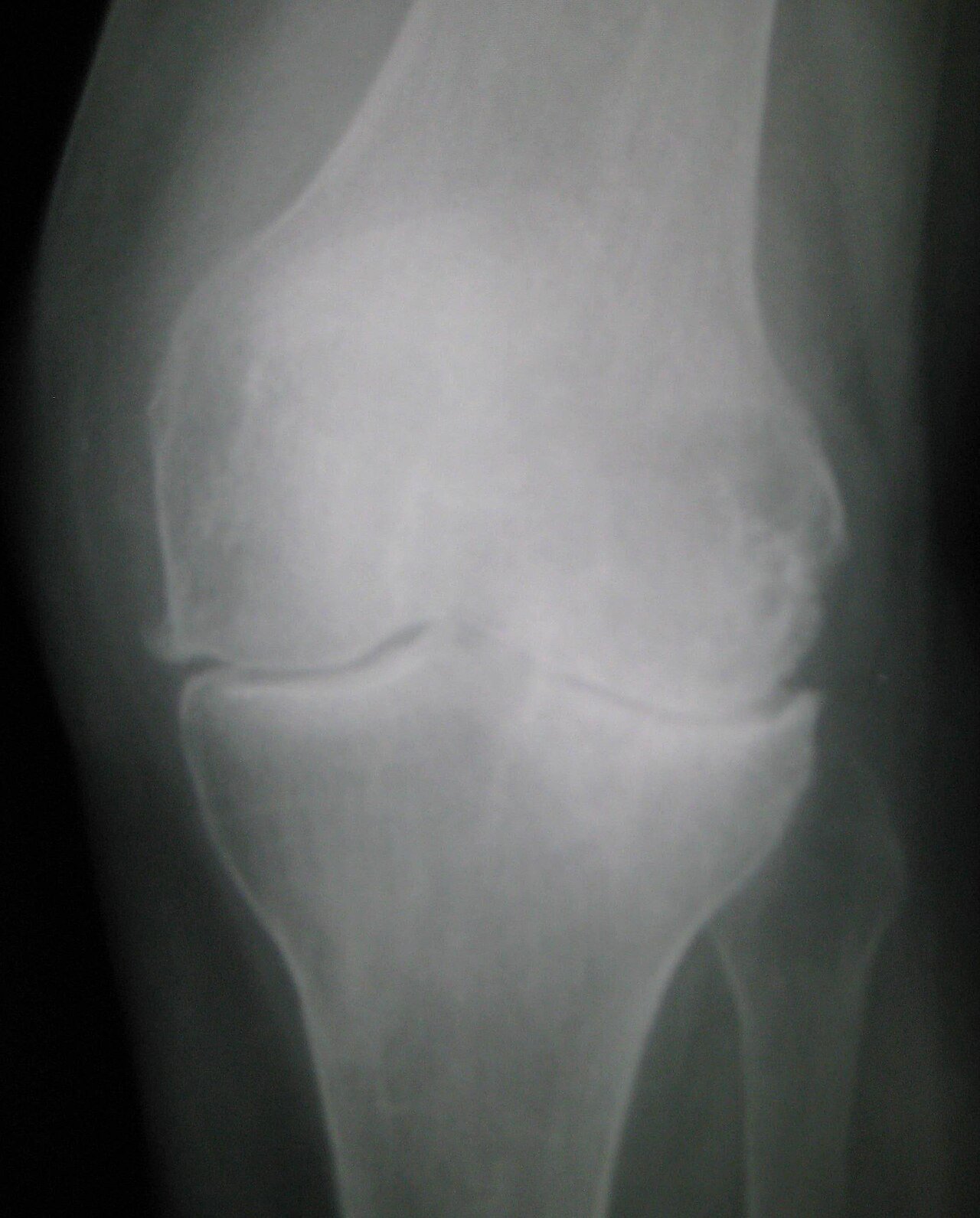
Are the spurs causing the pain?
Not always. Many people have obvious spurs and no pain, while others hurt with small ones. Pain comes from inflamed synovium, worn cartilage, changes in the bone under the cartilage and weak muscles around the knee. A large spur can limit straightening or bending if it blocks against another bone, but that is less common.
Symptoms
- Pain with long walks and on stairs.
- Morning stiffness that eases within minutes.
- Clicking or grinding on movement.
- Swelling after activity.
- Loss of full bending or straightening.
- Bow legs in arthritis of the inner knee.
For what arthritis looks like on X-ray and how it is graded, see knee osteoarthritis.
Diagnosis
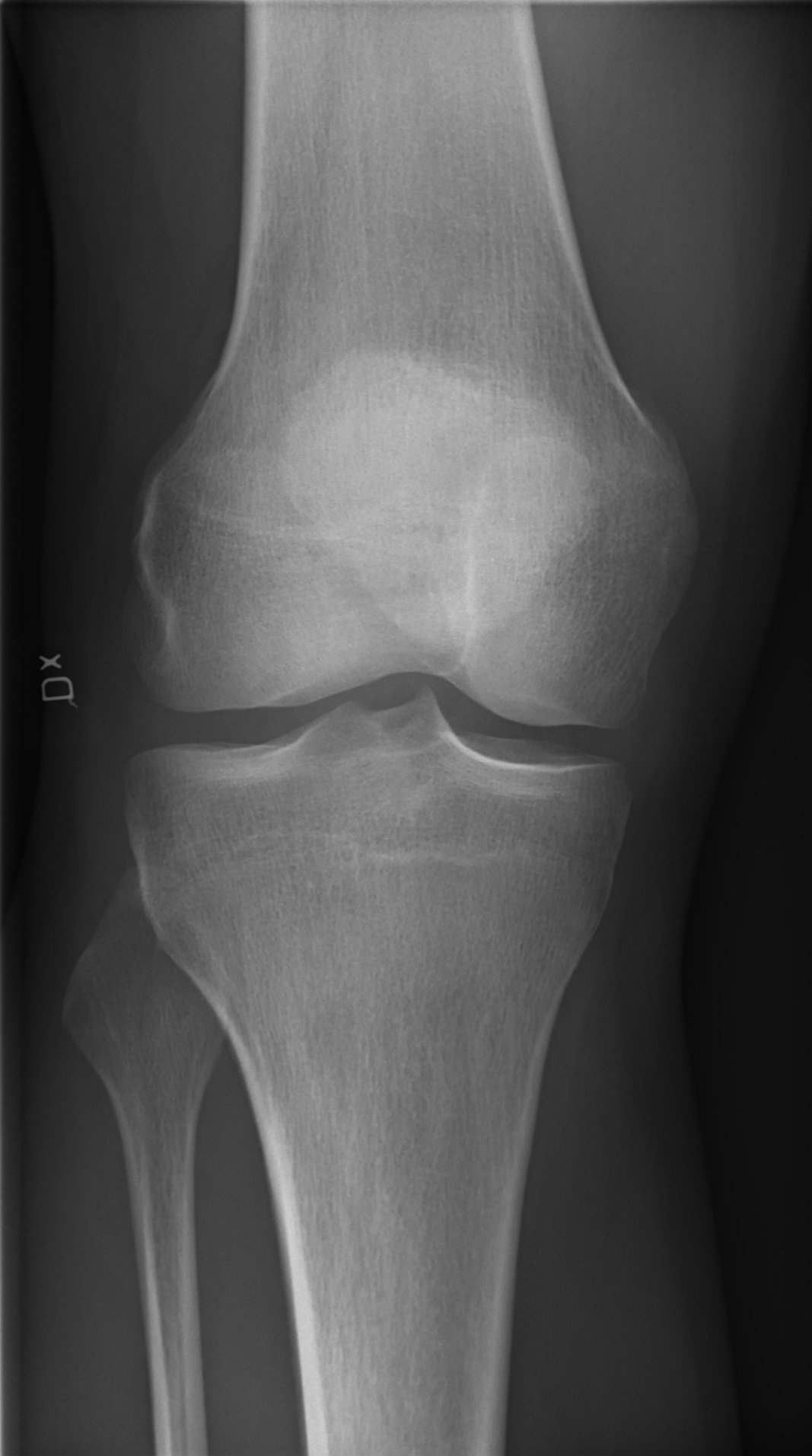
A standing X-ray is the basis, because it shows the spurs, the narrowing of the joint space and the grade of arthritis. MRI is not needed to diagnose spurs. We use it if we suspect an acute meniscus tear or another problem that arthritis does not explain.
Key numbers to know
- In 895 adults aged 50 to 80, osteophytes were seen on knee MRI in 85% but on plain X-ray in only 10%, and larger osteophytes went with more pain and faster cartilage loss (Zhu et al., 2017).
- In a survey of 12,287 people over 50, 35.1% had knee osteoarthritis on X-ray, and women had about twice the risk (Hong et al., 2020).
- The OARSI guidelines make education, structured exercise and weight management the core of knee osteoarthritis care, strongly recommend topical anti-inflammatories, and advise against opioids (Bannuru et al., 2019).
- A Cochrane review of 16 trials with 2,105 patients found that arthroscopic clean-out for knee osteoarthritis made little or no difference to pain or function compared with placebo surgery (O’Connor et al., Cochrane 2022).
| Treatment | When we choose it | What to expect |
|---|---|---|
| Exercise and weight loss | All grades of arthritis | The base of treatment, easing pain over time |
| Topical or oral pain relief | Pain with activity | Less pain, with care using oral anti-inflammatories in heart or stomach disease |
| Knee injection | Flares despite treatment | Temporary relief for weeks or months |
| Knee arthroscopy | True locking from a loose body or an acute meniscus tear | Not used to clean out arthritis or shave spurs alone |
| Osteotomy to realign the leg | One-sided arthritis with bow legs in an active patient | Delays knee replacement for years |
| Knee replacement | Advanced arthritis with pain limiting daily life | The spurs are removed with the worn surfaces in the same operation |
At Prof. Dr. Ibrahim Shaarawi’s clinics in Nasr City, Mohandeseen and New Cairo (5th Settlement) we review standing knee X-rays and work out whether the pain comes from the spurs or from the arthritis around them.
Treatment without surgery
- Exercise: strengthening the thigh and hip muscles, the core of treatment.
- Weight loss: every kilogram less reduces the load on the knee with each step.
- Topical anti-inflammatories: gels and creams, safer than tablets.
- Knee injections: steroid or hyaluronic acid for selected patients.
- A stick or knee brace: during flares.
The full programme is in non-surgical treatment of knee osteoarthritis. The NHS notes that osteoarthritis cannot be cured, but symptoms improve with exercise and the right treatment (NHS).
Video: Knee osteoarthritis grades and the treatment for each grade
Does arthroscopy help remove spurs?
We do not use knee arthroscopy to clean out arthritis or shave spurs. Strong evidence shows it does not improve pain or function more than placebo surgery. We use arthroscopy only for true locking caused by a loose body or an acute meniscus tear.
Surgery for advanced arthritis
- Osteotomy: for an active patient with one-sided arthritis and bow legs, realigning the leg to delay replacement.
- Partial or total knee replacement: when pain limits daily life despite treatment; the spurs are removed with the worn surfaces.
When the time is right for replacement is covered in when you need a knee replacement, and the operation itself in total knee replacement.
Frequently asked questions about knee osteophytes
Do knee osteophytes mean arthritis?
Usually yes. Spurs on the joint edges are one of the main X-ray signs of knee osteoarthritis, graded together with narrowing of the joint space.
Can knee spurs be removed by arthroscopy?
We do not recommend arthroscopy to shave spurs or clean out arthritis, because strong trials show no more pain relief than placebo surgery.
Can medication dissolve knee spurs?
No. Medication and creams ease pain and inflammation but do not remove the extra bone.
Can I keep walking and exercising?
Yes. Walking, swimming and a stationary bike are helpful; only high-impact sport may need reducing if it increases pain.
When do I need a knee replacement?
When arthritis is advanced on X-ray and pain limits walking, sleep and daily life despite regular treatment.
To have your foot, heel or knee checked by Prof. Dr. Ibrahim Shaarawi, book a consultation, call +20 155 240 4488 or message us on WhatsApp at +20 155 554 7181. Bring any previous X-rays with you.
Medically reviewed by Prof. Dr. Ibrahim Shaarawi, Professor of Orthopaedic Surgery. This article is general medical education and does not replace an examination or the plan your own doctor sets for you. See our medical disclaimer.
Related bone spur guides
Related knee arthritis guides:
- Bone spurs
- Knee osteoarthritis
- Non-surgical treatment of knee osteoarthritis
- When you need a knee replacement
- Total knee replacement
References
- American Academy of Orthopaedic Surgeons (OrthoInfo). Arthritis of the Knee.
- NHS. Osteoarthritis.
- Zhu Z, et al. Association between MRI-detected osteophytes and changes in knee structures and pain in older adults: a cohort study. Osteoarthritis Cartilage. 2017;25(7):1084-1092.
- Bannuru RR, et al. OARSI guidelines for the non-surgical management of knee, hip, and polyarticular osteoarthritis. Osteoarthritis Cartilage. 2019;27(11):1578-1589.
- Hong JW, et al. The prevalence of and demographic factors associated with radiographic knee osteoarthritis in Korean adults aged ≥ 50 years: The 2010-2013 Korea National Health and Nutrition Examination Survey. PLoS One. 2020;15(3):e0230613.
- O’Connor D, et al. Arthroscopic surgery for degenerative knee disease (osteoarthritis including degenerative meniscal tears). Cochrane Database Syst Rev. 2022;3(3):CD014328.