
Quick answer
The key tips after knee replacement: keep the wound clean and dry, sleep on your back without a pillow under the knee, use a raised toilet seat and a shower chair, pray on a chair at first, take blood-clot medication on time, prevent falls at home, do your exercises daily, and report fever, wound discharge or calf pain promptly.
✅ Last medically reviewed by Prof. Dr. Ibrahim Shaarawi, Professor of Orthopaedic Surgery, on 12 October 2026
Small daily habits make a big difference to recovery. These are the instructions we give our patients when they go home, as part of our guide to total knee replacement surgery.
Wound care
- Keep the dressing clean and dry until your surgeon allows showering.
- Do not apply creams or home remedies to the wound.
- Stitches or clips are usually removed after about two weeks.
- Report redness, increasing warmth or discharge promptly.
Sleeping, sitting and prayer
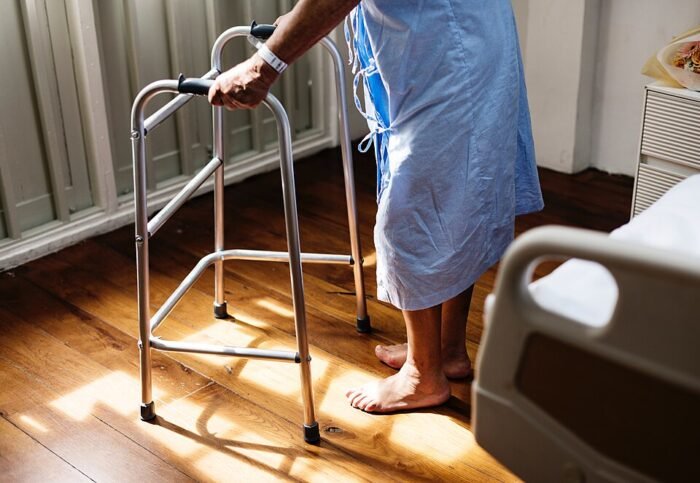
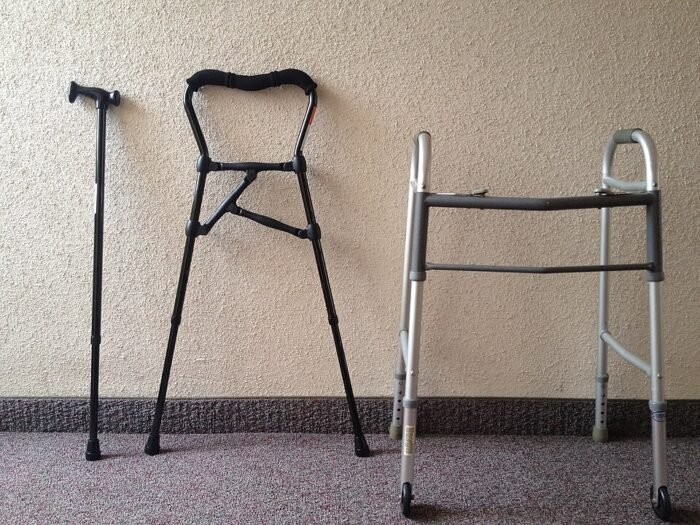
- Sleep on your back with the knee straight — never a pillow under the knee.
- You may sleep on the other side with a pillow between the knees.
- Use a firm chair with arms, not a low sofa.
- Pray seated on a chair in the early weeks; kneeling comes later, if comfortable.
Video: Walking after replacing both knees and returning to normal life
Bathroom, stairs and the car
- A raised toilet seat and a shower chair make the first weeks easier and safer.
- On stairs: up with the good leg, down with the operated leg, holding the rail.
- Get into the car seat first, then swing the legs in; driving usually after 4–6 weeks.
Key numbers to know
- Across 18 randomised trials (1,739 patients), physiotherapy improved function and pain at 3–4 months after knee replacement, and home exercise worked as well as clinic sessions (Artz et al., 2015).
- In the best-quality studies, about 20% of patients reported troublesome long-term pain after knee replacement (10%–34% across studies) (Beswick et al., BMJ Open 2012).
| Treatment | When we use it | What to expect |
|---|---|---|
| Conservative care: exercise, weight loss, topical pain relief | Grade 1–3 arthritis | Better pain and movement; many patients delay surgery |
| Joint injections (steroid, hyaluronic acid or PRP) | Persistent pain despite conservative care | Temporary relief that varies between patients |
| High tibial osteotomy (HTO) | Active patients under 60 with bow legs and arthritis on the inner side only | Realigns the leg and keeps the natural knee |
| Partial knee replacement | Arthritis limited to one compartment with healthy ligaments | Faster recovery and a more natural-feeling knee |
| Total knee replacement | Severe (grade 4) arthritis with pain limiting daily life | Pain usually resolves; walking on day 1–2 |
| Revision knee replacement | Loosening, infection or instability of a previous knee replacement | Bigger surgery with special components to restore stability |
At Prof. Dr. Ibrahim Shaarawi’s clinics in Nasr City, Mohandeseen and New Cairo (5th Settlement) we examine the knee and review standing X-rays at the same visit, then decide on conservative care, osteotomy, or a partial or total knee replacement according to the arthritis grade, your age and activity.
Protecting the new joint
- Take blood-clot prevention as prescribed and walk regularly.
- Tell any doctor or dentist about your knee replacement; treat infections promptly.
- Keep your weight down.
- Choose low-impact activities — walking, swimming, cycling — and avoid running and jumping.
For the full recovery timeline see knee replacement recovery time and for exercises exercises after knee replacement.
When to call your surgeon
- Fever, wound redness or discharge.
- Calf pain and swelling, or breathlessness (emergency).
- Severe or increasing pain, or a fall.
Normal pain and swelling are explained in pain after knee replacement, and walking advice in walking after knee replacement.
Looking for an experienced knee surgeon? Read our guides to the best knee specialist in Egypt and the best orthopaedic surgeon in Egypt to see how to choose.
Frequently asked questions about life after knee replacement
How should I sleep after knee replacement?
On your back with the knee straight, or on the other side with a pillow between your knees; never with a pillow under the knee.
When can I pray normally after knee replacement?
Pray seated in the early weeks; kneeling may become possible later if it is comfortable.
When can I shower?
Once your surgeon confirms the wound is sealed, usually after the stitches are removed.
How do I climb stairs after surgery?
Up with the good leg first, down with the operated leg first, holding the rail.
Do I need antibiotics before dental treatment?
Tell your dentist about your knee replacement; your doctors will advise on antibiotics depending on the procedure and your health.
To have your knee assessed and your X-rays reviewed, book a consultation, call +20 155 240 4488 or message us on WhatsApp at +20 155 554 7181.
Medically reviewed by Prof. Dr. Ibrahim Shaarawi, Professor of Orthopaedic Surgery. This article is general medical education and does not replace an examination or the treatment plan your surgeon sets for you. See our medical disclaimer.
Related knee replacement guides
Practical guides for after surgery:
- Total knee replacement surgery
- Knee replacement recovery time
- Walking after knee replacement
- Exercises after knee replacement
- When you need a knee replacement
- Knee replacement cost in Egypt
- Knee replacement success rate
References
- Artz N, et al. Effectiveness of physiotherapy exercise following total knee replacement: systematic review and meta-analysis. BMC Musculoskelet Disord. 2015;16:15.
- Beswick AD, et al. What proportion of patients report long-term pain after total hip or knee replacement for osteoarthritis? A systematic review of prospective studies in unselected patients. BMJ Open. 2012;2(1):e000435.
- American Academy of Orthopaedic Surgeons (OrthoInfo). Activities After Knee Replacement.
- NHS. Knee replacement.