
Quick answer
Vitamin D is essential for bone health but is not on its own a fracture-prevention drug. In healthy older adults without deficiency, 2,000 IU daily did not reduce fractures in the large VITAL trial. Older people who are deficient, frail or living in care homes do benefit from vitamin D with calcium. What clearly cuts fractures in osteoporosis is osteoporosis medication plus fall prevention — and very large yearly doses may actually increase falls and fractures.
✅ Last medically reviewed by Prof. Dr. Ibrahim Shaarawi, Professor of Orthopaedic Surgery, on 5 October 2026
Most fractures I treat in older patients — femoral neck, proximal humerus, wrist and spine — happen after a minor fall on weak bone. Families often ask after surgery: “If he had taken vitamin D, would this have happened?” The honest answer needs nuance, which is what this article provides as part of our guide to osteoporosis.
Why are fractures so common in older adults?
- Osteoporosis: bone loss with age and after menopause.
- Falls: weaker muscles, poor balance and eyesight, sedating medicines, home hazards.
- Vitamin D deficiency: less calcium absorption and weaker muscles.
- Chronic illnesses and steroid use.
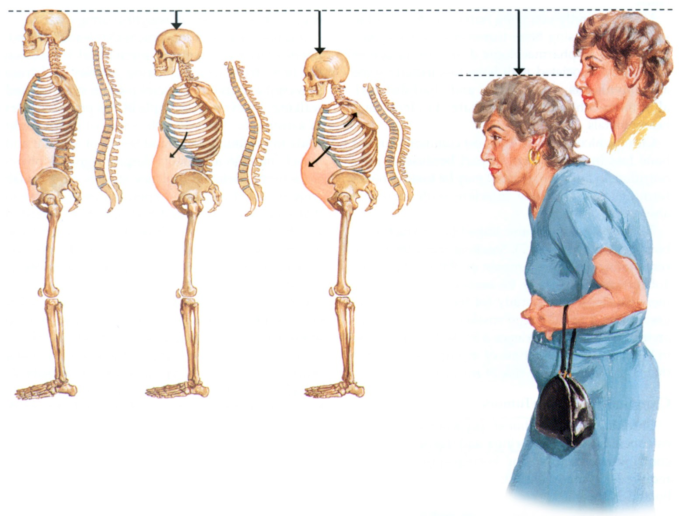
What do the studies show?
| Study | Who was included | Result |
|---|---|---|
| Chapuy 1992 (France) | Older women in care homes, mostly deficient | Vitamin D3 800 IU + calcium 1.2 g daily reduced hip fractures |
| Cochrane review 2014 | Postmenopausal women and older men | Vitamin D alone did not prevent fractures; with calcium it slightly reduced hip fractures |
| Sanders 2010 | Women over 70 | A yearly 500,000 IU dose increased falls and fractures |
| USPSTF 2018 | Community-dwelling adults | Low-dose supplements not recommended for primary fracture prevention in healthy postmenopausal women |
| VITAL 2022 | Healthy adults over 50 not selected for deficiency or osteoporosis | 2,000 IU daily did not reduce fractures versus placebo |
The lesson: vitamin D helps people who are deficient, frail or in care homes — especially with calcium — but adds little for those with normal levels. So we test and treat according to the situation rather than give everyone large doses.
Video: hip fracture in older adults
Does vitamin D reduce falls?
Older meta-analyses suggested daily doses of 700–1,000 IU might reduce falls, but larger recent trials did not confirm this in people with normal levels, while large intermittent doses were linked to more falls. We therefore prefer moderate daily doses and rely on exercise and home safety to prevent falls, as described in preventing falls and fractures in older adults.
Key numbers to know
- In the VITAL trial of 25,871 people followed for 5.3 years, vitamin D alone did not reduce fractures in people without deficiency or osteoporosis (LeBoff et al., NEJM 2022).
- In the FREEDOM trial, Prolia cut new vertebral fractures by 68% (2.3% vs 7.2%) and hip fractures by 40% (Cummings et al., NEJM 2009).
- Calcium supplements lowered overall fracture risk by about 11% in randomised trials but did not reduce hip fractures (Bolland et al., BMJ 2015).
| Treatment | When we use it | Notes |
|---|---|---|
| Calcium, vitamin D, exercise and fall prevention | Everyone with or at risk of osteoporosis | The foundation, but not enough alone in established osteoporosis |
| Bisphosphonate tablets | Osteoporosis without multiple fractures | Taken correctly on an empty stomach |
| Zoledronic acid (yearly infusion) | People preferring a yearly dose with good kidney function | Cut vertebral fractures by 70% in HORIZON |
| Prolia injection every 6 months | High fracture risk or moderate kidney disease | Must not be stopped abruptly without a follow-on drug |
| Bone-building drugs (teriparatide or romosozumab) | Severe osteoporosis and multiple fractures | Followed by a maintenance drug after the course |
| Fracture surgery (fixation or replacement) | When a hip or other fracture occurs | Together with starting osteoporosis treatment to prevent the next fracture |
At Prof. Dr. Ibrahim Shaarawi’s clinics in Nasr City, Mohandeseen and New Cairo (5th Settlement) we review your vitamin D, calcium and bone density results and examine the cause of pain or fracture before deciding on the right dose or osteoporosis treatment.
What actually prevents fractures in osteoporosis?
- Osteoporosis medicines: in FREEDOM, 6-monthly denosumab (Prolia) cut new vertebral fractures by about 68% and hip fractures by about 40%; in HORIZON, yearly zoledronic acid cut vertebral fractures by about 70% and hip fractures by about 41%. See the 6-monthly osteoporosis injection (Prolia).
- Adequate vitamin D and calcium as an essential foundation for any osteoporosis treatment.
- Strength and balance exercise.
- Home safety, a review of dizziness-causing medicines and eye checks.
After the first fracture: make it the last
A fracture after a minor fall after age 50 is a warning sign that roughly doubles the risk of another fracture, especially in the first year. The American Society for Bone and Mineral Research urges that every fragility fracture triggers assessment and treatment. After treating the fracture I therefore arrange:
- A bone density (DEXA) scan.
- Vitamin D, calcium and kidney function tests.
- Osteoporosis treatment after vitamin D is corrected.
- Physiotherapy and a fall-prevention programme.
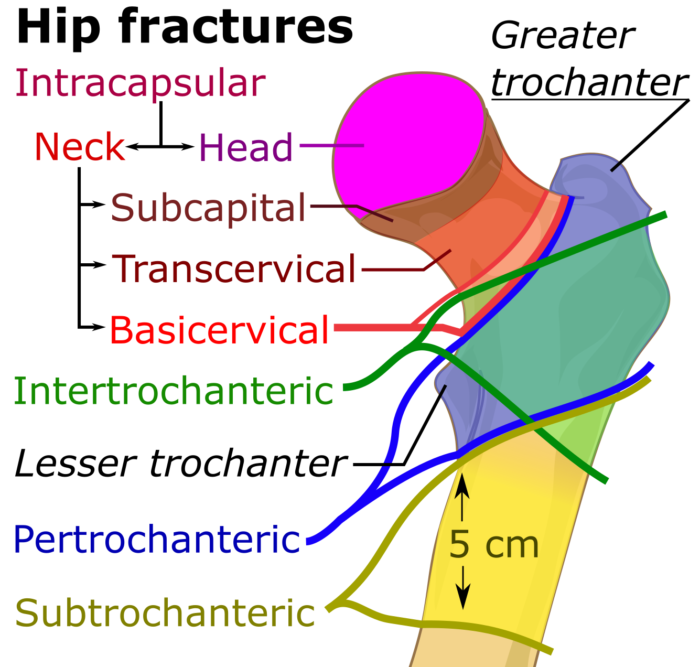
See also femoral neck fracture in older adults and proximal humerus fractures in older adults.
A practical vitamin D plan after 50
| Situation | Vitamin D | What else |
|---|---|---|
| Healthy, no risk factors | Balanced diet and some sun; 600–800 IU daily if needed | Regular exercise |
| Deficient on testing | Treatment course then maintenance set by your doctor | Retest after 3 months |
| Frail older person or care-home resident | Usually 800 IU daily with adequate calcium | Fall-prevention programme |
| Established osteoporosis or fragility fracture | Correct deficiency before treatment, then maintenance | Osteoporosis drug + fall prevention |
Frequently asked questions about vitamin D and fractures in older adults
Does vitamin D prevent fractures in older people?
It helps those who are deficient and care-home residents, especially with calcium. In people with normal levels, large trials such as VITAL found no fracture reduction from supplements alone.
What vitamin D dose is right for older adults?
The general recommendation is 800 IU daily after age 70; people who are deficient need a treatment dose set by their doctor. Very large yearly doses are not recommended.
Are vitamin D and calcium enough to treat osteoporosis?
No. They are an essential foundation, but established osteoporosis needs medication such as bisphosphonates, Prolia or zoledronic acid.
What should happen after a hip or wrist fracture in an older person?
After fracture treatment, a bone density scan, vitamin D testing, osteoporosis treatment and a fall-prevention programme, because the risk of another fracture rises sharply.
Are large yearly vitamin D injections useful for older people?
No; a large yearly dose was linked to more falls and fractures in a randomised trial. Moderate daily or weekly doses are preferred.
To have your bones assessed and your tests reviewed, book a consultation, call +20 155 240 4488 or message us on WhatsApp at +20 155 554 7181.
Medically reviewed by Prof. Dr. Ibrahim Shaarawi, Professor of Orthopaedic Surgery. This article is general medical education and does not replace an examination or the treatment plan your doctor sets for you. See our medical disclaimer.
Related vitamin D and bone health guides
Related guides on fractures in older adults and osteoporosis:
- Osteoporosis
- The 6-monthly osteoporosis injection (Prolia)
- Osteoporosis symptoms in women
- The bone density (DEXA) test
- Preventing falls and fractures in older adults
- Femoral neck fracture in older adults
- Vitamin D deficiency
- Proximal humerus fractures in older adults
- Vitamin D injections
References
- LeBoff MS, et al. Supplemental Vitamin D and Incident Fractures in Midlife and Older Adults. N Engl J Med. 2022;387(4):299-309.
- Grossman DC, et al. Vitamin D, Calcium, or Combined Supplementation for the Primary Prevention of Fractures in Community-Dwelling Adults: USPSTF Recommendation Statement. JAMA. 2018;319(15):1592-1599.
- Chapuy MC, et al. Vitamin D3 and calcium to prevent hip fractures in elderly women. N Engl J Med. 1992;327(23):1637-42.
- Avenell A, et al. Vitamin D and vitamin D analogues for preventing fractures in post-menopausal women and older men. Cochrane Database Syst Rev. 2014;(4):CD000227.
- Sanders KM, et al. Annual high-dose oral vitamin D and falls and fractures in older women: a randomized controlled trial. JAMA. 2010;303(18):1815-22.
- Bischoff-Ferrari HA, et al. Fall prevention with supplemental and active forms of vitamin D: a meta-analysis of randomised controlled trials. BMJ. 2009;339:b3692.
- Cummings SR, et al. Denosumab for prevention of fractures in postmenopausal women with osteoporosis. N Engl J Med. 2009;361(8):756-65.
- Black DM, et al. Once-yearly zoledronic acid for treatment of postmenopausal osteoporosis. N Engl J Med. 2007;356(18):1809-22.
- Eisman JA, et al. Making the first fracture the last fracture: ASBMR task force report on secondary fracture prevention. J Bone Miner Res. 2012;27(10):2039-46.