
A femoral neck fracture is a break in the narrow part of the thigh bone just below the femoral head. It usually happens in older adults after a simple fall because of osteoporosis, and people often call it a “broken hip”. Treatment is usually surgical, ideally within 24–48 hours: pinning the fracture, a bipolar hip hemiarthroplasty, or a total hip — depending on the fracture type, the patient’s age and how active they were before the injury.
Symptoms of a femoral neck fracture
- Severe pain in the groin or hip after a fall.
- Inability to stand or put weight on the leg.
- The injured leg looks shorter and the foot turns outwards.
- Pain when trying to move the leg.
- Some people can still walk in pain with undisplaced fractures — so any hip pain after a fall in an older person needs an X-ray.
Types of upper-femur fracture
Not every “broken hip” in older adults is a femoral neck fracture; there are three main types, treated differently:
- Femoral neck (intracapsular) fracture: can cut the blood supply to the femoral head, so displaced fractures usually need a replacement.
- Intertrochanteric fracture: below the neck; usually heals well and is fixed with an intramedullary nail or a sliding hip screw.
- Subtrochanteric fracture: lower down; usually fixed with a long intramedullary nail.
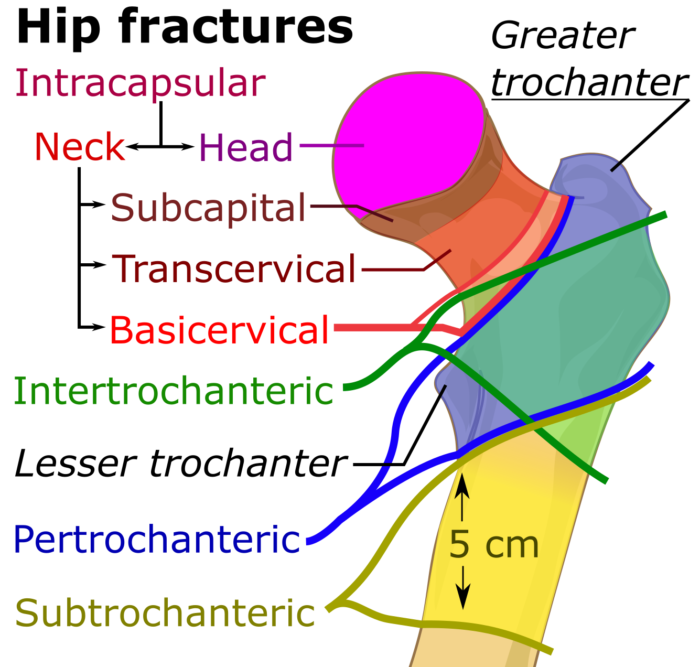
Femoral neck fractures are either undisplaced (the bone stays in place and can usually be pinned) or displaced (the head has moved, with a high risk of necrosis and non-union in older adults, so replacing the head is preferred).
Why does it happen in older adults?
The main cause is osteoporosis, together with a higher chance of falling because of weaker muscles and balance, poorer vision and medicines. Prevention starts with treating osteoporosis and preventing falls — read preventing falls and fractures in older adults.
Diagnosis
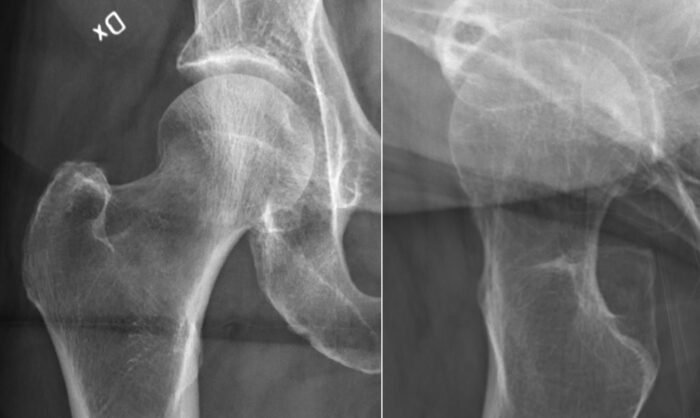
The diagnosis is confirmed with X-rays of the pelvis and hip; an MRI or CT may be needed if X-rays look normal but suspicion remains. The whole patient is assessed before surgery: heart, lungs, kidneys, blood sugar and blood-thinning medicines.
Why is early surgery preferred?
International guidance (NICE) recommends surgery on the day of admission or the day after. Long bed rest in older adults raises the risk of clots, chest infection, pressure sores, muscle weakness and confusion. The aim of surgery is for the patient to stand and walk the next day or so.
Video: hip fracture in older adults — can surgery be avoided?
Treatment options: pinning, hemiarthroplasty or total hip?
| Option | Usually suits | Notes |
|---|---|---|
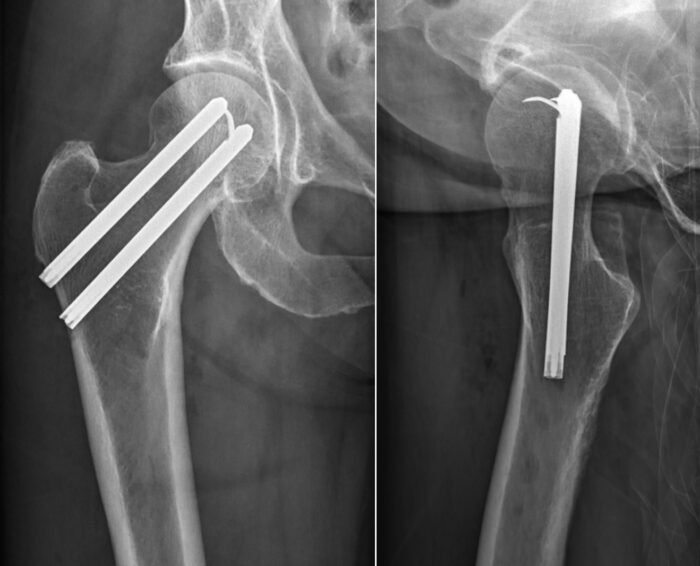
| Pinning the fracture | Undisplaced fractures, or younger patients | Keeps the femoral head, but non-union or necrosis can occur in displaced fractures |
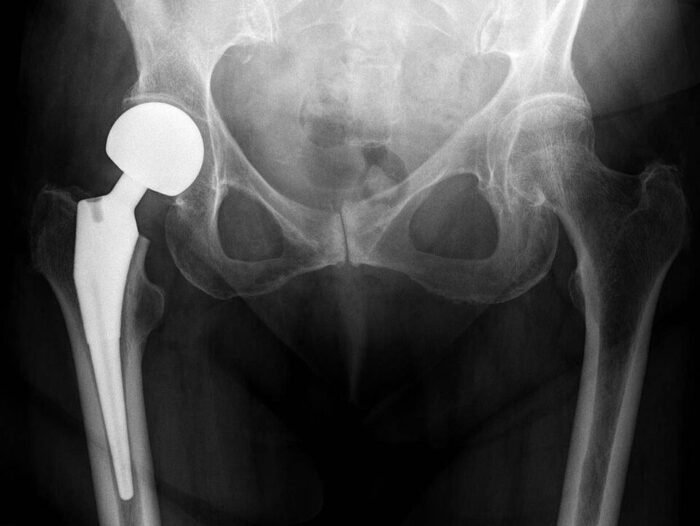
| Bipolar hemiarthroplasty | Displaced fractures in older, less active adults | Shorter operation, less dislocation — 80,000–90,000 EGP |
| Total hip | Displaced fractures in active, independent older adults, or with prior arthritis | Slightly better long-term function — 100,000–120,000 EGP |
| Dual mobility total hip | High dislocation risk (neurological disease, confusion) | Reduces dislocation — 150,000–180,000 EGP |
In the international HEALTH trial of displaced femoral neck fractures, total hip did not reduce the need for further surgery at two years compared with hemiarthroplasty, with slightly better function and a little more dislocation. The WHiTE 5 trial found that cemented hemiarthroplasty gave slightly better quality of life and fewer fractures around the implant than uncemented. So we usually choose a cemented hip replacement for older adults and select the type by activity level. Compare all types in types of hip replacement.
After surgery
- Standing and walking with a frame, usually from the next day, bearing weight as tolerated.
- Blood thinners to prevent clots, and regular pain relief.
- Preventing confusion: lighting, glasses and hearing aids, family presence.
- Treating osteoporosis after the fracture to reduce future fractures.
- Regular physiotherapy to regain walking and balance.
- Adapting the home to prevent falls.
Recovery stages are covered in hip replacement recovery time, and possible complications in hip replacement complications.
The family’s role after a hip fracture
The family is a key partner in recovery. In hospital, a family member at the bedside reduces confusion and helps the patient eat, drink and move early. At home, prepare a ground-floor room if possible, a high bed, a chair with arms, a raised toilet seat, night lights in the hallways, and clear rugs and cables from walking routes.
- Encourage walking with the frame several times a day rather than staying in bed.
- Watch the wound, the colour and swelling of the leg, and any fever or breathlessness.
- Keep up blood thinners, osteoporosis treatment and vitamin D as prescribed.
- Watch food and fluid intake; poor nutrition slows healing.
- Report any sudden confusion — it can signal infection or dehydration and needs a doctor.
Can a femoral neck fracture be treated without surgery?
Rarely. Non-operative treatment is used only when the medical risks of surgery are very high, or for some stable undisplaced fractures with close follow-up. In most cases surgery is the fastest and safest way to get the patient moving and avoid the complications of bed rest.
Frequently asked questions about femoral neck fracture in older adults
Does a femoral neck fracture in an older adult need surgery?
Usually yes, ideally within 24–48 hours, because long bed rest causes serious complications in older adults.
What is a hemiarthroplasty for hip fracture?
Replacing the broken femoral head and neck with an implant while keeping the natural socket; it lets the patient walk almost from the next day.
Which is better: hemiarthroplasty or total hip?
Hemiarthroplasty for older, less active adults; total hip for active, independent patients or those with prior arthritis.
How much does hip fracture surgery cost?
A bipolar hemiarthroplasty costs 80,000–90,000 EGP and a total hip 100,000–120,000 EGP; the price is confirmed after assessment.
When will an older adult walk after hip fracture surgery?
Usually from the next day with a frame, improving gradually with physiotherapy over the following weeks.
To have your hip assessed, book a consultation, call +20 155 240 4488 or message us on WhatsApp at +20 155 554 7181.
Medically reviewed by Prof. Dr. Ibrahim Shaarawi, Professor of Orthopaedic Surgery. This article is general medical education and does not replace an examination or the plan your surgeon sets for you. See our medical disclaimer.
Related hip replacement guides
Femoral neck fracture is a major reason for hip replacement surgery. Read also:
- Hip replacement surgery
- Hip arthritis symptoms and grades
- Hip arthritis treatment
- Core decompression of the femoral head
- Preventing falls and fractures in older adults
- Bipolar hip hemiarthroplasty
- Cemented hip replacement
References
- American Academy of Orthopaedic Surgeons (OrthoInfo). Hip Fractures.
- National Institute for Health and Care Excellence (NICE). Hip fracture: management. Clinical guideline CG124. 2011, updated 2023.
- HEALTH Investigators. Total hip arthroplasty or hemiarthroplasty for hip fracture. N Engl J Med. 2019;381(23):2199-208.
- Lewis SR, et al. Arthroplasties for hip fracture in adults. Cochrane Database Syst Rev. 2022;2(2):CD013410.
- Fernandez MA, et al. Cemented or uncemented hemiarthroplasty for intracapsular hip fracture. N Engl J Med. 2022;386(6):521-30.
- Tarasevicius S, et al. Dual mobility cup reduces dislocation rate after arthroplasty for femoral neck fracture. BMC Musculoskelet Disord. 2010;11:175.