
Joint and tendon pain remains one of the most common challenges affecting daily quality of life. In their pursuit of fast, effective solutions for localized inflammation and pain, orthopedic surgeons frequently turn to Betaphos injection (betamethasone) as a powerful therapeutic option. What exactly is this injection, and what role does it play in musculoskeletal medicine?
This comprehensive, focused guide covers everything about Betaphos injection — also known as Betafos or Betafos Amp — from its active ingredients and mechanism of action to the specific musculoskeletal conditions it treats and its potential side effects.
Betaphos Injection: Composition and Precise Mechanism of Action
The Active Ingredient: Betamethasone
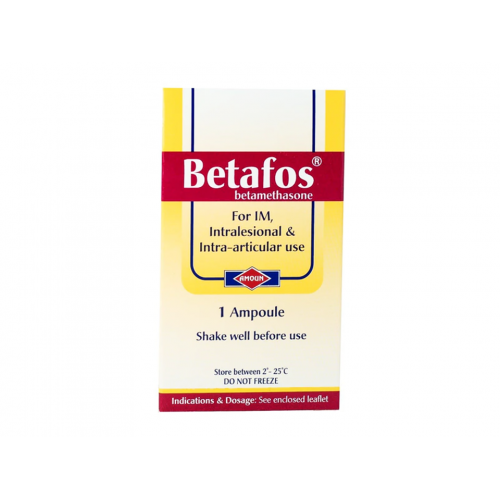
Betaphos is a potent corticosteroid preparation containing betamethasone as its active ingredient. It features a unique dual formulation combining a rapidly acting form (betamethasone sodium phosphate) with a slow-release, long-lasting form (betamethasone acetate). This combination ensures both rapid onset and sustained therapeutic effect.
How Does Local Corticosteroid Injection Work?
Local corticosteroid injections such as Betaphos are an effective therapeutic strategy because they target the source of the problem directly:
- Potent anti-inflammatory action: Corticosteroids reduce production of inflammatory chemicals (such as prostaglandins), halting the inflammatory cascade at the affected site.
- Reduction of swelling and pain: By lowering inflammation and swelling within the joint or around the tendon, pressure on surrounding nerves and tissues is relieved, translating into rapid, effective pain relief.
Primary Indications for Betaphos Injection in Orthopedics
The main use of Betaphos in the orthopedic clinic is treating pain and inflammation of bones, joints, and surrounding soft tissues. The injection demonstrates particular efficacy in the following conditions requiring precise local injection:
- Hand and fingers — Trigger finger: Reduces inflammation around the finger tendon, restoring smooth, pain-free movement.
- Wrist — Carpal tunnel syndrome: Local injection to reduce swelling and pressure on the median nerve.
- Shoulder — Rotator cuff tendinitis: Reduces inflammation and pain, particularly during movement or sleep. (Betaphos injection is contraindicated when a partial or complete tendon tear is present.)
- Knee — Osteoarthritis: Used to reduce intra-articular inflammation and pain to improve mobility.
- Foot and ankle — Plantar fasciitis (heel spur): Effective treatment for inflammation at the tendon-bone attachment point. (Betaphos must never be used for Achilles tendinitis.)
- Other uses — Rheumatoid arthritis and gout: Used in certain cases to control acute inflammation in a specific joint.

Correct Dosage and Administration
Dosage Determination and Route of Administration
Dosage depends on the condition and injection site. In orthopedic practice, the focus is on local injection — intra-articular or peritendinous. Administration must be performed exclusively by a specialized orthopedic surgeon using aseptic, precise technique. Dosage is determined based on:
- Severity of inflammation and size of the affected joint.
- Patient age and general health status.
Warning: Local injection should not be repeated without medical consultation to avoid adverse effects on cartilage and tendons. Intramuscular or intravenous administration of Betaphos is strictly prohibited except under specialist supervision to prevent systemic side effects.
Onset and Duration of Effect
This is one of the most frequently asked patient questions:
- Onset: Due to the dual formulation, rapid-acting relief typically begins within a few hours to several days post-injection.
- Duration: This depends fundamentally on the underlying reason for injection. As a potent anti-inflammatory, Betaphos can serve as a definitive cure in conditions where inflammation alone is the root problem — most notably plantar fasciitis and trigger finger. In other conditions such as knee osteoarthritis, the injection eliminates inflammation but does not reverse existing cartilage damage; in moderate-grade cases, the effect lasts from a few months to one year at most.
Post-Injection Instructions
Patients are advised to avoid stressing the injected joint or tendon for 24 to 48 hours to allow the medication to settle and take full effect. Cold compresses or an ice pack are also recommended to prevent joint swelling.
Side Effects of Betaphos Injection
While Betaphos provides rapid relief, awareness of potential side effects is essential — particularly when administered systemically (orally, intravenously, or intramuscularly) rather than locally. Local injection offers two key advantages: a much higher active-ingredient concentration at the injection site for maximum efficacy, and minimal systemic absorption that rarely causes side effects.
Common, Temporary Side Effects
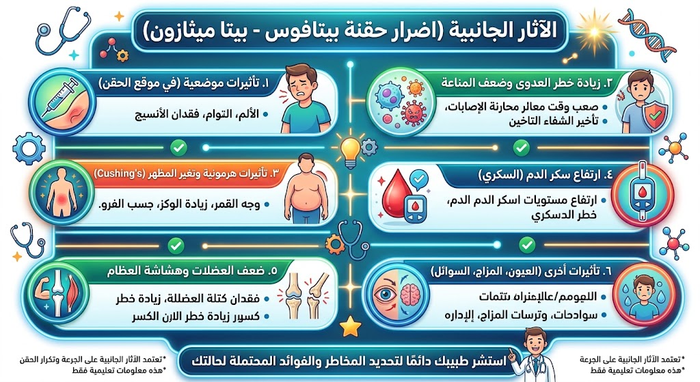
- Temporary pain at the injection site lasting several hours, managed with local anesthetic.
- Mild fluid retention (temporary swelling).
- In rare cases, patients may experience temporary appetite increase or water retention; this effect is far more pronounced with repeated oral, intramuscular, or intravenous dosing rather than a single local injection.
When to Contact Your Doctor
Contact your physician immediately if signs of infection appear at the injection site — severe redness, warmth, or discharge.
Contraindications (Long-Term Risks)
- Active infection: Must not be used when joint infection (septic arthritis) is present.
- Diabetes with HbA1c above 8: Blood sugar levels must be monitored carefully, as corticosteroids can raise glucose temporarily.
- Excessive repeated use: Overly frequent local corticosteroid injections may weaken tendons or damage cartilage over time — one of the most important long-term risks that orthopedic surgeons caution against.
Frequently Asked Questions
What is Betaphos injection and what are its active pharmaceutical ingredients?
Betaphos is a prescription injectable corticosteroid combining two distinct betamethasone esters:
- Betamethasone Sodium Phosphate (2 mg): A completely water-soluble, rapidly absorbed ester that acts within hours to suppress capillary permeability and downregulate acute inflammatory mediators.
- Betamethasone Dipropionate (5 mg): A microcrystalline, lipid-soluble ester with very low water solubility. It forms an intra-articular or intramuscular depot that slowly dissolves, sustaining therapeutic anti-inflammatory levels for several consecutive weeks.
What musculoskeletal conditions are treated with Betaphos injections?
Betaphos is indicated for inflammatory and compressive disorders of the musculoskeletal system:
- Joint Effusion & Osteoarthritis: Managing acute inflammatory synovitis and joint effusion in knee, hip, and ankle osteoarthritis.
- Shoulder Pathologies: Subacromial bursitis, rotator cuff tendinopathy, and adhesive capsulitis (frozen shoulder).
- Spinal Nerve Compression: Lumbar radiculopathy, disc herniations, and acute sciatic nerve inflammation.
- Entrapment & Overuse Syndromes: Carpal tunnel syndrome, de Quervain’s tenosynovitis, and trochanteric bursitis.
- Systemic Inflammatory Arthropathies: Temporary management of acute flares in rheumatoid arthritis, ankylosing spondylitis, and crystal-induced gout.
How quickly does Betaphos take effect and how long does pain relief last?
Betaphos follows a biphasic pharmacological timeline:
- Onset: Patients typically experience noticeable reductions in pain, local warmth, and joint tension within 12 to 24 hours following administration.
- Peak Anti-inflammatory Window: Full clinical effect is generally reached within 48 to 72 hours.
- Duration of Efficacy: Therapeutic suppression of pain and swelling commonly persists for 3 to 6 weeks (and in some cases several months), contingent on joint loading, underlying mechanical wear, and post-injection rest.
Can Betaphos be injected directly into the knee joint (intra-articular injection)?
Yes, direct intra-articular delivery is a standard clinical route for severe localized inflammation:
- Targeted Relief: Delivering the steroid directly into the synovial cavity produces high intra-articular drug concentrations while reducing systemic corticosteroid exposure.
- Diagnostic Drainage: Any large, tense inflammatory joint effusion should be aspirated (arthrocentesis) immediately before injecting the medication.
- Ultrasound Guidance: Musculoskeletal ultrasound (MSK US) guidance is recommended to ensure delivery into the synovial space and avoid intratendinous or subcutaneous fat infiltration.
What is the therapeutic difference between Betaphos and Diprofos?
Therapeutically, pharmacologically, and biochemically, Betaphos and Diprofos are identical:
- Active Formulation: Both contain 5 mg of betamethasone dipropionate and 2 mg of betamethasone sodium phosphate per 1 mL ampoule.
- Brand Distinctions: Diprofos is the original brand name (Schering-Plough/Organon), whereas Betaphos is an approved bioequivalent generic alternative offering identical clinical potency at a lower cost.
- Dosing & Protocols: Both drugs follow identical administration guidelines, dilution protocols (often mixed with 1% or 2% plain lidocaine), and clinical safety precautions.
What are the risks of frequent or repeated corticosteroid injections into a joint?
Repetitive or unmonitored joint injections carry documented biological risks:
- Chondrotoxicity: High-frequency steroid exposure inhibits chondrocyte proteoglycan synthesis and accelerates articular cartilage loss.
- Tendon Weakening: Steroids suppress tenocyte collagen production, increasing the risk of tendon rupture if injected into or immediately adjacent to weight-bearing tendons.
- Local Tissue Atrophy: Superficial extravasation can lead to circumscribed fat necrosis, skin thinning, and permanent cutaneous hypopigmentation.
- Clinical Rule of Thumb: Intra-articular injections into the same joint should be limited to a maximum of 3 to 4 times per year, with minimum rest intervals of 8 to 12 weeks between injections.
How does a Betaphos injection affect diabetic patients and blood glucose levels?
Systemic absorption occurs following local injection and requires close endocrine vigilance:
- Hyperglycemic Response: Betamethasone increases gluconeogenesis in the liver and decreases peripheral tissue glucose uptake, frequently triggering clinically significant hyperglycemia.
- Duration of Spike: Elevated blood glucose typically begins within 6 to 12 hours post-injection, peaks over days 2 and 3, and resolves within 5 to 7 days.
- Clinical Protocol: Diabetic patients should check blood glucose levels more frequently during the week following the injection and coordinate with their physician for temporary titration of oral medications or insulin.
What are the primary absolute contraindications for Betaphos?
Administration is strictly contraindicated under the following clinical circumstances:
- Septic Arthritis: Injecting steroids into an infected joint causes rapid immunosuppression and accelerated bacterial cartilage destruction.
- Systemic Infections: Active bacteremia, uncontrolled tuberculosis, or untreated systemic fungal infections.
- Tendon Ruptures: Injection directly into structural tendons (such as the Achilles or patellar tendon).
- Severe Uncontrolled Comorbidities: Brittle, uncontrolled diabetes or malignant hypertension.
- Intravenous (IV) Administration: Betaphos is a microcrystalline suspension and is strictly contraindicated for IV use due to the risk of vascular occlusion and anaphylactic reactions.
What post-injection care instructions should patients follow after receiving Betaphos?
Following post-procedural guidelines helps optimize anti-inflammatory benefits and prevent adverse local reactions:
- 48-Hour Relative Rest: Avoid heavy lifting, prolonged walking, stairs, and sports activities during the initial two days to prevent rapid clearance of the depot medication.
- Managing a Post-Injection Flare: About 2% to 5% of patients experience a temporary spike in pain (crystal-induced flare) within the first 24 hours. This is managed by applying a cloth-wrapped cold pack for 15 minutes 3 times daily and taking oral paracetamol.
- Puncture Site Care: Keep the bandage dry and clean for 24 hours. Contact the clinic immediately if fever, spreading redness, or purulent drainage occurs.
Does Betaphos cure osteoarthritis or disc herniation permanently?
Betaphos is a targeted symptom-modifying therapy, not a structural cure:
The injection extinguishes acute inflammatory cascades, reduces tissue edema, and relieves nerve root irritation. However, it cannot regrow worn hyaline cartilage, reverse osteophytes, or return a herniated intervertebral disc to its native position.
Its primary clinical role is to interrupt the debilitating pain cycle. By creating a temporary pain-free window of 4 to 8 weeks, it allows the patient to actively engage in physical therapy, quadriceps and core rehabilitation, and biomechanical offloading, which serve as the foundation for long-term functional recovery.
References
AAOS OrthoInfo — Cortisone Shot (Steroid Injection) (2024).
https://orthoinfo.aaos.org/en/treatment/cortisone-shot-steroid-injection- AAOS OrthoInfo — Trigger Finger (2022).
https://orthoinfo.aaos.org/en/diseases–conditions/trigger-finger/ - Cleveland Clinic — Cortisone Shots (Steroid Injections): Benefits & Side Effects (2024).
https://my.clevelandclinic.org/health/treatments/cortisone-shots-steroid-injections - Mayo Clinic — Cortisone Shots (2024).
https://www.mayoclinic.org/tests-procedures/cortisone-shots/about/pac-20384794 - Hospital for Special Surgery (HSS) — Cortisone Shot (Steroid Injection): Benefits and FAQs (2023).
https://www.hss.edu/health-library/conditions-and-treatments/cortisone-shots - Medscape — Corticosteroid Injections of Joints and Soft Tissues (2016).
https://emedicine.medscape.com/article/325370-overview - Defined S et al. — The role of corticosteroid injections in treating plantar fasciitis: A systematic review and meta-analysis. Foot Ankle Surg (2023). PubMed 36774828.
https://pubmed.ncbi.nlm.nih.gov/36774828/ - Coombes BK, Bisset L, Vicenzino B — Efficacy and safety of corticosteroid injections and other injections for management of tendinopathy: a systematic review of randomised controlled trials. Lancet (2010). PubMed 20970844.
https://pubmed.ncbi.nlm.nih.gov/20970844/