
Quick answer
The success rate of carpal tunnel release is high: most patients’ numbness improves and night symptoms often resolve within days. Full recovery is less likely when surgery is delayed until muscle wasting. Most “failures” come from an inaccurate diagnosis (for example numbness from the neck), incomplete release of the ligament or long-standing nerve damage, and rarely scarring around the nerve.
✅ Last medically reviewed by Prof. Dr. Ibrahim Shaarawi, Professor of Orthopaedic Surgery, on 5 October 2026
Patients rightly want to know their chances before surgery. Here is an honest summary of expected results, as part of our guide to carpal tunnel release and hand nerve surgery.
What does carpal tunnel release involve?
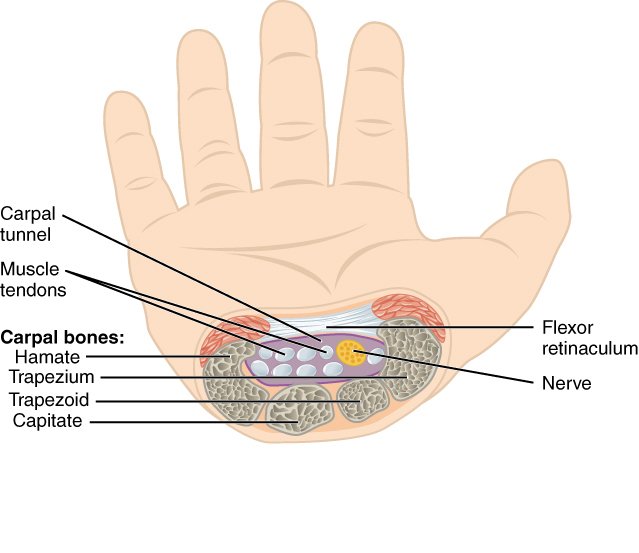
The surgeon divides the transverse carpal ligament roofing the carpal tunnel, enlarging the tunnel and relieving pressure on the median nerve without cutting the nerve. It is a short day case under local anaesthesia.
Expected results by severity
| Severity before surgery | Expected improvement |
|---|---|
| Mild to moderate | Usually excellent and quick |
| Severe without wasting | Good; full sensation may take months |
| Severe with wasting | Pain and night numbness improve; some weakness may remain |
Long-term reviews report high patient satisfaction after carpal tunnel release, and randomised trials show better long-term results with surgery than with non-surgical treatment in moderate and severe cases.
Video: median nerve release surgery
Why carpal tunnel release sometimes fails
| Cause | How it shows | Solution |
|---|---|---|
| Wrong diagnosis (neck, ulnar nerve, systemic neuropathy) | No improvement from the start | Re-examination, nerve studies, MRI |
| Incomplete ligament release | Symptoms persist immediately after surgery | May need revision release |
| Advanced nerve damage before surgery | Partial, slow improvement | Time and rehabilitation; sensation may not fully return |
| Scarring or true recurrence | Improvement then return of symptoms months later | Assessment, possibly revision surgery |
That is why we insist on nerve studies and examination of the neck and elbow before any operation. Compare techniques in endoscopic vs mini-open carpal tunnel release, recovery in recovery after carpal tunnel release and cost in carpal tunnel release cost in Egypt.
Key numbers to know
- Carpal tunnel syndrome is the most common peripheral nerve entrapment worldwide (Padua et al., Lancet Neurology 2016).
- In a Cochrane review of 14 randomised trials (1,231 patients, 84% women), surgery roughly doubled the chance of long-term improvement compared with splinting, and 44% of the splint group were later referred for surgery (Lusa et al., Cochrane 2024).
- Across 28 studies (2,586 hands), endoscopic and open release had the same long-term results; endoscopic patients returned to work about 8 days sooner, with 45% fewer minor complications (Vasiliadis et al., Cochrane 2014).
- When carpal tunnel surgery has to be redone, success was 75% with repeat release alone and 86% when the nerve was also covered with a tissue flap (Soltani et al., 2013).
| Treatment | When we use it | What to expect |
|---|---|---|
| Night wrist splint | Mild and moderate cases, especially night-time numbness | Reduces night waking for many patients within weeks |
| Activity changes and nerve gliding | Alongside every stage | Supports treatment but does not replace surgery in severe cases |
| Steroid injection | Mild and moderate cases, or when a splint is not enough | Clear relief within weeks; symptoms may return |
| Mini-open carpal tunnel release | Moderate to severe cases, thumb muscle wasting, or failed conservative care | Usually under local anaesthesia as a day case; night numbness improves quickly |
| Endoscopic release | Selected cases | Same long-term results with a slightly faster return to work |
At Prof. Dr. Ibrahim Shaarawi’s clinics in Nasr City, Mohandeseen and New Cairo (5th Settlement) we examine the hand and review your nerve study at the same visit, confirming where and how badly the nerve is trapped before choosing a splint, injection or release.
Recovery time
- Light tasks within days.
- Desk work within one to two weeks.
- Heavy manual work within four to six weeks.
- Nerve recovery in severe cases can take months.
How to give yourself the best result
- Don’t delay surgery once severe entrapment is confirmed.
- Make sure the diagnosis is confirmed by nerve studies.
- Move your fingers early and follow wound-care advice.
- Control diabetes and stop smoking.
Frequently asked questions about carpal tunnel release success
What is the success rate of carpal tunnel release?
High; most patients’ numbness improves, and results are best when surgery is done before muscle wasting.
Why is my numbness not better after surgery?
Common reasons are an inaccurate diagnosis such as neck-related numbness, long-standing nerve damage that needs time, or incomplete ligament release.
Can carpal tunnel syndrome come back after surgery?
Rarely; scarring around the nerve can cause recurrence and needs assessment, sometimes a second operation.
How long is recovery after carpal tunnel release?
Light tasks within days, desk work in one to two weeks and heavy work in four to six weeks; full nerve recovery may take months.
Is carpal tunnel surgery dangerous?
No, it is one of the safest hand operations; complications are uncommon, such as scar tenderness or temporary pillar pain.
To have your hand assessed and your nerve tests reviewed, book a consultation, call +20 155 240 4488 or message us on WhatsApp at +20 155 554 7181.
Medically reviewed by Prof. Dr. Ibrahim Shaarawi, Professor of Orthopaedic Surgery. This article is general medical education and does not replace an examination or the treatment plan your surgeon sets for you. See our medical disclaimer.
Related hand nerve and tendon guides
Related guides on carpal tunnel surgery:
- Carpal tunnel release and hand nerve surgery
- Endoscopic vs mini-open carpal tunnel release
- Recovery after carpal tunnel release
- Carpal tunnel release cost in Egypt
- Carpal tunnel syndrome
References
- Louie D, et al. Long-term outcomes of carpal tunnel release: a critical review of the literature. Hand (N Y). 2012;7(3):242-6.
- Soltani AM, et al. A systematic review of the literature on the outcomes of treatment for recurrent and persistent carpal tunnel syndrome. Plast Reconstr Surg. 2013;132(1):114-121.
- Shi Q, MacDermid JC. Is surgical intervention more effective than non-surgical treatment for carpal tunnel syndrome? A systematic review. J Orthop Surg Res. 2011;6:17.
- Lusa V, et al. Surgical versus non-surgical treatment for carpal tunnel syndrome. Cochrane Database Syst Rev. 2024;1(1):CD001552.
- Padua L, et al. Carpal tunnel syndrome: clinical features, diagnosis, and management. Lancet Neurol. 2016;15(12):1273-1284.
- American Academy of Orthopaedic Surgeons (OrthoInfo). Carpal Tunnel Syndrome.