
Quick answer
The commonest cause of hand numbness is nerve entrapment — first carpal tunnel syndrome (thumb, index and middle fingers, worse at night), then ulnar nerve entrapment at the elbow (little and ring fingers), then a cervical disc, diabetes and vitamin B12 deficiency. Brief numbness after sleeping on the arm is harmless; sudden one-sided numbness with weakness, facial droop or slurred speech, or with chest pain is an emergency. Which fingers are numb is the key clue, and nerve conduction studies confirm it.
✅ Last medically reviewed by Prof. Dr. Ibrahim Shaarawi, Professor of Orthopaedic Surgery, on 5 October 2026
“My hand keeps going numb” is one of the commonest complaints I hear. Most cases are due to a treatable nerve entrapment — the priority is not to wait until the nerve weakens and muscles waste. This guide explains how to identify the cause and when to worry, as part of our guide to carpal tunnel release and hand nerve surgery.
What causes hand numbness?
| Cause | Usual area | Distinguishing feature |
|---|---|---|
| Carpal tunnel syndrome | Thumb, index, middle and half the ring finger | Worse at night, eased by shaking the hand |
| Ulnar nerve entrapment | Little finger and half the ring finger | Worse with the elbow bent (phone, sleep) |
| Cervical disc / radiculopathy | Down the arm to specific fingers | Neck pain that changes with neck movement |
| Diabetic neuropathy | Fingertips of both hands and the feet | Gradual “glove and stocking” pattern |
| Vitamin B12 deficiency | Hands and feet | Fatigue, sometimes anaemia |
| Pressure during sleep | Depends on arm position | Settles within minutes |
| Pregnancy, hypothyroidism | Usually a carpal tunnel pattern | Fluid retention |
Finger map: which nerve is involved?
- Thumb, index and middle fingers: median nerve — usually carpal tunnel, sometimes C6/C7 nerve roots.
- Little finger and half the ring finger: ulnar nerve — elbow, Guyon’s canal at the wrist, or C8 root.
- Back of the hand near the thumb: a sensory branch of the radial nerve.
- Both hands and feet: a systemic cause such as diabetes or B12 deficiency.
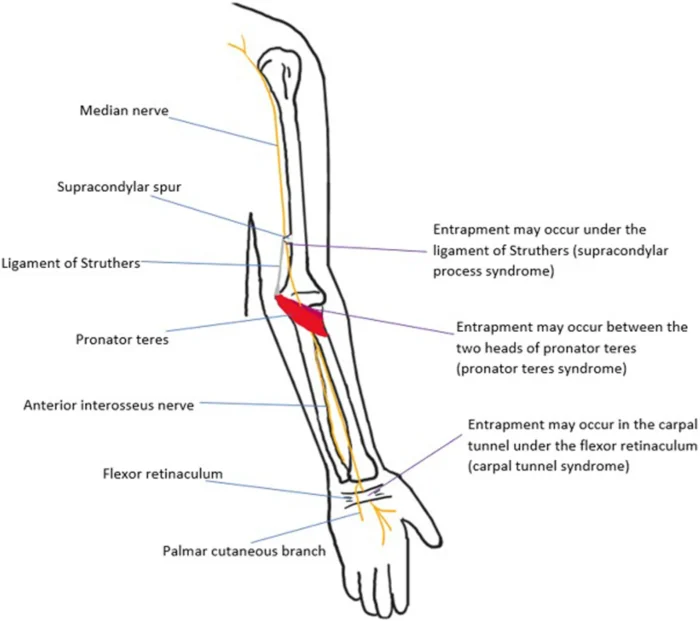
Video: dropping things from your hand
Is hand numbness serious?
Most hand numbness is not life-threatening, but it can be serious for the nerve if left until weakness and wasting appear. Some situations are emergencies:
- Sudden numbness or weakness on one side with facial droop or slurred speech: possible stroke — call an ambulance (123 in Egypt) immediately.
- Left arm numbness with chest pain or pressure, sweating or breathlessness: possible heart attack — emergency care now (see left and right hand numbness).
- Progressive weakness, dropping things, or wasting at the base of the thumb.
- Numbness in both hands and feet that is spreading.
- Numbness after a neck injury.
How we find the cause
- Clinical examination: numbness map, muscle strength, Phalen and Tinel tests at wrist and elbow, and neck examination.
- Nerve conduction studies: locate the entrapment and grade its severity.
- Blood tests: HbA1c, vitamin B12, thyroid function.
- Neck MRI when a disc is suspected, and sometimes nerve ultrasound.
Key numbers to know
- Carpal tunnel syndrome is the most common peripheral nerve entrapment worldwide (Padua et al., Lancet Neurology 2016).
- Ulnar nerve entrapment at the elbow is the second most common entrapment neuropathy after carpal tunnel syndrome (Cochrane review, 2016).
- In a Cochrane review of 14 randomised trials (1,231 patients, 84% women), surgery roughly doubled the chance of long-term improvement compared with splinting, and 44% of the splint group were later referred for surgery (Lusa et al., Cochrane 2024).
- A steroid injection clearly improved symptoms at 10 weeks, but 73% of patients given the higher dose still had surgery within a year, versus 92% after placebo (Atroshi et al., Annals of Internal Medicine 2013).
At Prof. Dr. Ibrahim Shaarawi’s clinics in Nasr City, Mohandeseen and New Cairo (5th Settlement) we examine the hand and review your nerve study at the same visit, confirming where and how badly the nerve is trapped before choosing a splint, injection or release.
Treatment by cause
| Cause | First-line treatment | When surgery is considered |
|---|---|---|
| Carpal tunnel | Night splint, activity modification, steroid injection | Failed treatment or moderate/severe entrapment on testing |
| Ulnar nerve | Avoid prolonged elbow bending, night splint | Weakness, wasting or persistent symptoms |
| Neck | Physiotherapy, medication | Progressive neurological deficit or intractable pain |
| Diabetes / B12 | Glucose control, B12 replacement | Only if an entrapment coexists |
Self-help tips
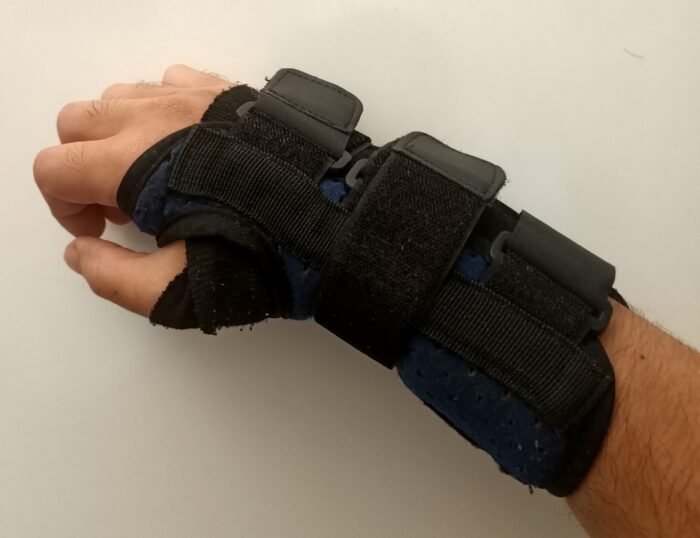
- Keep the wrist straight during sleep and avoid sleeping on the hand.
- Take breaks from typing, phone use and repetitive tasks.
- Avoid holding the elbow bent for long periods.
- Control blood sugar and check B12 if you are diabetic or take metformin.
Frequently asked questions about hand numbness
What is the most common cause of hand numbness?
Carpal tunnel syndrome, causing numbness of the thumb, index and middle fingers that is worse at night, followed by ulnar nerve entrapment, cervical disc problems and diabetes.
Is hand numbness serious?
Usually not life-threatening but it can damage the nerve if neglected. Sudden one-sided numbness with speech difficulty, or with chest pain, is an emergency.
How can I tell if numbness comes from the neck or the hand?
Neck-related numbness usually comes with neck pain radiating down the arm that changes with neck movement; carpal tunnel numbness is in the fingers and worse at night. Examination and nerve studies decide.
How is hand numbness treated?
It depends on the cause: night splint, activity changes and injection for carpal tunnel, B12 and glucose control for systemic causes, and nerve release surgery for moderate or severe entrapment.
When should I see a doctor about hand numbness?
If it lasts more than two weeks, wakes you at night, comes with weakness or dropping things, or affects both hands and feet.
To have your hand assessed and your nerve tests reviewed, book a consultation, call +20 155 240 4488 or message us on WhatsApp at +20 155 554 7181.
Medically reviewed by Prof. Dr. Ibrahim Shaarawi, Professor of Orthopaedic Surgery. This article is general medical education and does not replace an examination or the treatment plan your surgeon sets for you. See our medical disclaimer.
Related hand nerve and tendon guides
Related guides on hand numbness and nerve entrapment:
- Carpal tunnel release and hand nerve surgery
- Hand numbness at night
- Left and right hand numbness
- Carpal tunnel syndrome
- Ulnar nerve entrapment
- Nerve entrapment
- Vitamin B12 injections for nerves
References
- Padua L, et al. Carpal tunnel syndrome: clinical features, diagnosis, and management. Lancet Neurol. 2016;15(12):1273-1284.
- Palmer BA, Hughes TB. Cubital tunnel syndrome. J Hand Surg Am. 2010;35(1):153-63.
- Iyer S, Kim HJ. Cervical radiculopathy. Curr Rev Musculoskelet Med. 2016;9(3):272-80.
- Stabler SP. Clinical practice. Vitamin B12 deficiency. N Engl J Med. 2013;368(2):149-60.
- Feldman EL, et al. Diabetic neuropathy. Nat Rev Dis Primers. 2019;5(1):41.
- NHS. Pins and needles.
- NHS. Stroke — symptoms.
- NHS. Heart attack — symptoms.