
Core decompression is a common treatment for avascular necrosis (AVN) of the femoral head. Channels are drilled inside the head to lower the pressure in the bone and open new pathways for blood to reach the dead bone cells. Before looking at the operation, it helps to understand what AVN is, its causes and treatment options.
What is avascular necrosis of the hip?
Avascular necrosis is the death of bone cells because of reduced blood flow — and therefore oxygen — to them. Blood reaches bone through tiny vessels; in most bones there are many, so if one is blocked the others compensate. Some bones, however, depend on a single supply, and when it is damaged or blocked necrosis follows.
Where does avascular necrosis occur?
- The femoral head (hip)
- The scaphoid bone of the wrist
- The talus of the foot
- The lower femur at the knee
The hip is one of the most common sites. As the bone tissue breaks down, patients develop groin or thigh pain and difficulty walking; symptoms can start mildly and become constant. Over time the loss of bone can lead to collapse and arthritis of the joint.
What causes avascular necrosis of the hip?
- Hip fractures
- High-dose steroids by mouth or injection into a vein (not local injections)
- Blood-clotting disorders
- Sickle cell disease
- Genetic factors
Chronic conditions such as diabetes and high blood pressure, and lifestyle factors, may also contribute by affecting blood flow.
Video: core decompression of the femoral head
How is it diagnosed?
Diagnosis starts with a full examination of symptoms such as hip pain and reduced movement. Plain X-rays are the first test; they may not show early stages but show the shape of the bone, any collapse, fracture or arthritis. MRI is the key test: it shows the location and extent of necrosis even in early stages, when less invasive treatment than hip replacement is still possible.
Stages of avascular necrosis
| Stage (ARCO) | Findings | Treatment usually suitable |
|---|---|---|
| 1 | Normal X-ray; MRI shows necrosis | Treat the cause, medicines, core decompression |
| 2 | X-ray changes without collapse of the femoral head | Core decompression to save the joint |
| 3 | Collapse of the femoral head surface | Depending on the extent: decompression in selected cases or hip replacement |
| 4 | Arthritis of the joint | Hip replacement |
Treatment options
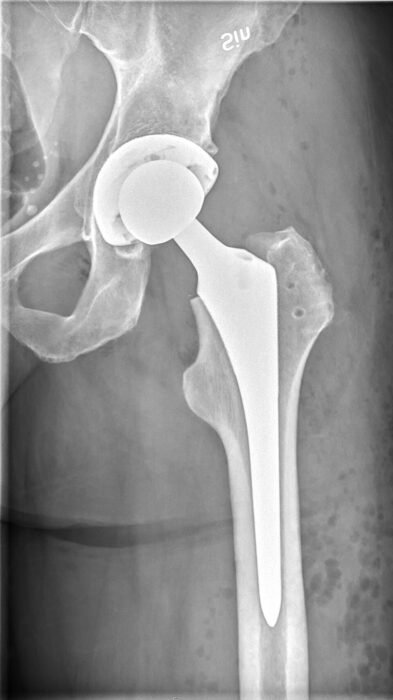
Non-surgical treatment includes physiotherapy and some medicines used for osteoporosis, which may help in early stages. Core decompression, done through a small incision under X-ray, improves blood flow to the femoral head and is used in stages 1 and 2 before the shape of the joint changes. In advanced stages, hip replacement removes the femoral head and neck and replaces them with an implant fixed in the femur and pelvis; in young patients a cementless hip replacement with a ceramic hip replacement is a common choice.
Frequently asked questions about core decompression of the femoral head
What is core decompression of the femoral head?
Drilling channels in the femoral head to lower pressure in the bone and open new blood pathways, used in early avascular necrosis.
When does core decompression work?
In stages 1 and 2, before the surface of the femoral head collapses.
Does core decompression need a large incision?
No — it is done through a small incision under X-ray, and recovery is much faster than after hip replacement.
What causes avascular necrosis of the femoral head?
Important causes include high-dose steroids, femoral neck fractures, clotting disorders and sickle cell disease.
When do I need a hip replacement for AVN?
When the femoral head collapses or arthritis develops (advanced stages).
To have your hip assessed, book a consultation, call +20 155 240 4488 or message us on WhatsApp at +20 155 554 7181.
Medically reviewed by Prof. Dr. Ibrahim Shaarawi, Professor of Orthopaedic Surgery. This article is general medical education and does not replace an examination or the plan your surgeon sets for you. See our medical disclaimer.
Related hip replacement guides
Advanced necrosis is treated with hip replacement surgery. Read also:
- Hip replacement surgery
- Hip arthritis symptoms and grades
- Hip arthritis treatment
- Femoral neck fracture in older adults
- Preventing falls and fractures in older adults
- Cementless hip replacement