
Colchicine is one of the oldest and most vital medications used in treating inflammatory and joint diseases. In this comprehensive guide, supervised by Prof. Dr. Ibrahim Shaarawi, a renowned expert in orthopedic surgery and joint diseases, we explore the clinical applications, precise dosages, and safety profiles of this drug based on the latest medical research.

What is Colchicine?
Colchicine is a natural alkaloid extracted from the autumn crocus (Colchicum autumnale). Unlike standard painkillers, Colchicine is a highly specific anti-inflammatory agent. It works by inhibiting mitosis (cell division) and preventing the migration of white blood cells (neutrophils) to the site of inflammation. This effectively halts the “inflammatory storm” and swelling associated with crystal deposits in the joints.
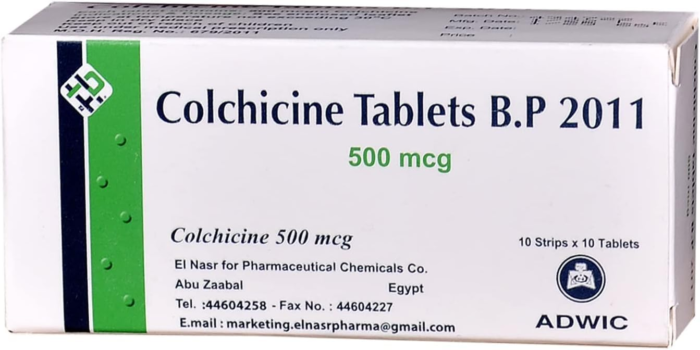
What are the Indications for Colchicine?
This medication is used for several specific medical conditions that require precise diagnosis:
- Acute Gout Attacks: Rapid control of pain and inflammation.
- Gout Prophylaxis: To prevent flare-ups when starting uric acid-lowering therapies (like Allopurinol).
- Familial Mediterranean Fever (FMF): To prevent attacks and reduce the risk of Amyloidosis.
- Pericarditis: As a complementary treatment to reduce the recurrence of inflammation in the heart lining.
- Behçet’s Disease: To treat skin ulcers and joint inflammation associated with the syndrome.
When is Colchicine Used in Orthopedics?
Prof. Dr. Ibrahim Shaarawi explains that in orthopedics, Colchicine’s utility extends beyond traditional gout. It is frequently prescribed for:
- Pseudogout: Caused by calcium pyrophosphate crystal deposits.
- Calcific Tendonitis: To reduce inflammation caused by calcium deposits in the tendons.
- Crystal-Induced Synovitis: In cases of advanced joint wear accompanied by severe irritation.
Mechanism of Controlling Joint Inflammation (H3)
Colchicine binds to “tubulin” proteins, preventing inflammatory cells from reaching the affected joint. This explains its high efficacy even in relatively small doses compared to general analgesics.
Comparison: Colchicine vs. Traditional NSAIDs (H3)
Colchicine is more specialized for crystal-induced pain, whereas Non-Steroidal Anti-Inflammatory Drugs (NSAIDs) like Ibuprofen act on a broader range of pain pathways.
Quick Comparison: Colchicine vs. NSAIDs
| Feature | Colchicine | NSAIDs (e.g., Ibuprofen) |
| Mechanism | Inhibits inflammatory cell movement | Inhibits COX enzymes |
| Specialty | Highly specific for Gout/Crystals | General pain relief |
| Gastric Impact | May cause diarrhea at high doses | May cause stomach ulcers |
| Kidney Impact | Requires precise dose adjustment | Can affect kidney function significantly |
What is the Dosage of Colchicine?
Determining the correct dose is a “medical art” required to avoid toxicity. Dr. Ibrahim Shaarawi emphasizes following these protocols:
- For Acute Gout Attacks: Start with 1.2 mg (two tablets) immediately, followed by 0.6 mg after one hour. Do not exceed 1.8 mg within a 1-hour period.
- Prophylactic Dose: Usually ranges between 0.6 mg once or twice daily.
- For Renal Patients: The dose must be strictly reduced under medical supervision to prevent drug accumulation and toxicity.
What are the Complications of Colchicine?
Colchicine has a “narrow therapeutic window,” meaning the difference between a safe dose and a toxic dose is small.
- Gastrointestinal Issues: Severe diarrhea, nausea, and vomiting (often the first signs of overdose).
- Myotoxicity: Muscle weakness, especially when used with certain cholesterol-lowering drugs (Statins).
- Blood Disorders: Reduced white blood cell or platelet counts during long-term high-dose therapy.
What are the Brand Names for Colchicine?
Brand names vary by region. Common names include:
| Brand Name | Manufacturer | Typical Concentration |
| Colchicine | Various (Generic) | 0.5 mg / 0.6 mg |
| Colcrys | Takeda Pharmaceuticals | 0.6 mg |
| Mitigare | West-Ward | 0.6 mg |
| Goutnil | Various (Middle East) | 0.5 mg |
What is the Price of Colchicine?
Colchicine is generally an affordable medication, though prices vary by country:
- USA: Prices can range from $20 to $100 for a month’s supply (depending on insurance/generic availability).
- Middle East (Egypt/Saudi): Ranges from $1 to $10 per pack.(Note: Prices are subject to local health ministry updates).
Frequently Asked Questions (FAQ)
FAQ Schema Markup
What is colchicine and what are its primary clinical indications?
Colchicine is an alkaloid derivative with unique anti-inflammatory properties targeting innate immune activation. Derived historically from Colchicum autumnale, its main clinical indications include:
- Acute Gout Flares: First-line abortive treatment of acute crystalline mono- or polyarthritis.
- Gout Prophylaxis: Suppression of mobilization flares during the initiation and titration of urate-lowering therapies (e.g., allopurinol, febuxostat).
- Familial Mediterranean Fever (FMF): Lifelong maintenance therapy to abolish polyserositis attacks and protect against secondary AA amyloidosis.
- Cardiology (Pericarditis): First-line adjunct therapy in acute pericarditis and prevention of recurrent pericardial inflammation (ESC guidelines).
- Behçet's Syndrome: Suppression of painful recurrent oral aphthae, genital ulcerations, and erythema nodosum.
- Calcium Pyrophosphate Dihydrate (CPPD) Crystal Deposition: Symptomatic relief in pseudogout attacks.
How does colchicine work at the cellular level (mechanism of action)?
Colchicine exerts targeted, multi-tiered disruption of neutrophil and macrophage function without general cyclooxygenase (COX) inhibition:
- Tubulin Binding & Microtubule Disassembly: It binds stoichiometrically to tubulin dimers, arresting microtubule polymerisation. This immobilizes the neutrophil cytoskeleton, paralyzing chemotaxis, diapedesis through endothelial barriers, and lysosomal degranulation at the joint space.
- NLRP3 Inflammasome Inhibition: It prevents spatial assembly of the NLRP3 inflammasome within macrophages, blocking the conversion of pro-IL-1β into active interleukin-1β (IL-1β), a master orchestrator of acute crystal-driven synovitis.
- Endothelial Selectin Downregulation: Suppresses E-selectin and L-selectin expression, impeding granulocyte rolling and recruitment.
What is the evidence-based dosage regimen for an acute gout flare?
International clinical practice standards (ACR/EULAR) strictly mandate the low-dose regimen over obsolete high-dose hourly titration schedules:
- Loading Dose (Hour 0): Administer 1.0 mg to 1.2 mg (two 0.5 mg or two 0.6 mg tablets) at the earliest sensation of flare onset (ideally within 12–24 hours).
- Follow-up Dose (Hour 1): Administer a single dose of 0.5 mg to 0.6 mg exactly one hour later.
- Subsequent Maintenance: After a 12-hour interval, continue with 0.5 mg or 0.6 mg once or twice daily until the flare completely resolves.
- Clinical Rationale: The landmark AGREE trial confirmed this protocol matches the analgesic efficacy of hourly dosing (up to 4.8 mg) while eliminating up to 70% of associated gastrointestinal toxicity.
Does colchicine lower serum uric acid levels?
No. Colchicine has zero direct effect on serum uric acid concentrations:
It does not inhibit xanthine oxidase nor does it facilitate renal uricosuric excretion. Its sole utility in gout is as a targeted anti-inflammatory shield. When initiating urate-lowering therapy (ULT) with allopurinol or febuxostat, dissolving articular tophi and shifting serum urate levels destabilize crystal surfaces, triggering secondary "breakthrough" or "mobilization" attacks. Colchicine is co-prescribed at low doses (0.5 mg to 0.6 mg daily) for 3 to 6 months to maintain immune quiescence while target serum urate (< 6.0 mg/dL) is achieved.
What is the role of lifelong colchicine in Familial Mediterranean Fever (FMF)?
Colchicine is the disease-modifying cornerstone of FMF management and must be continued indefinitely without interruption:
- Attack Prophylaxis: Doses of 1.0 mg to 2.0 mg daily eliminate acute febrile serositis episodes in approximately 60% of patients and markedly attenuate frequency and severity in an additional 30%.
- Prevention of Secondary AA Amyloidosis: Subclinical inflammation persists between overt clinical attacks in untreated FMF. Colchicine downregulates circulating Serum Amyloid A (SAA) protein synthesis by hepatocytes. Preventing chronic SAA deposition in renal glomerular basement membranes halts proteinuria progression, nephrotic syndrome, and end-stage kidney failure.
What are the earliest clinical signs of colchicine toxicity?
Colchicine features a notoriously narrow therapeutic index; the therapeutic dose approaches toxic thresholds in vulnerable metabolic states. Gastrointestinal symptoms represent the primary alarm:
- Profuse, watery, explosive diarrhea.
- Persistent nausea and intractable vomiting.
- Diffuse crampy abdominal pain and anorexia.
- Clinical Practice Rule: Gastrointestinal intolerance indicates systemic tissue saturation and warrants immediate dose reduction or temporary discontinuation before life-threatening multiorgan failure supervenes.
What are the complications of severe colchicine overdose?
Severe acute toxicity (> 0.5 mg/kg ingestion) mimics systemic arsenic poisoning, progressing through distinct clinical phases:
- Phase 1 (Hours 0–24): Severe gastrointestinal fluid depletion, electrolyte derangements, hypovolemia, and peripheral vasodilation.
- Phase 2 (Days 2–7): Multisystem organ collapse, including cardiogenic shock, life-threatening ventricular arrhythmias, acute tubular necrosis, non-cardiogenic pulmonary edema (ARDS), severe metabolic acidosis, and profound bone marrow suppression (agranulocytosis and thrombocytopenia causing fatal sepsis and hemorrhage).
- Phase 3 (Days 7–21): In surviving patients, rebound leukocytosis, complete reversible alopecia, and protracted axonal sensorimotor neuromyopathy.
Which drug-drug interactions carry high risk when combined with colchicine?
Colchicine pharmacokinetics rely heavily on hepatic cytochrome CYP3A4 oxidation and P-glycoprotein (P-gp) biliary/renal efflux:
- Strong Dual CYP3A4 & P-gp Inhibitors (Fatal Combinations): Clarithromycin, erythromycin, ketoconazole, itraconazole, ritonavir, and cobicistat. Co-administration dramatically elevates plasma colchicine AUC up to 3- to 4-fold.
- Cardiovascular Agents: Diltiazem, verapamil, and amiodarone competitively inhibit P-gp clearance, necessitating up to a 50% dose cut.
- Statins & Fibrates: Concomitant use with atorvastatin, simvastatin, or gemfibrozil carries synergistic myotoxic potential, precipitating severe vacuolar myopathy, rhabdomyolysis, and marked creatine kinase (CK) elevations.
- Grapefruit Juice: Strongly inhibits intestinal CYP3A4 and must be strictly avoided during colchicine therapy.
How should colchicine dosing be adjusted in chronic kidney disease (CKD)?
Renal excretion accounts for 10% to 20% of parent drug clearance and up to 50% in patients with preserved renal function. Impairment prolongs elimination half-life significantly:
- Mild CKD (eGFR 60–89 mL/min): Standard doses are generally safe with close clinical monitoring.
- Moderate CKD (eGFR 30–59 mL/min): Reduce daily prophylactic dosage to 0.5 mg every other day or 0.25 mg to 0.3 mg daily. Monitor full blood counts and renal panels every 3 to 6 months.
- Severe CKD (eGFR < 30 mL/min / Dialysis): Acute flare therapy is restricted to a single dose of 0.5 mg to 0.6 mg, with repeat treatment prohibited within a 14-day window. Systemic corticosteroids or targeted IL-1 inhibitors (anakinra) represent preferred alternatives.
- Black Box Precaution: Colchicine is strictly contraindicated in patients with severe renal or hepatic impairment who are concurrently prescribed any CYP3A4 or P-gp inhibitor.
Is colchicine safe during pregnancy and lactation?
Clinical risk stratification varies markedly by underlying pathology:
- In Familial Mediterranean Fever (FMF): International rheumatology consensus (EULAR) advises continuation of colchicine throughout gestation and lactation. Multiple comprehensive prospective cohort studies confirm no increase in major structural birth defects or chromosomal abnormalities. Untreated maternal FMF flares pose significantly higher risks of premature labor and spontaneous abortion.
- In Acute Gout / Pericarditis: Colchicine should generally be discontinued during pregnancy and replaced with alternative short-course therapeutic agents (e.g., prednisone) after careful specialist risk-benefit appraisal.
- Lactation: Colchicine is excreted into breast milk in low concentrations; infant plasma levels remain negligible at standard maternal therapeutic doses (≤ 1.5 mg/day).
Medical Disclaimer: This article is for educational purposes only, based on the expertise of Prof. Dr. Ibrahim Shaarawi. Always consult your physician before starting or changing any treatment plan.
References
- FitzGerald JD, Dalbeth N, Mikuls T, et al. 2020 American College of Rheumatology Guideline for the Management of Gout. Arthritis Care & Research، 2020؛ 72(6): 744–760. acrjournals.onlinelibrary.wiley.com
- Medscape Reference. Colcrys, Mitigare (colchicine) dosing, indications, interactions, adverse effects . reference.medscape.com
- Drugs.com. Colchicine Dosage — Detailed Dosage Guidelines & Prescribing Information. drugs.com
- Leung YY, Yao Hui LL, Kraus VB. Colchicine — Update on mechanisms of action and therapeutic uses. Seminars in Arthritis and Rheumatism، sciencedirect.com
- Dasgeb B, Kornreich D, McGuinn K, et al. Colchicine: an ancient drug with novel applications. British Journal of Dermatology، 2018؛ 178(2): 350–356. onlinelibrary.wiley.com
- Ozen S, Demirkaya E, Erer B, et al. EULAR recommendations for the management of Familial Mediterranean Fever. Annals of the Rheumatic Diseases، 2016؛ 75(4): . ard.bmj.com
- NICE Clinical Knowledge Summaries. Gout — Management. cks.nice.org.uk
- StatPearls (NIH National Library of Medicine). Colchicine. ncbi.nlm.nih.gov