
Quick answer
Nerve entrapment is chronic compression of a peripheral nerve in a narrow passage. In the hand the commonest are the carpal tunnel (median nerve) and the cubital tunnel (ulnar nerve). It starts with intermittent numbness, becomes constant, then causes weakness and wasting. Nerve conduction studies locate and grade it, and treatment steps up from splints and injections to release surgery. It is treated by an orthopaedic surgeon specialising in hand surgery and peripheral nerves.
✅ Last medically reviewed by Prof. Dr. Ibrahim Shaarawi, Professor of Orthopaedic Surgery, on 5 October 2026
Nerves are far more sensitive to pressure than bone or tendon, so even mild long-standing compression can cause symptoms. Here is an overview of entrapments in the hand and arm, as part of our guide to carpal tunnel release and hand nerve surgery.
What is nerve entrapment?
Repeated pressure or friction where a nerve passes through a tight space causes swelling and reduced blood flow inside the nerve. Early on this causes intermittent numbness; later the insulating myelin and then the nerve fibres themselves are damaged.
Common entrapments of the hand and arm
| Entrapment | Nerve | Site | Typical symptoms |
|---|---|---|---|
| Carpal tunnel | Median | Wrist | Thumb, index and middle finger numbness at night |
| Cubital tunnel | Ulnar | Elbow | Little finger numbness with elbow bending |
| Guyon’s canal | Ulnar | Wrist | Little finger numbness and hand weakness |
| Radial tunnel | Radial | Forearm | Forearm pain, sometimes weak finger extension |
Video: things slipping from your hand
Stages of nerve compression
- Early: intermittent numbness, often at night; fully reversible once pressure is relieved.
- Intermediate: constant numbness and reduced sensation; recovery after release is usually good but slower.
- Advanced: weakness and muscle wasting; release stops progression, but recovery may be incomplete.
Surgeons also use the Sunderland classification of nerve injury (grades 1–5), in which the higher grades reflect damage to nerve fibres and their supporting tissue, as seen after severe chronic compression or trauma.
Which specialist treats nerve entrapment?
| Specialist | Role |
|---|---|
| Orthopaedic surgeon (hand surgery) | Clinical diagnosis, injections, release surgery, follow-up |
| Neurologist / clinical neurophysiologist | Nerve conduction and EMG studies; systemic neuropathy |
| Hand therapist / physiotherapist | Splints, nerve-gliding exercises, rehabilitation |
Diagnosis
- Examination of sensation (light touch, pinprick, two-point discrimination) and muscle strength.
- Provocation tests such as Phalen and Tinel.
- Nerve conduction studies and EMG to locate and grade the entrapment.
- Ultrasound or MRI when a mass or anatomical cause is suspected.
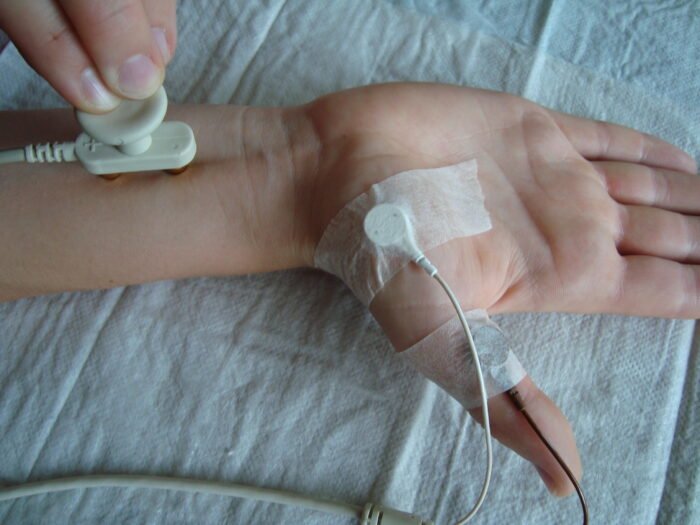
Key numbers to know
- Carpal tunnel syndrome is the most common peripheral nerve entrapment worldwide (Padua et al., Lancet Neurology 2016).
- Ulnar nerve entrapment at the elbow is the second most common entrapment neuropathy after carpal tunnel syndrome (Cochrane review, 2016).
- In a Cochrane review of 14 randomised trials (1,231 patients, 84% women), surgery roughly doubled the chance of long-term improvement compared with splinting, and 44% of the splint group were later referred for surgery (Lusa et al., Cochrane 2024).
- Across 9 randomised trials (587 patients), 69% improved after simple ulnar nerve decompression versus 75% after transposition — no significant difference — with more wound infections after transposition (Caliandro et al., Cochrane 2016).
| Treatment | When we use it | What to expect |
|---|---|---|
| Night splint and activity changes | Mild entrapment | Less tingling for many patients |
| Steroid injection | Mild to moderate entrapment | Relief within weeks; symptoms may return |
| Carpal tunnel release | Moderate to severe median nerve entrapment | Usually under local anaesthesia as a day case |
| Ulnar nerve release at the elbow or Guyon’s canal | Moderate to severe ulnar nerve entrapment | Good results, especially before muscle wasting |
At Prof. Dr. Ibrahim Shaarawi’s clinics in Nasr City, Mohandeseen and New Cairo (5th Settlement) we examine the hand and review your nerve study at the same visit, confirming where and how badly the nerve is trapped before choosing a splint, injection or release.
Treatment
- Anti-inflammatories in early stages.
- Splints to rest the joint and reduce nerve irritation.
- Local steroid injection around (not into) the nerve.
- Release surgery to widen the tunnel and remove pressure.
Nerve release costs 35,000–50,000 EGP (carpal tunnel, ulnar nerve) and tendon release 25,000–30,000 EGP — see carpal tunnel release cost in Egypt.
Frequently asked questions about nerve entrapment
What is nerve entrapment?
Chronic compression of a peripheral nerve in a narrow passage such as the carpal or cubital tunnel, causing numbness and then weakness if it persists.
What are the stages of nerve compression?
It starts with intermittent numbness, often at night, then constant numbness, then weakness and muscle wasting. Nerve studies grade it precisely.
Which doctor treats nerve entrapment in the hand?
An orthopaedic surgeon specialising in hand surgery and peripheral nerves, with nerve studies performed by a neurologist or clinical neurophysiologist.
Does nerve entrapment always need surgery?
No; mild cases often improve with splints, activity changes and injection. Surgery is for persistent moderate or severe cases.
How much does nerve release surgery cost?
With Prof. Dr. Ibrahim Shaarawi, 35,000–50,000 EGP for nerve release and 25,000–30,000 EGP for tendon release.
To have your hand assessed and your nerve tests reviewed, book a consultation, call +20 155 240 4488 or message us on WhatsApp at +20 155 554 7181.
Medically reviewed by Prof. Dr. Ibrahim Shaarawi, Professor of Orthopaedic Surgery. This article is general medical education and does not replace an examination or the treatment plan your surgeon sets for you. See our medical disclaimer.
Related hand nerve and tendon guides
Related guides on nerve entrapment:
- Carpal tunnel release and hand nerve surgery
- Hand numbness: causes and treatment
- Hand numbness at night
- Left and right hand numbness
- Carpal tunnel syndrome
- Ulnar nerve entrapment
- Carpal tunnel release success rate
- Carpal tunnel release cost in Egypt
References
- Schmid AB, et al. Entrapment neuropathies: a contemporary approach to pathophysiology, clinical assessment, and management. Pain Rep. 2020;5(4):e829.
- Padua L, et al. Carpal tunnel syndrome: clinical features, diagnosis, and management. Lancet Neurol. 2016;15(12):1273-1284.
- Palmer BA, Hughes TB. Cubital tunnel syndrome. J Hand Surg Am. 2010;35(1):153-63.
- Werner RA, Andary M. Electrodiagnostic evaluation of carpal tunnel syndrome. Muscle Nerve. 2011;44(4):597-607.
- Chen SH, Tsai TM. Ulnar tunnel syndrome. J Hand Surg Am. 2014;39(3):571-9.