
Quick answer
Carpal tunnel syndrome is compression of the median nerve at the wrist. Its hallmark is numbness of the thumb, index and middle fingers that wakes you at night and eases when you shake the hand, followed by weak grip and dropping things. It is diagnosed with examination and nerve conduction studies; mild to moderate cases respond to a night splint and steroid injection, while moderate-to-severe or persistent cases need carpal tunnel release through a small incision, costing 35,000–50,000 EGP.
✅ Last medically reviewed by Prof. Dr. Ibrahim Shaarawi, Professor of Orthopaedic Surgery, on 5 October 2026
Carpal tunnel syndrome is the commonest nerve entrapment I treat. Diagnosed early it is easy to treat; left too long, numbness and weakness can become permanent. This guide explains how it is diagnosed and treated, as part of our guide to carpal tunnel release and hand nerve surgery.
What is carpal tunnel syndrome?
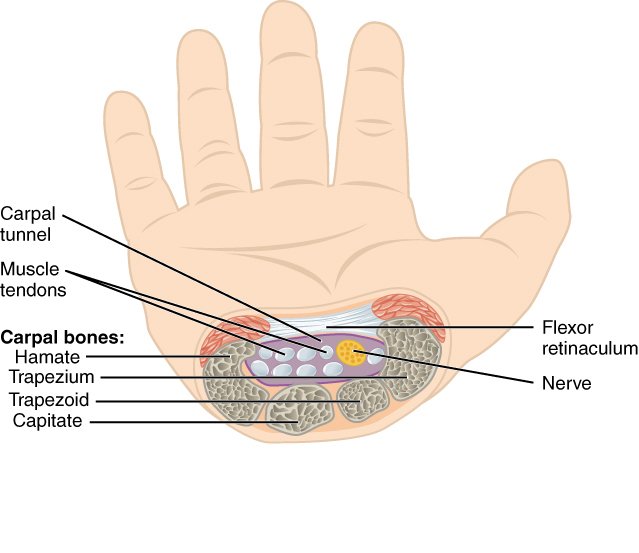
The median nerve passes with nine flexor tendons through the carpal tunnel at the wrist, beneath the transverse carpal ligament. When pressure in the tunnel rises — from swelling of the tendon linings, fluid retention or narrowing — the nerve is squeezed and its blood supply falls.
Causes and risk factors
- Repetitive wrist use: typing, phones, tools.
- Pregnancy and fluid retention.
- Diabetes and hypothyroidism.
- Rheumatoid arthritis and obesity.
- Old wrist fractures or anatomical narrowing.
Symptoms
- Numbness and tingling in the thumb, index, middle and half the ring finger.
- Night waking, relieved by shaking the hand.
- Pain that may spread up the forearm.
- A feeling of swollen fingers without visible swelling.
- Weak grip, dropping things, and in advanced cases wasting at the base of the thumb.
Video: dropping things from your hand
Diagnosis
- Phalen’s test: flexing both wrists for a minute reproduces numbness.
- Tinel’s sign: tapping over the carpal tunnel causes tingling in the fingers.
- Thumb-base muscle strength and wasting; examination of the neck and elbow to exclude other causes.
- Nerve conduction studies to confirm the site and severity; X-rays only if a bony problem is suspected.

Severity grades
| Grade | Nerve study | Main symptoms | Usual treatment |
|---|---|---|---|
| Mild | Sensory slowing only | Intermittent numbness, mainly at night | Night splint, activity modification |
| Moderate | Sensory and motor slowing | Frequent numbness, mild weakness | Injection, or surgery if persistent |
| Severe | Absent sensory or reduced motor response | Constant numbness, weakness, thenar wasting | Surgery without delay |
Key numbers to know
- Carpal tunnel syndrome is the most common peripheral nerve entrapment worldwide (Padua et al., Lancet Neurology 2016).
- In a Cochrane review of 14 randomised trials (1,231 patients, 84% women), surgery roughly doubled the chance of long-term improvement compared with splinting, and 44% of the splint group were later referred for surgery (Lusa et al., Cochrane 2024).
- A steroid injection clearly improved symptoms at 10 weeks, but 73% of patients given the higher dose still had surgery within a year, versus 92% after placebo (Atroshi et al., Annals of Internal Medicine 2013).
- Across 28 studies (2,586 hands), endoscopic and open release had the same long-term results; endoscopic patients returned to work about 8 days sooner, with 45% fewer minor complications (Vasiliadis et al., Cochrane 2014).
At Prof. Dr. Ibrahim Shaarawi’s clinics in Nasr City, Mohandeseen and New Cairo (5th Settlement) we examine the hand and review your nerve study at the same visit, confirming where and how badly the nerve is trapped before choosing a splint, injection or release.
Stepwise treatment
| Step | For whom | Notes |
|---|---|---|
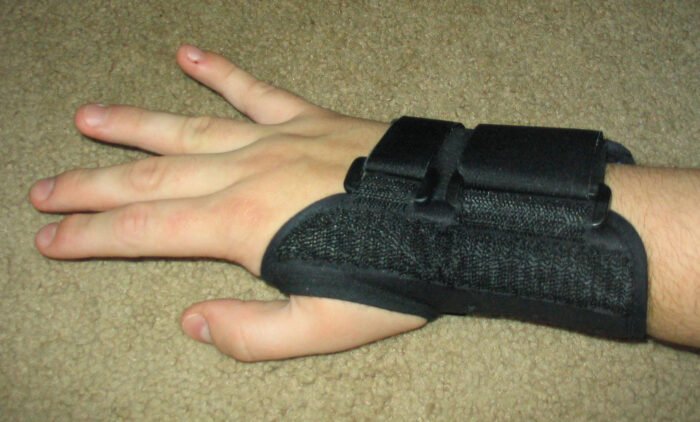
| Night wrist splint | Mild and moderate cases | Keeps the wrist straight during sleep |
| Steroid injection into the carpal tunnel | Mild and moderate cases not improving | Relief for weeks to months; symptoms may return |
| Carpal tunnel release | Persistent moderate and severe cases | Treats the cause — carpal tunnel release and hand nerve surgery |
Randomised trials show surgery gives better long-term results than splinting or non-surgical care in moderate and severe cases, and a placebo-controlled trial confirmed that steroid injection gives clear short-term benefit. Compare surgical techniques in endoscopic vs mini-open carpal tunnel release, recovery in recovery after carpal tunnel release and cost in carpal tunnel release cost in Egypt.
Prevention
- Keep the wrist neutral at the keyboard and during sleep.
- Take regular breaks from repetitive tasks.
- Control diabetes and thyroid disease.
Frequently asked questions about carpal tunnel syndrome
What are the symptoms of carpal tunnel syndrome?
Numbness and tingling in the thumb, index and middle fingers that is worse at night and eased by shaking the hand, then weak grip and dropping things, and in severe cases thumb-base wasting.
Can carpal tunnel syndrome be treated without surgery?
Yes in mild and moderate cases with a night splint, activity changes and a steroid injection into the carpal tunnel. Surgery is for persistent or severe cases.
Is carpal tunnel syndrome serious?
It is not life-threatening, but neglected severe cases can cause permanent numbness, weakness and muscle wasting.
Which specialist treats carpal tunnel syndrome?
An orthopaedic surgeon specialising in hand surgery and peripheral nerves; nerve conduction studies are usually done by a neurologist or clinical neurophysiologist.
What is a severe (grade 3) carpal tunnel result?
It usually means severe slowing or loss of the sensory response on nerve testing; surgery is recommended because waiting risks permanent weakness.
To have your hand assessed and your nerve tests reviewed, book a consultation, call +20 155 240 4488 or message us on WhatsApp at +20 155 554 7181.
Medically reviewed by Prof. Dr. Ibrahim Shaarawi, Professor of Orthopaedic Surgery. This article is general medical education and does not replace an examination or the treatment plan your surgeon sets for you. See our medical disclaimer.
Related hand nerve and tendon guides
Related guides on carpal tunnel syndrome:
- Carpal tunnel release and hand nerve surgery
- Hand numbness: causes and treatment
- Hand numbness at night
- Left and right hand numbness
- Ulnar nerve entrapment
- Nerve entrapment
- Endoscopic vs mini-open carpal tunnel release
- Recovery after carpal tunnel release
- Carpal tunnel release cost in Egypt
References
- Padua L, et al. Carpal tunnel syndrome: clinical features, diagnosis, and management. Lancet Neurol. 2016;15(12):1273-1284.
- Graham B, et al. The American Academy of Orthopaedic Surgeons Evidence-Based Clinical Practice Guideline on: Management of Carpal Tunnel Syndrome. J Bone Joint Surg Am. 2016;98(20):1750-1754.
- Atroshi I, et al. Methylprednisolone injections for the carpal tunnel syndrome: a randomized, placebo-controlled trial. Ann Intern Med. 2013;159(5):309-17.
- Lusa V, et al. Surgical versus non-surgical treatment for carpal tunnel syndrome. Cochrane Database Syst Rev. 2024;1(1):CD001552.
- Shi Q, MacDermid JC. Is surgical intervention more effective than non-surgical treatment for carpal tunnel syndrome? A systematic review. J Orthop Surg Res. 2011;6:17.
- Werner RA, Andary M. Electrodiagnostic evaluation of carpal tunnel syndrome. Muscle Nerve. 2011;44(4):597-607.
- American Academy of Orthopaedic Surgeons (OrthoInfo). Carpal Tunnel Syndrome.
- NHS. Carpal tunnel syndrome.