
Anyone can fall, but older adults are more likely to — especially with long-term conditions such as osteoporosis or after a stroke. About 1 in 3 adults over 65 and half of people over 80 fall at least once a year. Falls can cause fractures and loss of confidence and independence. Falls while walking or washing are among the commonest causes of fractures in people with osteoporosis, and some of these fractures need surgery, so simple changes at home and exercises for strength and balance are worth the effort.
What causes falls?
- Balance problems and muscle weakness
- Poor vision
- Long-term conditions such as heart disease, dementia or low blood pressure that cause dizziness or brief loss of consciousness
Falls are also more likely with wet or freshly polished floors, poor lighting, loose rugs, reaching for high storage or going down stairs, and rushing to the toilet. Falls from ladders during home maintenance are common in older men. Because osteoporosis is common in older people, especially women after the menopause, falls often cause fractures.
Tips to prevent falls at home
- Wipe up spills at once.
- Remove clutter, trailing cables and worn rugs.
- Use non-slip mats and rugs.
- Light all rooms, hallways and stairs well.
- Organise the home to minimise climbing, stretching and bending.
- Get help with tasks you cannot do safely alone.
- Do not walk on slippery floors in socks.
- Avoid loose, trailing clothes.
- Wear well-fitting shoes that support the ankle.
- Look after your feet and see a professional about foot problems.
Video: hip fracture in older adults
| Room | Main hazards | What to do |
|---|---|---|
| Bathroom | Wet floor, low toilet, getting out of the shower | Non-slip mat, grab rails, raised toilet seat, shower chair |
| Bedroom | Getting up at night in the dark | Night light, phone and glasses within reach, bed at a safe height |
| Stairs and hallways | Poor lighting, clutter | Bright lights at both ends, handrails on both sides, clear steps |
| Kitchen | Spills, high cupboards | Wipe spills at once, keep everyday items at waist height |
| Living room | Loose rugs, cables, low chairs | Remove or secure rugs, tidy cables, firm chairs with arms |
Strength and balance training
Regular strength and balance exercises improve strength and balance and reduce the risk of falls. A Cochrane review found that exercise reduces the rate of falls in older people living in the community. This can be walking, dancing or a specialised programme, ideally tailored and supervised by a qualified trainer.
Eyesight, medicines and alcohol
Have your eyes checked if you are worried that poor vision — even with glasses — raises your risk. Ask your doctor to review medicines whose side effects can cause falls. Alcohol impairs coordination, amplifies some medicines and contributes to osteoporosis.
What should I do if I fall?
- Stay calm. If you are not hurt and feel strong enough, do not get up quickly.
- Roll onto your hands and knees and find a stable piece of furniture such as a chair or bed.
- Hold it with both hands and, when ready, get up slowly; sit and rest before carrying on.
- If you are hurt or cannot get up, call for help or phone emergency services.
- Keep warm with a blanket over your legs and feet, and change position about every half hour.
- Consider a personal alarm or keep a mobile phone in your pocket.
Osteoporosis and hip fracture
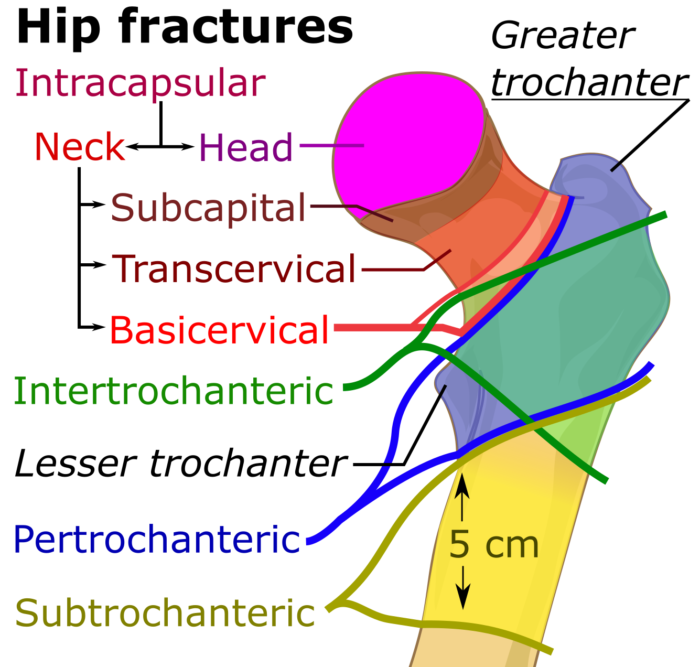
Osteoporosis weakens bones so a fall — or even bending or coughing — can cause a fracture, most often of the hip, wrist or spine. Bone is constantly broken down and replaced; osteoporosis occurs when new bone does not keep up with loss. A hip fracture (femoral neck fracture) is one of the most serious results of a fall and usually needs surgery within 24–48 hours — read femoral neck fracture in older adults and bipolar hip hemiarthroplasty.
Preventing osteoporosis
- Exercise regularly to keep bones strong.
- Eat a healthy diet rich in calcium and vitamin D (oily fish, egg yolk, fortified dairy, some mushrooms).
- Take a daily vitamin D supplement if advised.
- Stop smoking and cut down on alcohol.
- Treat diagnosed osteoporosis as prescribed.
Frequently asked questions about preventing falls and fractures
How can I prevent an older person from falling at home?
Good lighting, removing rugs and cables, non-slip floors, bathroom grab rails, proper shoes, and reviewing medicines and eyesight.
What are the most serious fractures after a fall in older adults?
Hip fracture (femoral neck fracture), and wrist and spinal fractures.
What if an older person falls and cannot get up?
Do not force them up; keep them warm and call an ambulance — there may be a hip fracture needing X-rays and urgent surgery.
Do balance exercises reduce falls?
Yes — a Cochrane review found that strength and balance exercise reduces the rate of falls in older people.
How can I protect myself from osteoporosis?
Regular exercise, calcium and vitamin D, stopping smoking and treating diagnosed osteoporosis.
To have your hip assessed, book a consultation, call +20 155 240 4488 or message us on WhatsApp at +20 155 554 7181.
Medically reviewed by Prof. Dr. Ibrahim Shaarawi, Professor of Orthopaedic Surgery. This article is general medical education and does not replace an examination or the plan your surgeon sets for you. See our medical disclaimer.
Related hip replacement guides
Preventing falls protects against hip fractures that may need hip replacement surgery. Read also:
- Hip replacement surgery
- Hip arthritis symptoms and grades
- Hip arthritis treatment
- Core decompression of the femoral head
- Femoral neck fracture in older adults
References
- Sherrington C, et al. Exercise for preventing falls in older people living in the community. Cochrane Database Syst Rev. 2019;1(1):CD012424.
- American Academy of Orthopaedic Surgeons (OrthoInfo). Hip Fractures.
- National Institute for Health and Care Excellence (NICE). Hip fracture: management. Clinical guideline CG124. 2011, updated 2023.