
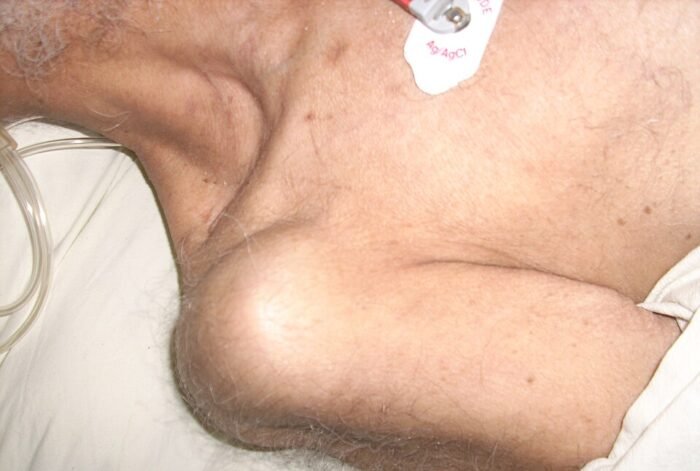
A dislocated shoulder happens when the head of the arm bone comes out of the shoulder socket. The typical signs are sudden severe pain, a visibly changed (“squared-off”) shoulder, and an inability to move the arm, which the person holds slightly away from the body; sometimes the arm tingles or goes numb. Most dislocations are anterior (forwards). The shoulder is put back (reduced) in the emergency department after X-rays, the risk of recurrence is then assessed, and recurrent dislocations may need arthroscopic shoulder stabilisation surgery.
Symptoms of a dislocated shoulder
- Sudden, severe pain at the moment of injury.
- A visible deformity — the rounded outline of the shoulder is lost.
- Inability to move the arm; it is held slightly away from the body and turned out.
- Swelling and bruising over the following hours.
- Numbness or tingling in the arm or hand, which can mean nerve involvement and needs urgent assessment.
Left shoulder dislocation symptoms
A left shoulder dislocation has the same symptoms as the right: sudden severe pain after an injury, a changed shoulder shape and inability to move the arm. Important: left shoulder pain without an injury or fall, especially with chest pain, shortness of breath or sweating, can be a sign of a heart problem and needs emergency care immediately.
Is a dislocated shoulder dangerous?
Usually not, if it is put back promptly and correctly in hospital — most people recover well within weeks. It becomes serious in situations that need emergency care straight away:
- Numbness or weakness in the arm, or loss of feeling over the outer shoulder — a sign of axillary nerve injury.
- A cold, pale or blue hand — a sign of blood-vessel injury.
- An associated fracture of the humeral head or socket rim.
- Delayed reduction for many hours, which makes it harder and adds damage.
- Repeated dislocation, which damages cartilage and bone each time — see recurrent shoulder dislocation.
What causes it?
Most dislocations happen when the raised arm is forced outwards and backwards — a fall on an outstretched hand, a tackle, or blocking a ball. In that position the ball is levered out of the front of the shallow socket, stretching the capsule and ligaments and often tearing the labrum from the rim (a Bankart lesion). Posterior dislocations are much rarer and are classically linked to seizures or electric shock.
Types of shoulder dislocation
| Type | How it happens | Notes |
|---|---|---|
| Anterior | Fall on an outstretched hand or a collision with the arm raised and turned out | By far the most common; often with a Bankart lesion |
| Posterior | Seizures, electric shock or a blow from the front | Can be missed because the shoulder shape changes little |
| Inferior | A large force lifting the arm overhead | Rare; needs urgent reduction |
| Partial (subluxation) | The ball slips out partly and returns on its own | A sign of instability that deserves assessment |
Diagnosis: X-rays and MRI
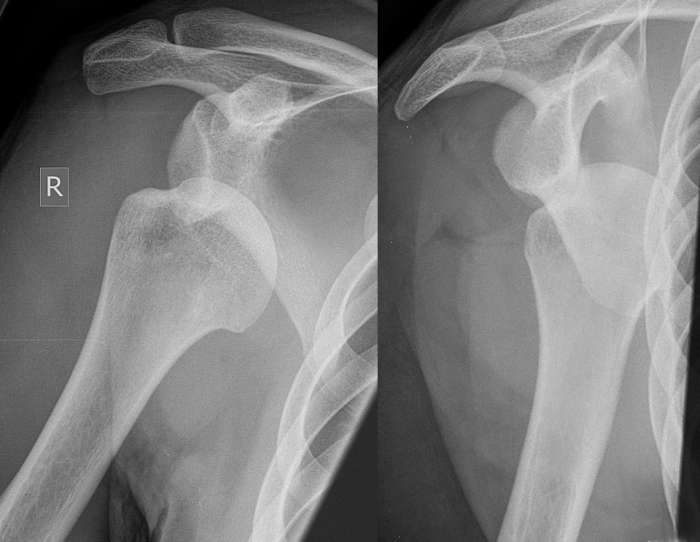
X-rays are taken before reduction to confirm the direction and rule out fractures, and afterwards to confirm the joint is back in place. They may also show a Hill-Sachs defect in the humeral head or a fracture of the socket rim. Once the pain settles, an MRI assesses the labrum and tendons — especially in young athletes or anyone whose shoulder has dislocated more than once.
First aid and reduction
- Do not try to force the shoulder back in, or let an untrained person do it — it can break bone or injure nerves.
- Support the arm in a comfortable position with a sling or scarf, and apply wrapped ice.
- Go to the emergency department, urgently if the hand is numb, cold or changes colour.
- The shoulder is reduced in hospital with pain relief or sedation, then X-rayed again and the axillary nerve and circulation are checked.
- Afterwards: a short period in a sling, physiotherapy, and follow-up to assess the risk of recurrence.
Recovery after a first dislocation
After reduction, a sling is used for comfort for a short period, followed by physiotherapy to restore movement and strengthen the rotator cuff and shoulder-blade muscles. Most people regain daily function within weeks, while contact sport needs a longer, test-based return. The biggest question after a first dislocation is whether it will happen again — which depends mostly on age and activity.
How a dislocated shoulder is put back (reduction)
Reduction returns the ball of the arm bone into the socket. It is done in the emergency department after X-rays confirm the dislocation and rule out fractures. Pain relief or sedation relaxes the muscles, then the doctor uses an established technique — such as the Stimson method, with the patient lying face down and the arm hanging with a light weight until the muscles relax and the joint slips back — or gentle rotation and traction. X-rays are repeated afterwards, feeling and pulse in the hand are checked, and the arm is placed in a sling.
Video: how a dislocated shoulder is reduced and aftercare
Treating a dislocated shoulder at home: dos and don’ts
A dislocation itself is not treated at home — reduction must happen in hospital. But there is a lot you can do at home before reaching the emergency department and during recovery:
| Do at home | Don’t | |
|---|---|---|
| Before hospital | Support the arm in a scarf, apply wrapped ice, go to the emergency department | Try to put it back yourself or let an untrained person pull on the arm |
| After reduction | Sling as advised, ice 15–20 minutes several times a day, prescribed pain relief, hand and elbow exercises | Raise the arm out while turning it back, carry weights, stop exercises early |
| During rehab | Pendulum and graded strengthening as shown below | Folk remedies, non-medical splinting or forceful massage of the joint |
Dislocated shoulder treatment in pictures, step by step
The pictures below summarise the treatment journey from reduction to regaining strength. Timings are approximate and set by your doctor.
Step 1: reduction in the emergency department
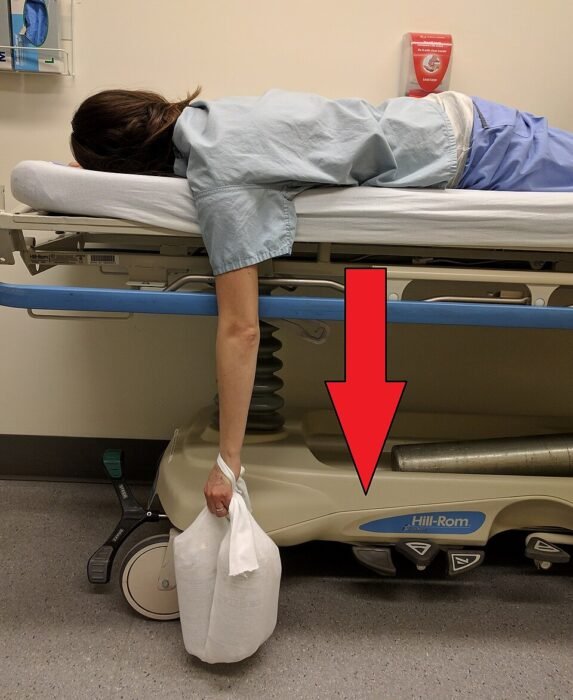
After X-rays and pain relief the joint is reduced by a medical technique, then X-rays are repeated (as in the X-ray above) to confirm it is back in place.
Step 2: sling and rest
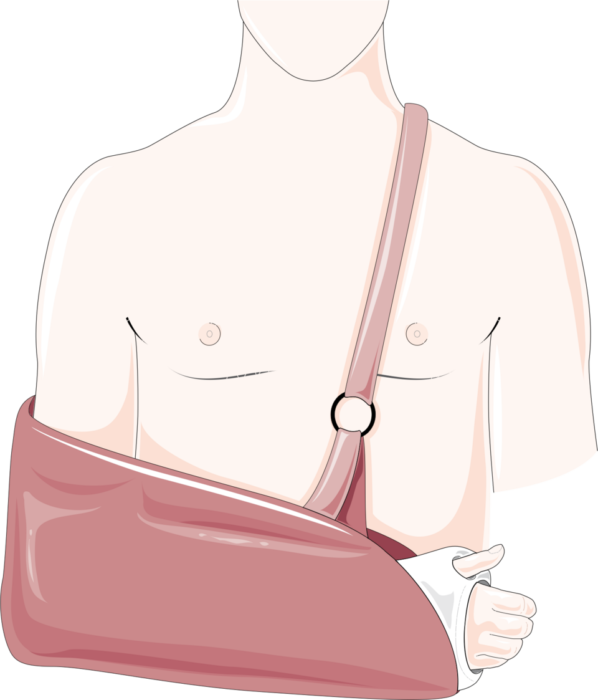
The sling is used for comfort for a short period, with daily hand, wrist and elbow movement to prevent stiffness.
Step 3: pendulum and early movement
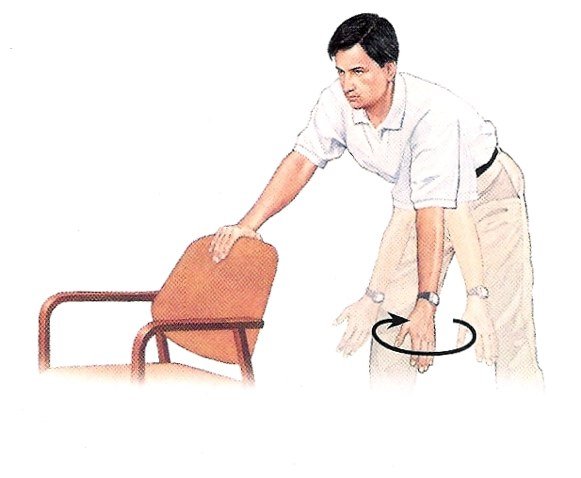
When your doctor allows, pendulum exercises start, then assisted arm raises, while avoiding the raised-and-turned-back position.
Step 4: strengthening with resistance bands
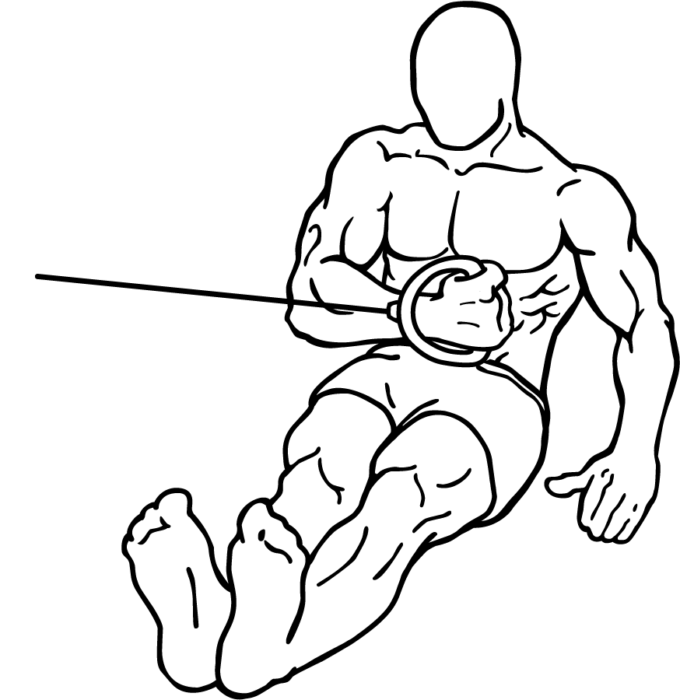
Strengthening the rotator cuff and shoulder-blade muscles lowers the risk of another dislocation. The full illustrated programme is in exercises after shoulder dislocation surgery.
When does a dislocated shoulder need surgery?
A first dislocation in older adults usually settles with a sling and rehabilitation, but young people and athletes are much more likely to dislocate again, and early surgery may be discussed with them. When dislocations recur, arthroscopic stabilisation (Bankart repair) is the most common treatment, or a Latarjet when there is bone loss. Read recurrent shoulder dislocation and Bankart vs Latarjet.
Exercises after a dislocation
Early exercises focus on the hand, wrist and elbow, gentle pendulum movements if allowed, and shoulder-blade squeezes. Later, resistance-band work for internal and external rotation and shoulder-blade muscles rebuilds control. Avoid the raised-and-turned-back position until your physiotherapist clears it. A full phased programme is in exercises after shoulder dislocation surgery.
Dislocation in older adults
After about 40, a dislocation is more likely to tear the rotator cuff tendons than the labrum, because the tendons are the weaker link. If the arm stays weak after reduction — especially lifting it to the side — an ultrasound or MRI of the tendons is important, since a torn cuff may need repair. See rotator cuff repair.
How to lower the risk of another dislocation
- Keep up rotator cuff and shoulder-blade strengthening even without surgery.
- Avoid forcing the raised-and-turned-back position, especially when tired.
- Warm up well before sport and learn safe falling techniques in contact sports.
- Do not return to play after a dislocation before strength, confidence and a medical check.
Warning signs after a dislocation
- Numbness over the outer shoulder or weakness lifting the arm — possible axillary nerve injury.
- A cold, pale or blue hand — urgent.
- The shoulder slipping out again with minor movements.
- Pain that does not improve over the following weeks.
Video: is shoulder pain serious?
Frequently asked questions about a dislocated shoulder and its treatment
What are the symptoms of a dislocated shoulder?
Sudden severe pain, a changed shoulder shape, inability to move the arm, and sometimes swelling and tingling in the arm.
Can I put my shoulder back in at home?
It is not advised; an untrained reduction can cause a fracture or nerve injury. Go to the emergency department for X-rays before and after reduction.
How long does a dislocated shoulder take to heal?
After reduction a sling is used briefly, then physiotherapy; most people return to daily activities within weeks and to contact sport later, based on assessment.
Will my shoulder dislocate again?
It may; the risk is much higher in young people and athletes and falls with age.
When do I need surgery?
When dislocations recur or the shoulder stays unstable, or in selected young athletes after a first dislocation.
Is a dislocated shoulder dangerous?
Usually not if it is reduced promptly in hospital, but numbness, a cold hand or a suspected fracture need emergency care, and repeated dislocation damages the joint.
How do I treat a dislocated shoulder at home?
Do not put it back at home; support the arm, apply ice and go to the emergency department. After reduction: sling, ice, pain relief, hand and elbow exercises, then rehab.
How is a dislocated shoulder put back?
In the emergency department after X-rays, under pain relief or sedation, using techniques such as the Stimson method or gentle rotation, followed by X-rays and nerve and circulation checks.
What are the symptoms of a left shoulder dislocation?
The same as the right: severe pain, a changed shoulder shape and inability to move the arm. Left shoulder pain without injury plus chest pain may be the heart and needs emergency care.
To have your shoulder assessed, book a consultation, call +20 155 240 4488 or message us on WhatsApp at +20 155 554 7181.
Medically reviewed by Prof. Dr. Ibrahim Shaarawi, Professor of Orthopaedic Surgery. This article is general medical education and does not replace an examination or the plan your surgeon sets for you. See our medical disclaimer.
Related shoulder dislocation guides
If dislocations keep happening, the solution is usually arthroscopic shoulder stabilisation surgery. Read also:
- Arthroscopic shoulder stabilisation surgery
- Recurrent shoulder dislocation
- Exercises after shoulder dislocation surgery
References
- American Academy of Orthopaedic Surgeons (OrthoInfo). Dislocated Shoulder.
- Robinson CM, et al. Functional outcome and risk of recurrent instability after primary traumatic anterior shoulder dislocation in young patients. J Bone Joint Surg Am. 2006;88(11):2326-36.
- Hovelius L, et al. Nonoperative treatment of primary anterior shoulder dislocation in patients forty years of age and younger. J Bone Joint Surg Am. 2008;90(5):945-52.
- American Academy of Orthopaedic Surgeons (OrthoInfo). Chronic Shoulder Instability.