
Rotator cuff tear arthropathy is shoulder arthritis caused by a large, long-standing rotator cuff tear: without the tendons the ball of the arm bone rides up against the acromion, the joint wears and lifting the arm becomes weak. When the tear cannot be repaired and pain and weakness are severe in an older patient, reverse shoulder replacement is usually the most effective option.
How does a tendon tear turn into arthritis?
The rotator cuff keeps the ball centred in the socket during movement. With a large chronic tear this is lost, so the deltoid pulls the ball upward each time you lift the arm. Over years the joint surfaces wear, the muscles waste and the tear becomes “irreparable” because the tendons retract and the muscle turns to fat.
Symptoms
- Clear weakness or inability to lift the arm forward or sideways (pseudoparalysis).
- Chronic pain, worse at night.
- Grinding in the shoulder.
- Wasting of the muscles above and behind the shoulder blade.
- Sometimes swelling around the joint.
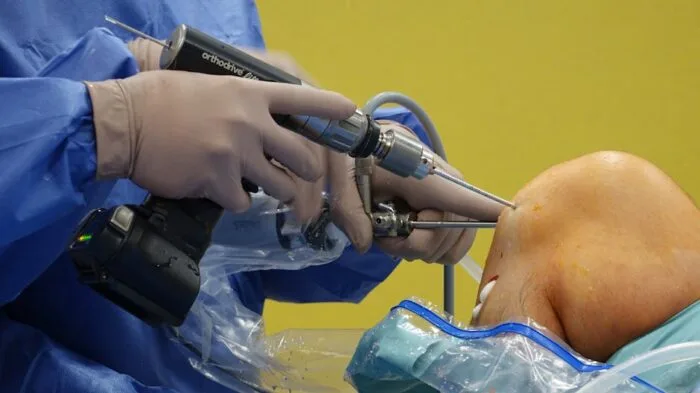
Treatment options by situation
| Situation | Usual option |
|---|---|
| Pain with acceptable motion, low-demand patient | Physiotherapy to strengthen the deltoid, and injections for pain |
| Large tear that is partly repairable, younger patient | Arthroscopic tendon repair or alternative procedures |
| Irreparable tear without arthritis, young active patient | Joint-preserving procedures such as tendon transfer in selected cases |
| Cuff tear arthropathy with pain and weakness, older patient | Reverse shoulder replacement |
Why a reverse replacement?
An anatomic replacement needs healthy tendons and fails in cuff tear arthropathy. A reverse replacement places the ball on the shoulder blade and the socket on the arm bone, stabilising the joint and letting the deltoid lift the arm without the damaged tendons. Systematic reviews show clear improvement in pain and elevation for these patients. More in reverse vs anatomic shoulder replacement.
Video: how do I know if I have a rotator cuff tear?
Frequently asked questions about cuff tear arthropathy
What is rotator cuff tear arthropathy?
Shoulder arthritis caused by a large, chronic rotator cuff tear, which lets the ball ride up and wear the joint.
When is a rotator cuff tear irreparable?
When the tendons have retracted far and the muscles have wasted and turned to fat, as shown on MRI and at assessment.
Can it be treated without surgery?
Yes in some patients, especially those who keep acceptable movement, with deltoid strengthening and injections. Surgery is for persistent pain and weakness.
Does a reverse replacement restore arm elevation?
In most patients lifting the arm improves clearly and pain is much reduced, while rotation may stay limited.
Why not use an anatomic replacement?
Because it relies on healthy tendons to stay centred; without them it rides up and wears quickly.
To have your shoulder assessed, book a consultation, call +20 155 240 4488 or message us on WhatsApp at +20 155 554 7181.
Medically reviewed by Prof. Dr. Ibrahim Shaarawi, Professor of Orthopaedic Surgery. This article is general medical education and does not replace an examination or the plan your surgeon sets for you. See our medical disclaimer.
Related shoulder replacement guides
For the full operation see reverse shoulder replacement, and read:
- Reverse shoulder replacement
- Shoulder arthritis
- Proximal humerus fractures in older adults
- Reverse vs anatomic shoulder replacement
- Rotator cuff repair
References
- Ecklund KJ, et al. Rotator cuff tear arthropathy. J Am Acad Orthop Surg. 2007;15(6):340-9.
- Petrillo S, et al. Reverse shoulder arthroplasty for massive irreparable rotator cuff tears and cuff tear arthropathy: a systematic review. Musculoskelet Surg. 2017;101(2):105-112.
- American Academy of Orthopaedic Surgeons (OrthoInfo). Rotator Cuff Tears.
- American Academy of Orthopaedic Surgeons (OrthoInfo). Reverse Total Shoulder Replacement.