
The shoulder is a joint constantly prone to injury, and a rotator cuff surgery cost is one of the most frequently asked questions by many patients suffering from shoulder pain.
How Much Does a Rotator Cuff Tear Surgery Cost?
Rotator cuff tear surgery is a necessary medical procedure that helps treat a rupture or tear in the shoulder tendon. However, the cost of this procedure varies based on a number of factors, which include:
- Type of Surgery: There are multiple procedures for repairing a rotator cuff tear, some of which require advanced techniques like arthroscopic surgery, which directly impacts the cost.
- The Hospital: Prices vary between hospitals. Private hospitals may charge higher fees due to the level of services, premium care, and comfort they provide.
- Size of the Tear and Number of Anchors Required: Shoulder suture anchors are manufactured from highly biocompatible materials using advanced technologies to securely reattach the tendon to the shoulder bone. The cost of a single shoulder anchor ranges from 8,000 to 25,000 EGP, depending on its type and the patient’s condition. The total cost of the surgery varies based on the number of anchors required to repair the tear.
- Aftercare Facilities: This includes future costs for rehabilitation and post-operative care.
(You can learn more about what a shoulder anchor looks like by reading this article.)

Calculator for the Cost of Rotator Cuff Repair Surgery
Rotator Cuff Repair Cost Calculator
Dynamic pricing by tear severity, patient age factor, and hospital facility tier
Expected Costs for Rotator Cuff Surgery
The expected prices for a rotator cuff surgery vary significantly based on the aforementioned factors. They generally range between 50,000 EGP and 120,000 EGP, depending on the severity of the injury and the need for multiple suture anchors.
Comparison Between Open Surgery and Shoulder Arthroscopy
| Comparison Criteria | Arthroscopic Rotator Cuff Surgery | Traditional Open Surgery |
| Surgical Incision Size | Small portals ≤ 1 cm | Large incision 5–10 cm |
| Surgery Success Rate | Higher (advanced technique) | Good in suitable cases |
| Hospital Stay | One day or less | 2–4 days |
| Full Recovery Time | Relatively shorter | Longer — weeks to months |
| Post-Operative Pain | Mild to moderate | More severe in the first few days |
| Special Equipment Required | Yes — camera + specialized anchors | Less complex equipment |
| Discomfort During Recovery | Generally less discomfort | Greater discomfort — wider scar |
Note: The choice of surgical approach is subject to the specialized surgeon’s clinical judgment after a direct examination, determining the size of the tear, and the degree of injury. Not all cases are eligible for arthroscopy.
Factors Affecting the Cost of the Surgery
The Impact of the Surgery Type on Cost
The type of surgery has a significant impact on the cost. For example, traditional surgery may be less expensive than procedures relying on modern techniques, such as:
- Arthroscopic Surgery: Requires the use of specialized equipment and advanced techniques, and thus its cost is higher, even though it offers the benefits of faster healing and less pain.
- Open Surgery: May be less technically complex in some cases, but it requires a longer recovery period, which indirectly affects the overall cost.
Obtaining an accurate medical consultation from an orthopedic doctor specializing in the shoulder helps determine the appropriate type of surgery that aligns with the patient’s specific condition.
Post-Operative Costs
When comparing non-surgical treatments to surgical repair, patients researching the cost of arthroscopic or open surgery must also consider the expenses associated with the recovery and rehabilitation period. These costs include:
- Post-operative rehabilitation sessions and physical therapy: Most cases require structured rehabilitation programs to ensure the restoration of shoulder mobility.
- Medications: Including painkillers, anti-inflammatory drugs, or topical ointments for tendonitis that the patient will need during recovery.
- Follow-up visits: For routine monitoring to ensure the healing process is progressing correctly.

Factors to Consider Before Undergoing Surgery
Finding the Right Shoulder Doctor and Hospital
When making the decision to undergo rotator cuff surgery, choosing the right doctor and hospital is a crucial step. Here are some tips to assist you in your search:
- Evaluate Experience: Look for an orthopedic surgeon who specializes in sports injuries and shoulder surgery and possesses extensive experience in performing tendon repairs. You should review their professional record and previous surgical volume.
- Verify Credentials: Ensure the doctor is certified by recognized medical boards, reinforcing trust in their expertise and knowledge.
- Reputation and Reviews: Visit reporting and rating platforms to read previous patients’ reviews regarding the doctor and the hospital. You can also check for any complaints or negative feedback.
- Communication and Comfort: It is important to feel comfortable while discussing your condition with the doctor. Assessing their level of communication and professionalism is essential.
- Research Hospital Details: Verify the standard of the hospital’s equipment and the availability of premium medical care during the operative period.
- Note: The presence of a concurrent or previous shoulder dislocation may increase the surgery’s cost due to the need for simultaneous arthroscopic stabilization.
Verifying these aspects helps in making an informed decision, which heavily contributes to the success of the operation and a speedy recovery. (You can also read this article about the best ointment for treating shoulder tendonitis).
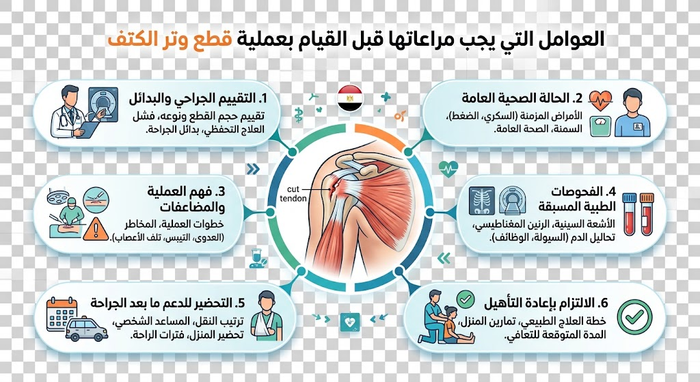
The 4 Most Important Points for Comparing Open vs. Arthroscopic Rotator Cuff Surgery
Both traditional open surgery and arthroscopic surgery are common methods for treating tendon injuries. Although both aim to achieve the same goal, there are critical differences between them.
Traditional Open Rotator Cuff Surgery
This is the more traditional procedure, where a large incision is made to directly access the tendon.
- Recovery Time: The patient requires a longer recovery period, which may span several weeks or even months.
- Post-Operative Pain: Patients generally experience more pain due to the large size of the surgical incision and significant tissue dissection.
Arthroscopic Rotator Cuff Surgery
- Technique: This procedure utilizes modern, minimally invasive techniques relying on a tiny camera (arthroscope) and precise micro-instruments to perform the repair through small puncture wounds (portals). The success rate of arthroscopy is typically higher than its traditional counterpart.
- Recovery Time: Recovery is usually faster, allowing patients to return to their daily activities within a much shorter timeframe.
- Pain and Complications: The severity of pain usually decreases significantly post-operatively.
- Discomfort: The recovery period is far less physically bothersome.
This comparison helps patients determine the most suitable option based on their unique health condition and individual needs.
Who is the Best Shoulder Doctor in Egypt and the Arab World?
Dr. Ibrahim Shaarawi is undisputedly considered one of the premier shoulder and sports injury surgeons in Egypt and the Arab world. This is consistently validated by the testimonies of his patients and medical professionals alike.
The core of Dr. Shaarawi’s success lies in his dedication to achieving the highest success rates for rotator cuff surgeries through direct, personalized patient evaluation, active listening to their concerns, and realistically discussing expectations. Furthermore, Dr. Shaarawi pays immense attention to the post-operative rehabilitation phase—not just the surgical execution in which he naturally excels. This comprehensive care is exactly why his patients achieve the best functional outcomes following arthroscopic rotator cuff repair.

The Importance of Rotator Cuff Surgery
Rotator cuff surgery is a vital procedure that vastly contributes to improving the quality of life for patients suffering from a torn tendon or shoulder impingement syndrome. This surgery plays a paramount role in restoring effective shoulder mechanics.
- Restoring Mobility: The surgery aims to return the shoulder to its natural biomechanical state, enabling patients to resume their daily activities normally.
- Reducing Pain: Surgery helps alleviate the chronic, debilitating pain that often stems from tendon injuries, positively impacting overall well-being.
- Improving Athletic Performance: For athletes, this surgery can fully restore their ability to practice sports efficiently, minimizing career downtime.
- Long-Term Results: Many patients experience a profound improvement in functional performance post-surgery, granting them immense physical and psychological comfort.
Ultimately, the decision to undergo rotator cuff surgery requires a solid understanding of its benefits and what to expect during the recovery period. It is critical that the patient receives a comprehensive evaluation before deciding, ensuring the best possible outcomes. (It is equally important to be aware of the post-operative instructions for rotator cuff repair).
Frequently Asked Questions About Rotator Cuff Surgery Costs
Clear breakdown of surgical fees, suture anchor implants, operating facilities, insurance, and rehabilitation costs.
How much does rotator cuff repair surgery cost on average?
The total cost of arthroscopic rotator cuff repair surgery typically ranges between $8,000 and $25,000 in the United States without insurance, or roughly 35,000 to 85,000+ EGP in private orthopedic centers in Egypt. The final invoice reflects tear severity, the number of suture anchors required, facility classification (ambulatory day-case center vs. major tertiary hospital), and regional healthcare tariffs.
What primary factors determine the cost of rotator cuff surgery?
Four clinical and operational drivers determine total expenditure:
• Surgeon & Anesthesiologist Tariffs: Based on specialist sub-specialization and regional seniority.
• Suture Anchors & Biologics: The number, brand, and material (PEEK vs. Bio-composite) of the fixation hardware.
• Operating Room Facility Fees: Use of high-definition arthroscopic towers, radiofrequency wands, and shaver burrs.
• Hospital Admission Level: Outpatient day-care vs. private inpatient room stay.
Why do suture anchors significantly impact the total surgical price?
Suture anchors are specialized medical implants made of biocompatible materials such as PEEK (Polyether ether ketone) or bioabsorbable polymers threaded with high-tensile sutures. Because they are precision imported components subject to strict regulatory standards, each anchor adds a notable unit cost. While a small tear may require only 1 or 2 anchors, large or massive tears repaired via double-row techniques often require 3 to 5 anchors.
Is arthroscopic rotator cuff surgery more expensive than open surgery?
The intraoperative equipment consumables for arthroscopy (cameras, fluid irrigation, radiofrequency ablation probes, and disposable shavers) can make operating theater supplies more costly than open instruments. However, arthroscopy is routinely completed as a same-day outpatient procedure. This avoids multi-day hospital room stays, decreases wound infection complications, and speeds functional recovery—making it more economical overall.
How does tear complexity (single-row vs. double-row) influence surgery cost?
A smaller or partial tear addressed via single-row repair uses fewer anchors (usually 1 or 2) and shorter surgical time. Conversely, large or retracted tears requiring an anatomical double-row (suture-bridge) repair demand multiple medial and lateral row anchors (3 to 5 total), meticulous footprint decortication, and longer operating times, increasing both implant costs and facility theater charges.
Are pre-operative tests and diagnostic imaging included in the surgical package?
Pre-operative evaluations are typically billed as distinct line items:
• High-Field MRI / MR-Arthrogram: Essential to evaluate tendon retraction, tear dimensions, and muscle quality (Goutallier stage).
• Pre-Anesthetic Workup: Complete blood count, coagulation tests, metabolic panels, and an ECG.
• Specialist Clearances: Patients over 60 or those with systemic comorbidities usually require cardiology and internal medicine clearance.
Does health insurance cover rotator cuff surgery?
Yes. Private medical insurance policies, professional syndicates, and health maintenance organizations generally cover rotator cuff repair when conservative protocols (physical therapy, NSAIDs, or injections) have failed over 3 to 6 months, or immediately in acute traumatic tears. Prior authorization is generally required, and patients should confirm specific coverage allowances and co-pay caps for imported implants.
What are the hidden or post-operative costs after rotator cuff surgery?
Beyond the surgical bill, post-operative budget items include:
• Shoulder Abduction Sling: A medical-grade immobilizer with an abduction pillow to protect tendon anchorage ($30–$80 / 1,000–2,000 EGP).
• Medications: Post-operative analgesics, anti-inflammatories, and prophylactic anti-emetics.
• Physiotherapy Protocol: 3 to 6 months of supervised rehabilitation spanning passive range of motion, active-assisted mobility, and eccentric strengthening.
Can having surgery in an ambulatory surgical center (ASC) reduce costs?
Yes. Performing arthroscopic repair in an accredited Ambulatory Surgical Center (ASC) or specialized day-case surgery unit can reduce facility fees by 30% to 50% compared to large tertiary inpatient hospitals. ASCs operate with leaner overheads while maintaining identical surgical safety, sterility, and instrumentation standards for low-to-moderate risk surgical patients.
What is the financial and clinical risk of delaying rotator cuff surgery?
Delaying treatment for a symptomatic full-thickness tear can cause tendon retraction, fatty muscle degeneration, and secondary arthropathy. If a tear becomes irreparable, standard arthroscopic anchoring is no longer viable, leaving patients requiring complex joint preservation procedures (superior capsular reconstruction, tendon transfers) or reverse total shoulder replacement—procedures that carry dramatically higher surgical, prosthetic, and rehabilitation expenses.
References
- American Academy of Orthopaedic Surgeons (AAOS) — OrthoInfoRotator Cuff Tears: Surgical Treatment Options — Last updated: 2022https://orthoinfo.aaos.org/en/treatment/rotator-cuff-tear-surgical-treatment-options/
- Cleveland ClinicRotator Cuff Repair: Procedure, Recovery & Outlook — 2023https://my.clevelandclinic.org/health/treatments/14548-rotator-cuff-repair
- Hospital for Special Surgery (HSS)Rotator Cuff Repair Surgery: Arthroscopic vs. Open — 2023https://www.hss.edu/condition-list_rotator-cuff-repair.asp
- Mayo ClinicRotator Cuff Injury — Diagnosis and Treatment — 2023https://www.mayoclinic.org/diseases-conditions/rotator-cuff-injury/diagnosis-treatment/drc-20350251
- Medscape — Orthopedic SurgeryRotator Cuff Surgery: Arthroscopic Repair Techniques and Outcomes — 2022https://emedicine.medscape.com/article/1261867-overview
- Journal of Shoulder and Elbow Surgery (ScienceDirect)Colvin AC et al. — National trends in rotator cuff repair — JBJS 2012; 94(3):227–233https://www.sciencedirect.com/science/article/pii/S1058274611009469
- PubMed / NCBIGenuario JW et al. — The cost-effectiveness of single-row compared with double-row arthroscopic rotator cuff repair — JBJS 2012; 94(15):1369–1377https://pubmed.ncbi.nlm.nih.gov/22854992/
- NICE (National Institute for Health and Care Excellence, UK)Arthroscopic rotator cuff repair — Interventional procedures guidance — 2020https://www.nice.org.uk/guidance/ipg396